Where to Eat in Korea: Latest Guides

  • Nurimaeul Gamjatang Itaewon: 24-Hour Pork Bone Stew by Exit 4

    Nurimaeul Gamjatang Itaewon: 24-Hour Pork Bone Stew by Exit 4

    In short

    Nurimaeul Gamjatang (누리마을감자탕) is a 24-hour pork bone stew restaurant on the second floor of a building about 29 m from Itaewon Station Exit 4. A small pot of spicy gamjatang is ₩35,000 (about $25), and single bowls of bone soup start at ₩12,000. Good for a hearty lunch, a late-night meal, or anyone who wants a big pot of Korean stew without too much salt.

    On the last day of my summer vacation, my partner and I wanted something hot and filling, so we went to Nurimaeul Gamjatang Itaewon for a weekday lunch. Maybe it was the end-of-holiday mood, but a bowl of steaming broth sounded better than anything else.

    Gamjatang is a Korean stew of pork back bones simmered with potatoes and greens in a red, spicy broth. You share one pot at the table, pick the meat off the bones, and add noodles or rice as you go.

    Quick facts

    • Korean name누리마을감자탕 이태원점 (Nurimaeul Gamjatang, Itaewon branch)
    • Address2F, 176 Itaewon-ro, Yongsan-gu, Seoul
      서울 용산구 이태원로 176 2층
    • SubwayItaewon Station (이태원역, Line 6), Exit 4, about 29 m
    • HoursOpen 24 hours, every day of the year
    • PriceGamjatang pots ₩34,000–52,000 depending on type and size; bone soups ₩12,000–13,000
    • Good forCouples and groups sharing a pot, a solid lunch in Itaewon, late-night meals
    • Phone0507-1334-9321
    • NotesNaver reservations for 2 to 12 people. Takeout available. No parking. Self-service side dish bar.
    • MapOpen in Naver Map

    Finding it

    The restaurant sits right on Itaewon-ro, the main road through Itaewon, an easy walk from Itaewon Station. Come up at Exit 4. The dining room is on the second floor, so the first time you go, remember to look up for the white sign with the red logo. A street-level entrance with the same sign leads to the stairs.

    📍 Nurimaeul Gamjatang Itaewon (누리마을감자탕 이태원점), 2F, 176 Itaewon-ro, Yongsan-gu · Naver Map · Google Maps
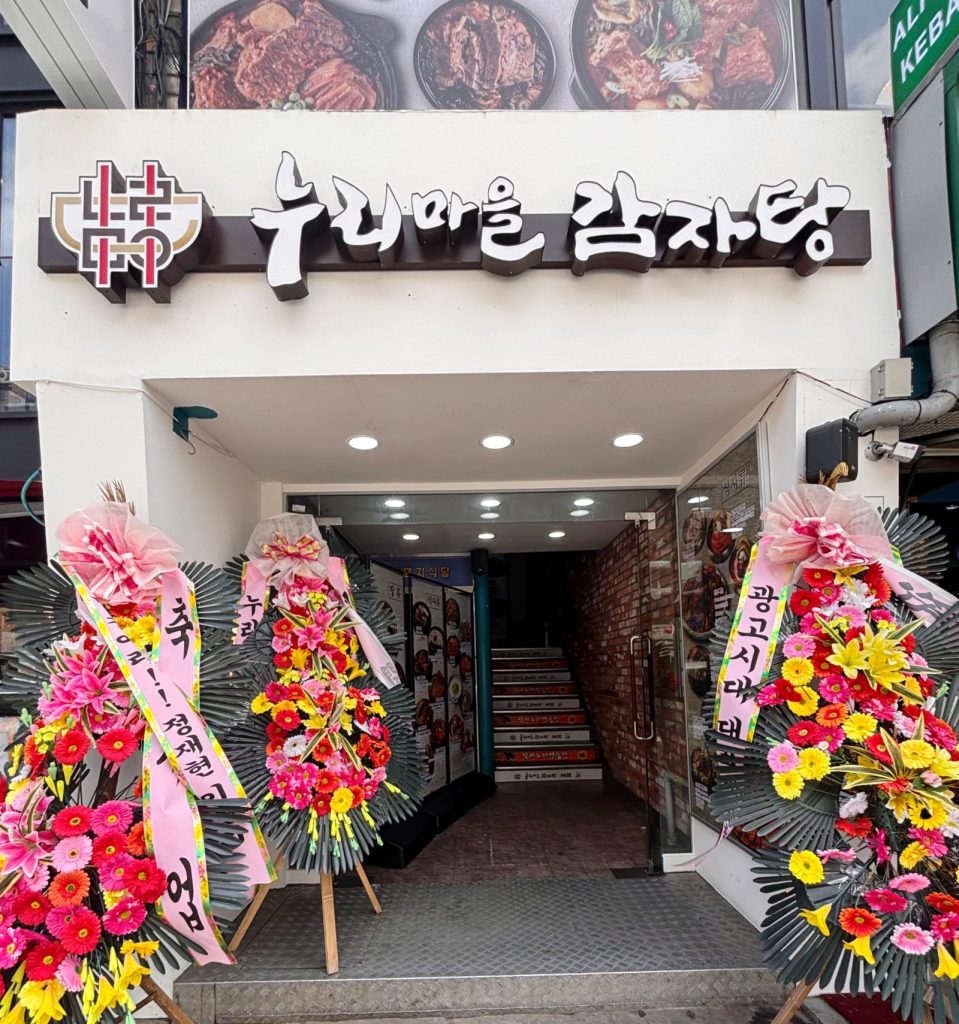
    Street entrance of Nurimaeul Gamjatang on Itaewon-ro, with stairs leading up to the second-floor dining room
    The street-level entrance. The dining room is up the stairs.

    We came at weekday lunchtime and were seated straight away with no wait. The room was clean and not crowded even at lunch, so we could eat at a relaxed pace. The menu boards by the entrance list the dishes in English, Japanese and Chinese as well as Korean, which helps if you don’t read Hangul.
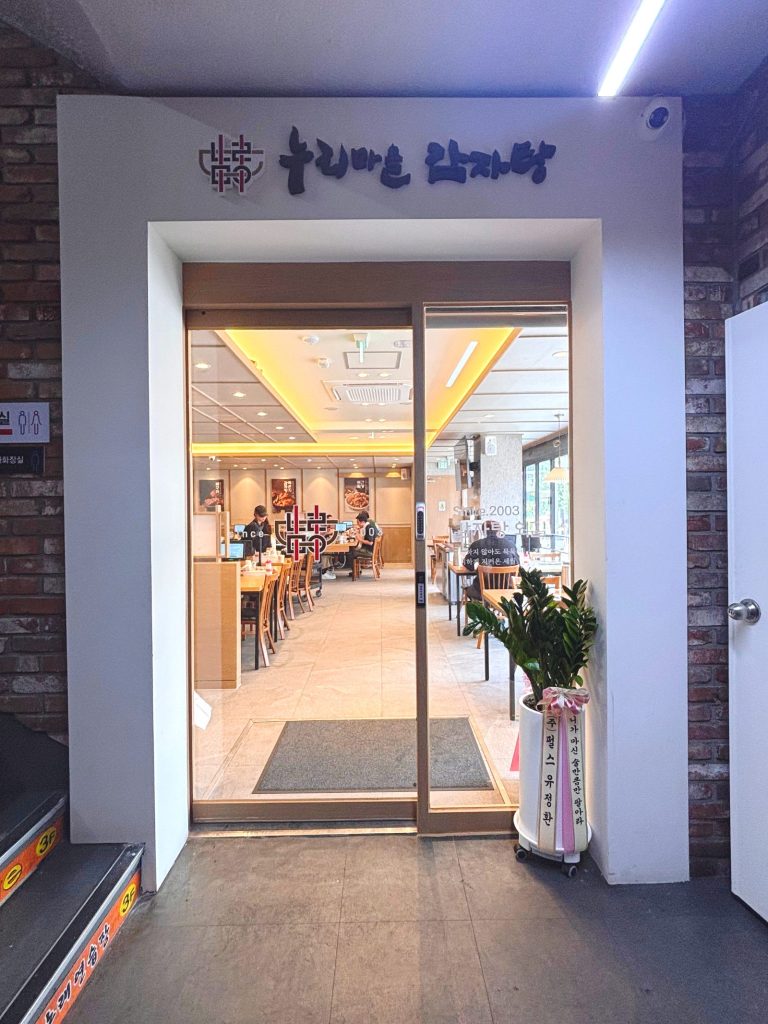
    Glass doors opening into the bright, wood-toned dining room of Nurimaeul Gamjatang Itaewon
    Through the doors into the second-floor dining room.

    The self-service side dish bar

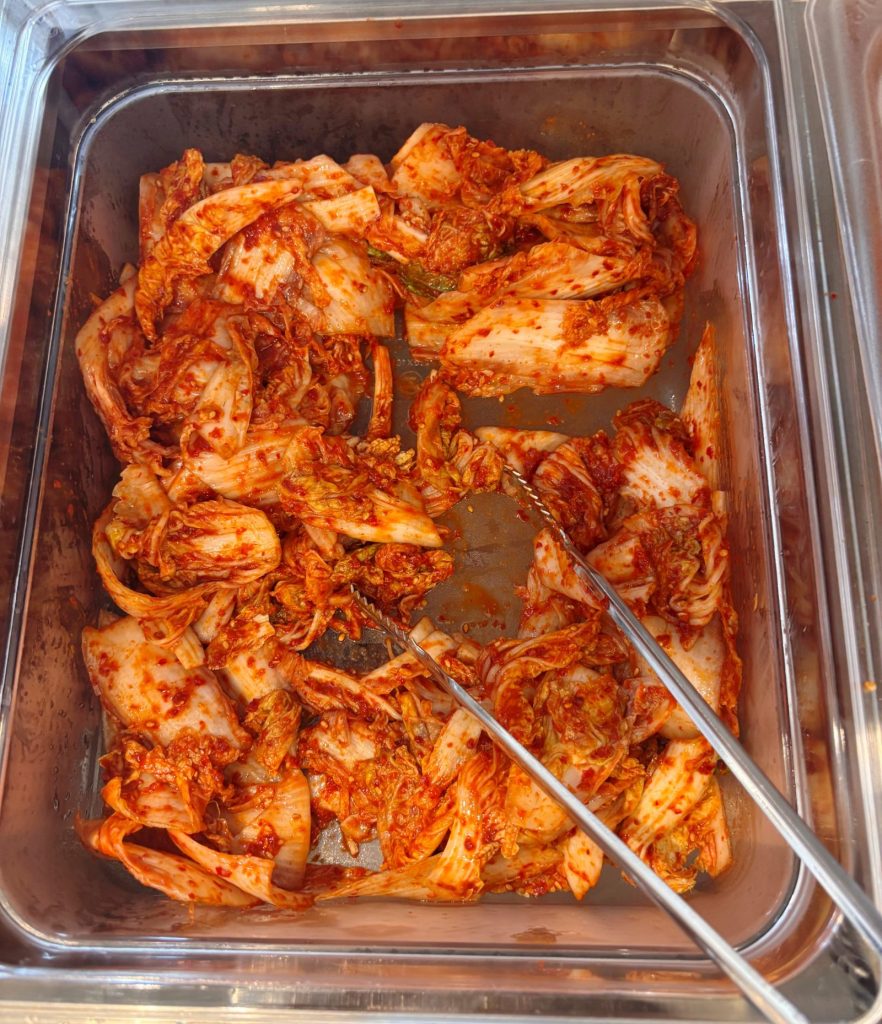
    My favorite practical detail was the self bar (셀프바, selpeu-ba). Napa cabbage kimchi, radish kimchi and spicy cheongyang green chilies are laid out so you can help yourself whenever you run low. I like this much better than waving down a server every time I want more kimchi.
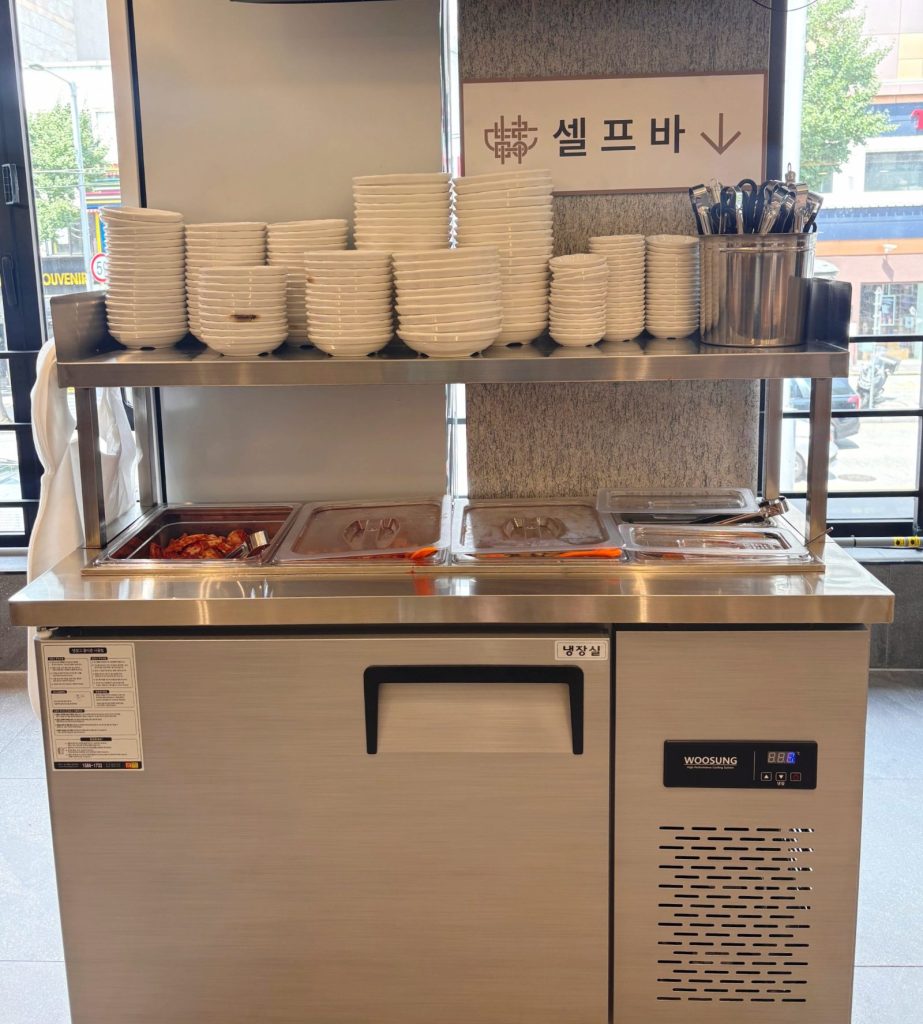
    Self-service side dish bar with bowls and refrigerated banchan at Nurimaeul Gamjatang Itaewon
    The self bar, with bowls and side dishes.
    Tray of napa cabbage kimchi with tongs at the self bar of Nurimaeul Gamjatang Itaewon
    Napa cabbage kimchi at the self bar. It turned out to be great with ramen.

    What we ordered

    We ordered the spicy gamjatang for two, plus glass noodles, ramen noodles and a bowl of rice. The plan was to add fried rice at the end if we were still hungry. Spoiler: we never got that far.

    1. Spicy gamjatang (얼큰감자탕, eolkeun gamjatang)

    The pot arrives topped with perilla leaves, sliced green onion and enoki mushrooms over chunks of potato. Even though we ordered for two, there were five big pork bones inside, along with lots of potato and ugeoji (dried cabbage greens). The portion honestly surprised me when I saw the pot.
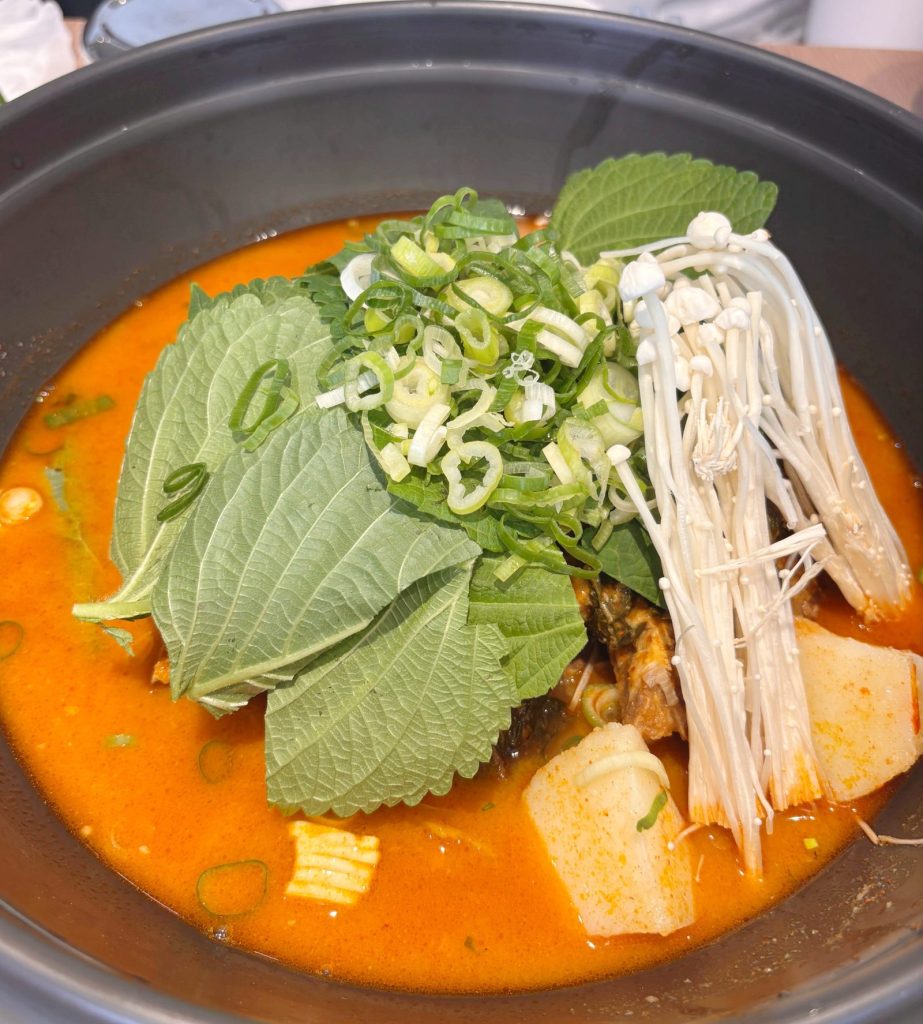
    Pot of spicy gamjatang topped with perilla leaves, green onion, enoki mushrooms and potato at Nurimaeul Gamjatang Itaewon
    Spicy gamjatang as it arrives, before it starts to boil.

    The ugeoji came in large pieces, but it was so soft it pulled apart easily, and we cut it with scissors. Eaten with the broth, it reminded me why ugeoji belongs in gamjatang.
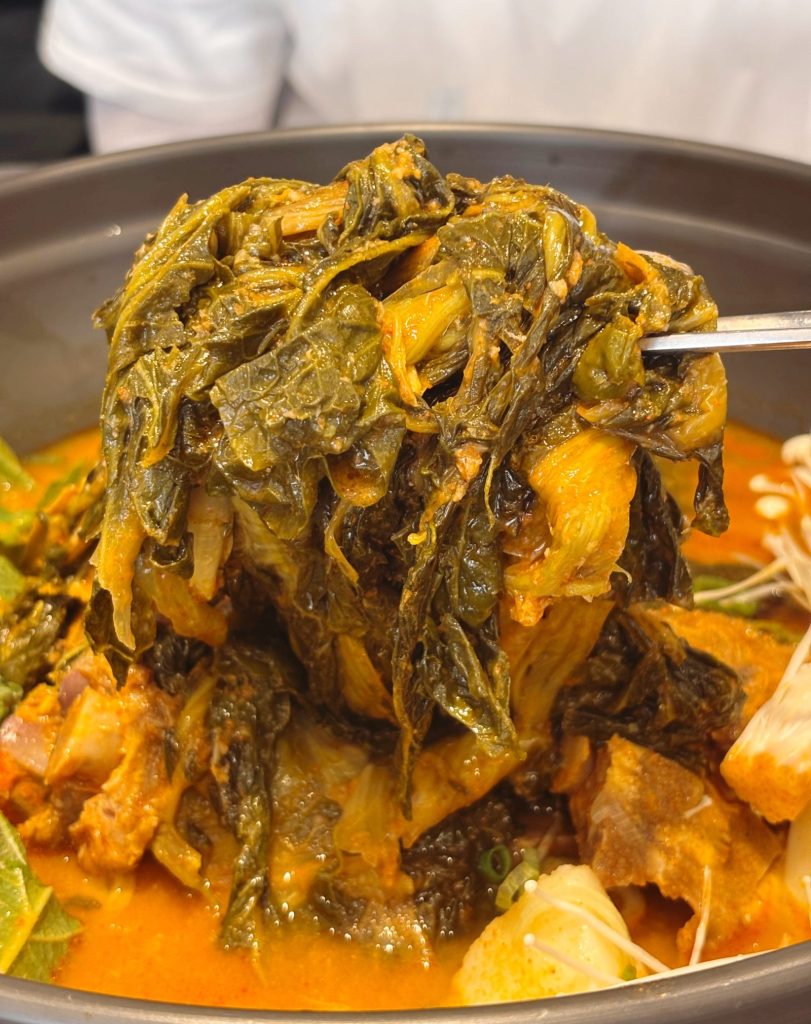
    Pork back bones piled with soft ugeoji cabbage greens in the gamjatang at Nurimaeul Gamjatang Itaewon
    Soft ugeoji greens piled over the bones.

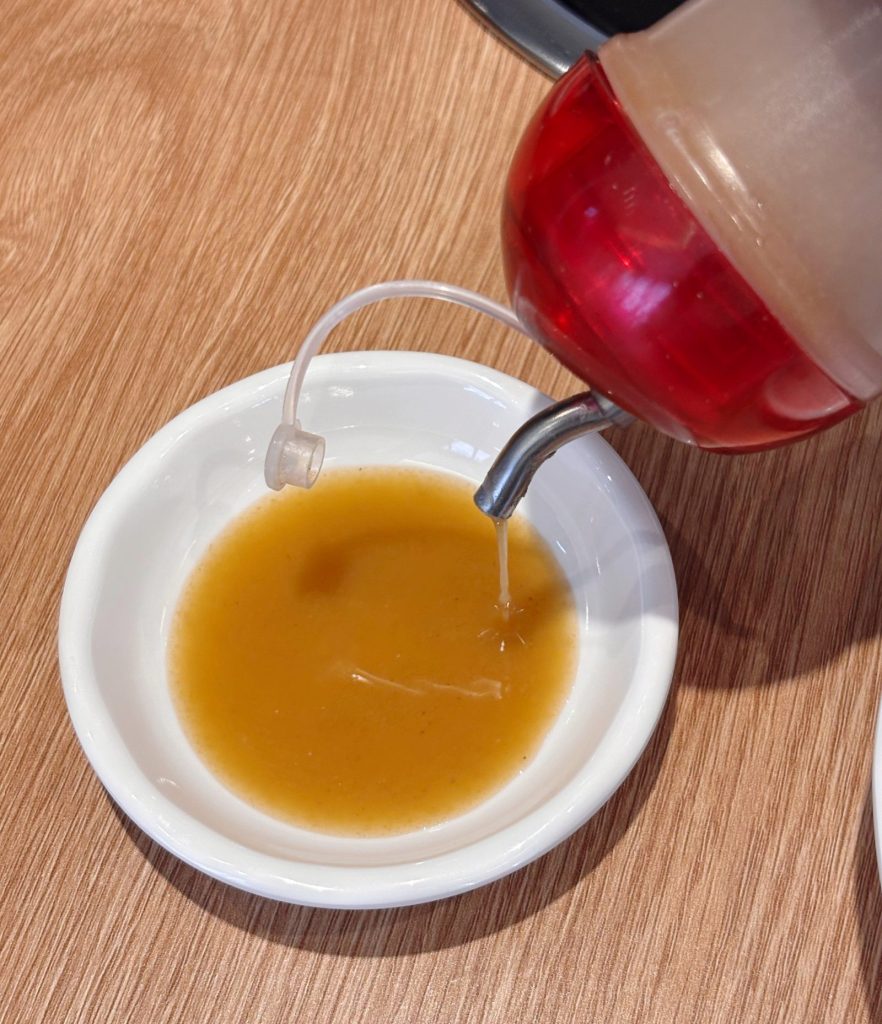
    The meat came away from the bone the moment I lifted it with the tongs. It was tender and moist, good on its own or dipped in mustard sauce.
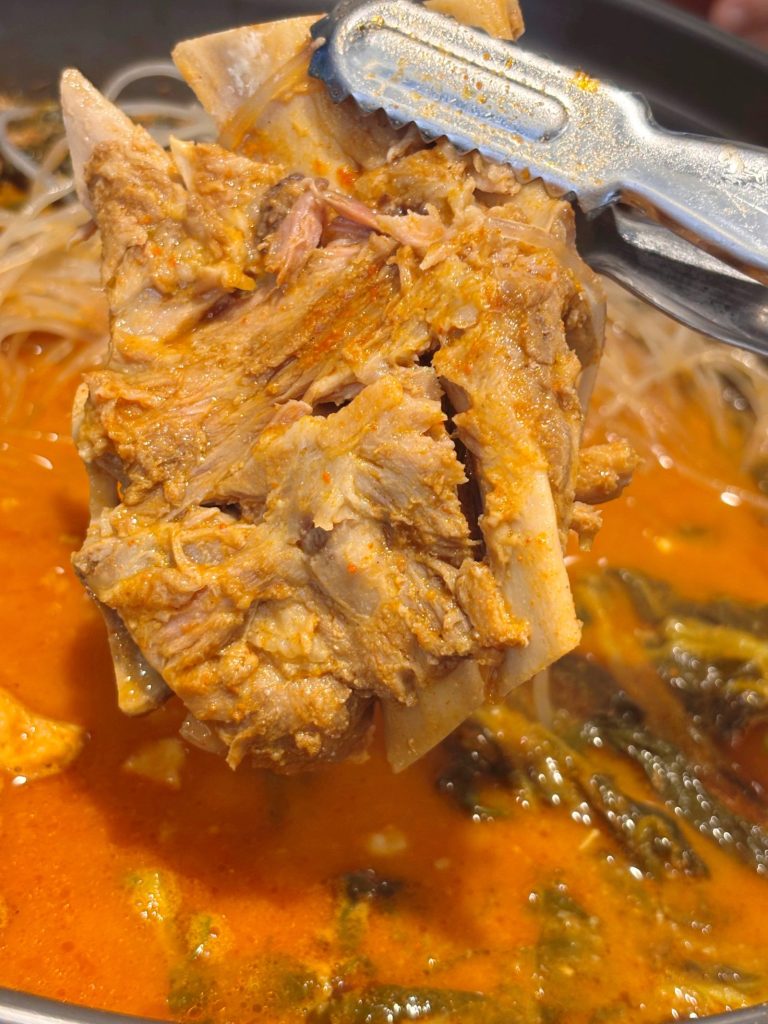
    Tongs lifting a tender pork back bone out of the spicy broth at Nurimaeul Gamjatang Itaewon
    The meat slid right off the bone.
    Mustard dipping sauce being poured into a small dish at Nurimaeul Gamjatang Itaewon
    Mustard sauce for dipping the pork.

    The best part for me was the broth. Gamjatang broth tends to be on the salty side, and it usually gets saltier as it keeps boiling. This one stayed pleasantly mild all the way through, so we never got tired of it and finished the meal comfortably.

    2. Glass noodles (당면사리, dangmyeon sari)

    Once we had pulled out some of the bones and made room in the pot, in went the glass noodles. The portion was huge, more like a whole extra bowl than a simple add-on. I love dangmyeon and can never skip it with gamjatang, and these were especially good: they soaked up the broth and went down smoothly. If you only pick one add-on, make it this one.
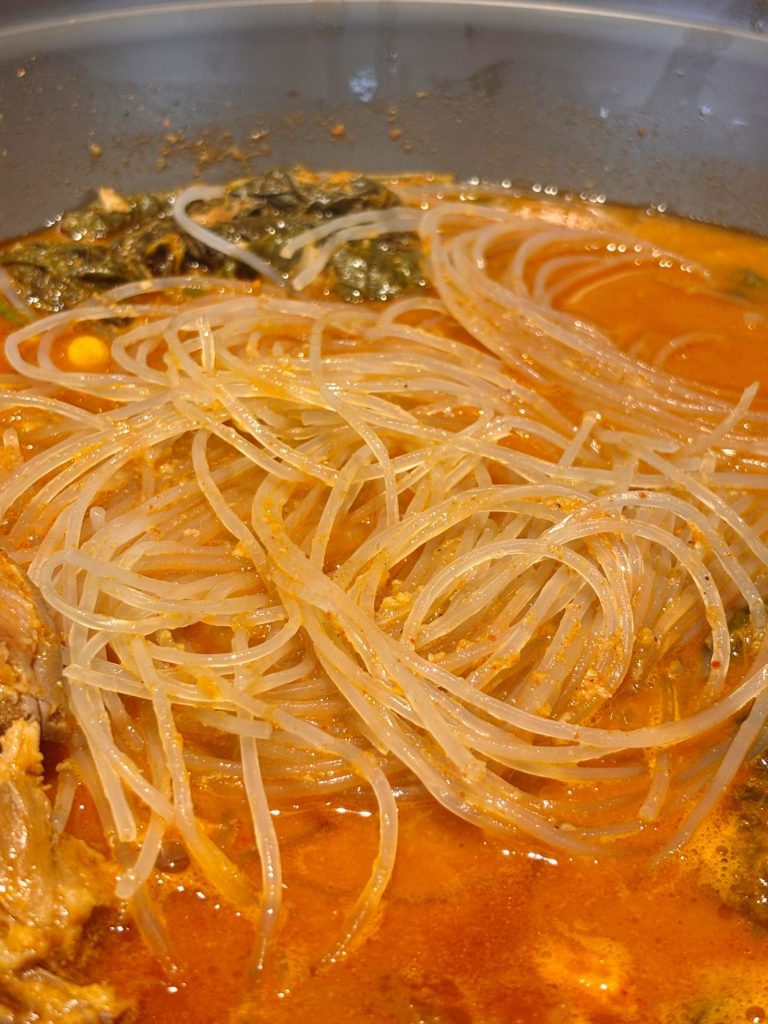
    Glass noodles (dangmyeon) added to the gamjatang pot at Nurimaeul Gamjatang Itaewon
    Glass noodles going into the pot.

    3. Ramen noodles (라면사리, ramyeon sari)

    We ate the ramen a little differently, wrapping each bite in the napa cabbage kimchi from the self bar. The kimchi is tasty on its own, and it went really well with the spicy broth. My tip: cook the glass noodles first and add the ramen later, so the ramen doesn’t go soggy and keeps its bite.
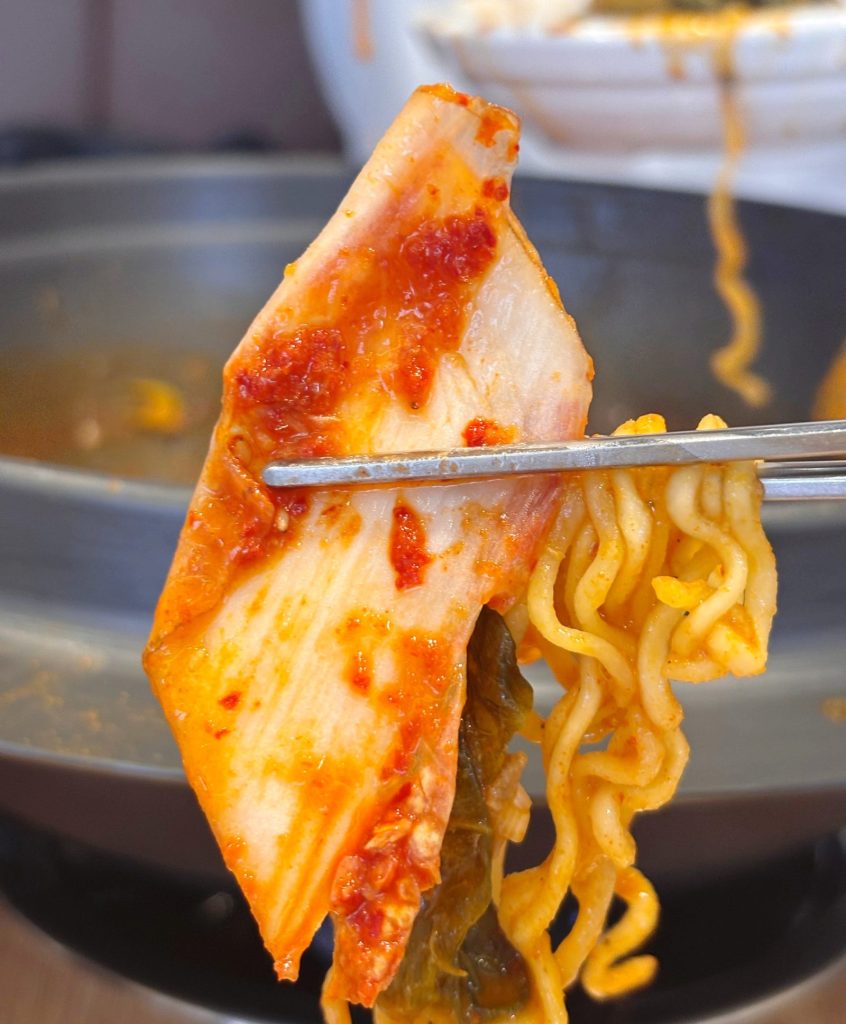
    Ramen noodles wrapped in cabbage kimchi over the pot at Nurimaeul Gamjatang Itaewon
    Ramen wrapped in kimchi, our favorite combination.

    Menu and prices

    DishPrice
    Nuri gamjatang, classic (small / medium / large)
    누리감자탕
    ₩34,000 / 41,000 / 48,000
    ~$24 / 29 / 34
    Spicy gamjatang (small / medium / large)
    얼큰감자탕
    ₩35,000 / 42,000 / 49,000
    ~$25 / 30 / 35
    Aged kimchi gamjatang (S / M / L)
    묵은지감자탕
    ₩36,000 / 43,000 / 50,000
    ~$26 / 31 / 36
    Sundae (blood sausage) gamjatang (S / M / L)
    순대전골감자탕
    ₩36,000 / 43,000 / 50,000
    ~$26 / 31 / 36
    Mala gamjatang (S / M / L)
    마라감자탕
    ₩38,000 / 45,000 / 52,000
    ~$27 / 32 / 37
    Soy-braised pork bones (S / M / L)
    간장뼈찜
    ₩36,000 / 44,000 / 52,000
    ~$26 / 31 / 37
    Nuri bone hangover soup (single bowl)
    누리뼈해장국
    ₩12,000
    ~$8.60
    Spicy or ramen bone hangover soup (single bowl)
    얼큰뼈해장국 / 뼈라면해장국
    ₩13,000
    ~$9.30
    Galbitang (beef short rib soup)
    갈비탕
    ₩16,000
    ~$11.40
    Dumplings, meat or kimchi (4 pieces)
    고기/김치 만두
    ₩3,000
    ~$2.10

    *USD figures are rough estimates at about ₩1,400 to $1. Prices are from Naver Place (menu updated August 2026). Naver does not list prices for noodle add-ons, rice or fried rice, so check the menu when you order. Prices can change.

    Tips for visitors

    • Come hungry. The pot for two was big enough that we skipped the fried rice we had planned.
    • Noodle order matters. Glass noodles first, ramen later, so the ramen stays chewy.
    • Use the self bar. Kimchi, radish kimchi and chilies are self-service, so refill as you like.
    • Ordering phrase: “Eolkeun gamjatang, i-inbun juseyo” (얼큰감자탕 2인분 주세요) means “Spicy gamjatang for two, please.”
    • Any hour works. It is open 24 hours, every day. We had no wait at weekday lunch.
    • Take the subway. Naver lists no parking. Itaewon Station Exit 4 is a minute away.

    My verdict

    Nurimaeul Gamjatang Itaewon gave us exactly what we wanted on the last day of a summer vacation: a huge pot of tender pork bones, soft ugeoji, and a broth that stayed mild instead of turning salty. The self bar made the meal easy, and the glass noodles were the highlight. My only regret is that we were too full for fried rice, so next time I will order fewer noodles and finish with it. If you like big portions, less salty broth and helping yourself to side dishes, it is worth a stop in Itaewon.

    Nurimaeul Gamjatang Itaewon FAQ

    Where is Nurimaeul Gamjatang Itaewon?

    Nurimaeul Gamjatang Itaewon is on the second floor of 176 Itaewon-ro, Yongsan-gu, on the main Itaewon street. Naver lists it about 29 m from Exit 4 of Itaewon Station (Line 6), roughly a one-minute walk. Look up for the sign, because the dining room is upstairs.

    Is Nurimaeul Gamjatang Itaewon open 24 hours?

    Yes. Naver lists Nurimaeul Gamjatang Itaewon as open 24 hours a day, every day of the year, so it works for a late-night meal after a night out in Itaewon as well as a normal lunch or dinner.

    How much does gamjatang cost at Nurimaeul Gamjatang Itaewon?

    At Nurimaeul Gamjatang Itaewon, the spicy gamjatang (eolkeun gamjatang) is ₩35,000 for a small, ₩42,000 for a medium and ₩49,000 for a large. Single-serving bone hangover soups cost ₩12,000 to ₩13,000. Noodle add-ons and rice are ordered separately.

    Is the broth at Nurimaeul Gamjatang Itaewon very salty or very spicy?

    We ordered the spicy version at Nurimaeul Gamjatang Itaewon, and it had a proper spicy kick. What stood out was the salt level: gamjatang broth usually gets saltier as it boils down, but this one stayed mild right to the end.

    Can I book or park at Nurimaeul Gamjatang Itaewon?

    Nurimaeul Gamjatang Itaewon takes Naver reservations for groups of 2 to 12, and it also does takeout. Naver says there is no parking, so the subway is the easiest way to get there. We went at weekday lunch and were seated right away without a booking.

    More meals nearby: try Hyunsuni in Yongsan, an easy walk from I’Park Mall, or Decalcomanie in Haebangchon, a short trip from Itaewon. See all Seoul restaurant guides.

    Visited: August 2026. Prices and hours last checked: October 22, 2026, on Naver. Please check Naver Map before you go.

    This post is based on my own visit and photos. I used AI tools to help with the English wording.
  • Oksoban Gongdeok: Shabu-Shabu with Table-Side Vegetable Refills

    Oksoban Gongdeok: Shabu-Shabu with Table-Side Vegetable Refills

    In short

    Oksoban Gongdeok (옥소반 공덕역점) is a shabu-shabu and sukiyaki restaurant right by Gongdeok Station Exit 7, where staff bring unlimited vegetables to your table. Sets start at ₩16,900 (about $12) at weekday lunch and ₩20,900 (about $15) at dinner and weekends. Open daily 11:00–22:00, with a 15:00–17:00 break on weekdays. Good for families, group dinners and a calm sit-down meal.

    We went to Oksoban Gongdeok for a weekend lunch with the kids. It has a reputation around Gongdeok as a go-to spot for get-togethers, so I booked a table on Naver before we left. Good thing I did: by the time we arrived, every seat in the room was taken. Without that reservation, we would have been in for a long wait.

    What surprised me first was the mood. Most refill-style hot pot places feel busy and a bit chaotic, but Oksoban is calm and polished, more like a proper restaurant. It works just as well for a meal with friends as it does for a family lunch.

    Quick facts

    • Korean name옥소반 공덕역점 (Oksoban, Gongdeok Station branch)
    • Address1F Unit 11, Hyosung Harrington Square Bldg B, 92 Mapo-daero, Mapo-gu, Seoul
      서울 마포구 마포대로 92 효성해링턴스퀘어 B동 1층 11호
    • SubwayGongdeok Station (공덕역, Lines 5 and 6, AREX, Gyeongui-Jungang Line). The restaurant points to Exit 7; Naver lists about 97 m from Exit 9
    • HoursDaily 11:00–22:00. Weekdays: break 15:00–17:00, lunch last order 14:00. Weekends and holidays: no break. Last order 21:00
    • PriceSets ₩16,900–23,900 at weekday lunch, ₩20,900–27,900 for dinner; unlimited-meat options ₩31,900–41,900
    • Good forFamilies with kids, group meals, a calm lunch or dinner near Gongdeok
    • Phone0507-1361-1746
    • NotesReservations on Naver. High chairs, group seating and wheelchair access listed. Free parking in the Harrington Square garage when you dine (give your car number when paying). Paid corkage available.
    • MapOpen in Naver Map

    Finding it

    Gongdeok Station is a big transfer hub where four lines meet, so it is easy to reach from Hongdae, Yeouido or central Seoul. The restaurant’s own directions say to come up at Exit 7; Hyosung Harrington Square Building B is right in front of you, and Oksoban is on the ground floor in unit 11. Naver also shows it about 97 m from Exit 9.

    📍 Oksoban Gongdeok (옥소반 공덕역점), 92 Mapo-daero, Mapo-gu · Naver Map · Google Maps

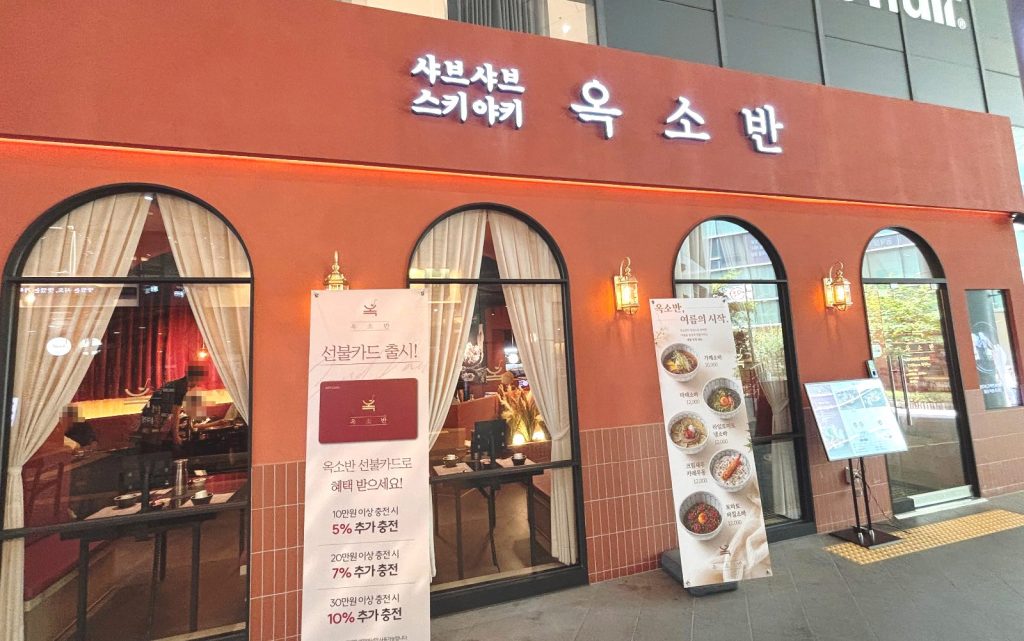
    You can’t miss the frontage: a terracotta-red wall with tall arched windows and white curtains, and the sign reads “샤브샤브 스키야키 옥소반”.

    Red arched storefront of Oksoban shabu-shabu and sukiyaki restaurant near Gongdeok Station
    The red, arched storefront in Hyosung Harrington Square.

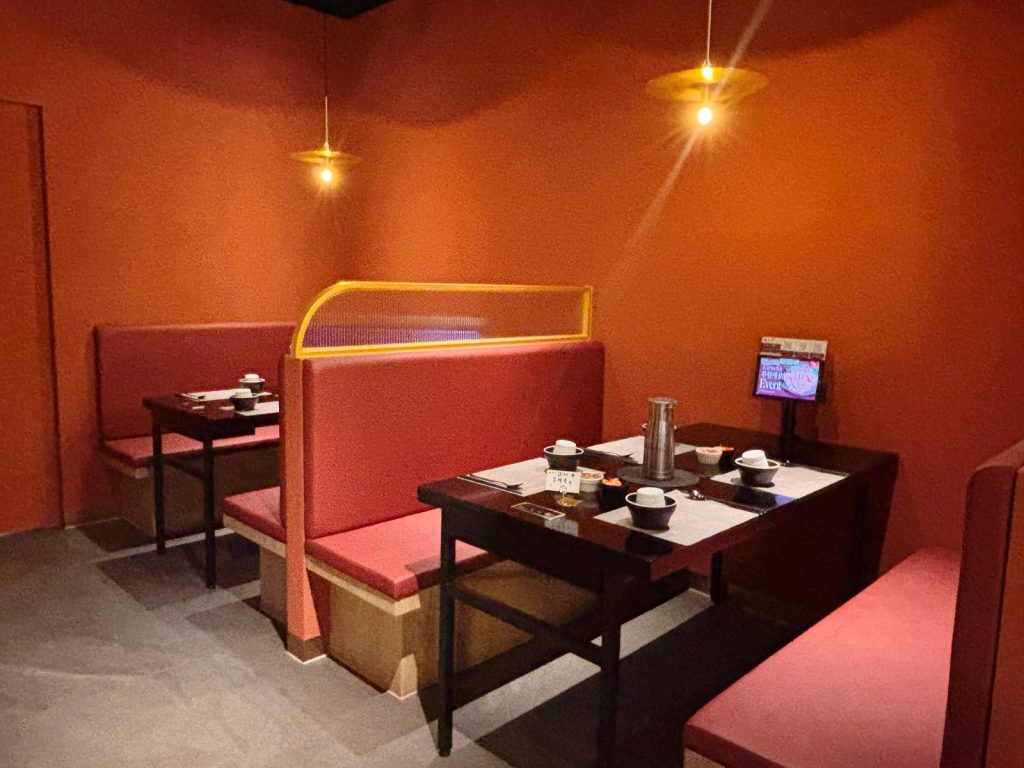
    Inside, the warm orange walls and booth seating make it feel cozy rather than cafeteria-like.

    Orange booth seating with red cushions inside Oksoban Gongdeok
    Booth seating inside.

    How it works: table service, not a salad bar

    Oksoban serves two styles of Japanese hot pot. Shabu-shabu means you swish thin slices of beef through a light broth for a few seconds, while sukiyaki is cooked in a sweeter soy-based sauce and dipped in raw egg. You pick a style, then a set based on the cut of beef.

    For me, the service style is what makes this place good value. At many all-you-can-eat shabu-shabu spots you keep getting up to fetch vegetables and side dishes from a salad bar, which breaks up the conversation. Here you just stay seated. The staff keep bringing broth, side dishes and vegetables to the table, so nobody has to leave mid-meal. That made it a relaxed place to eat with a group.

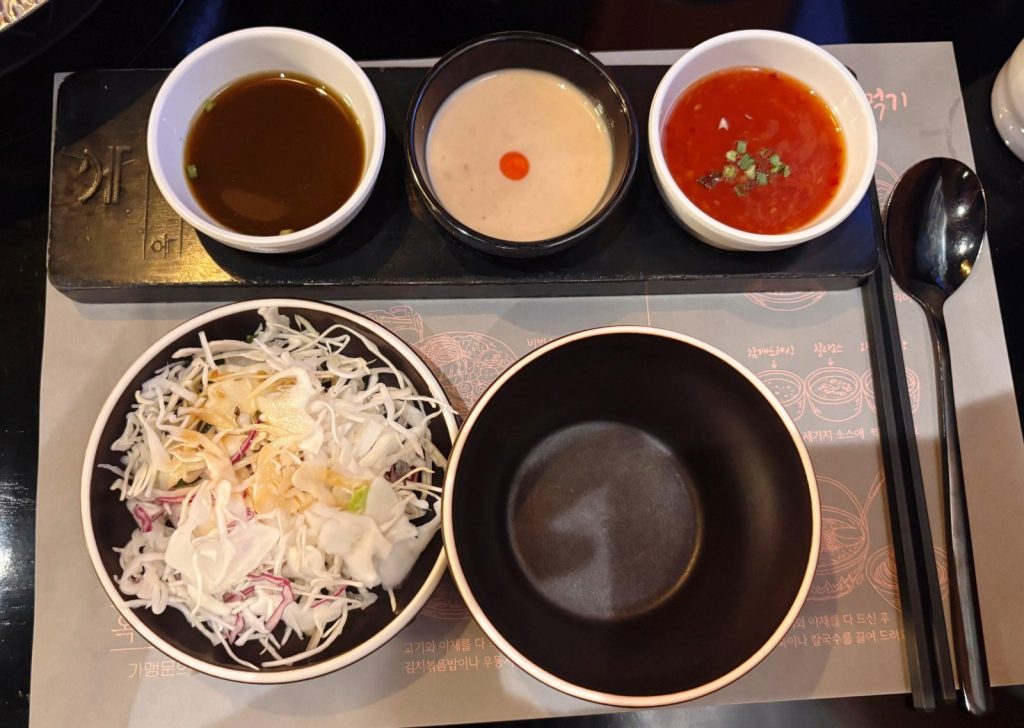
    Three dipping sauces, cabbage salad and an empty bowl set at the table at Oksoban Gongdeok
    Three dipping sauces and a small salad to start.

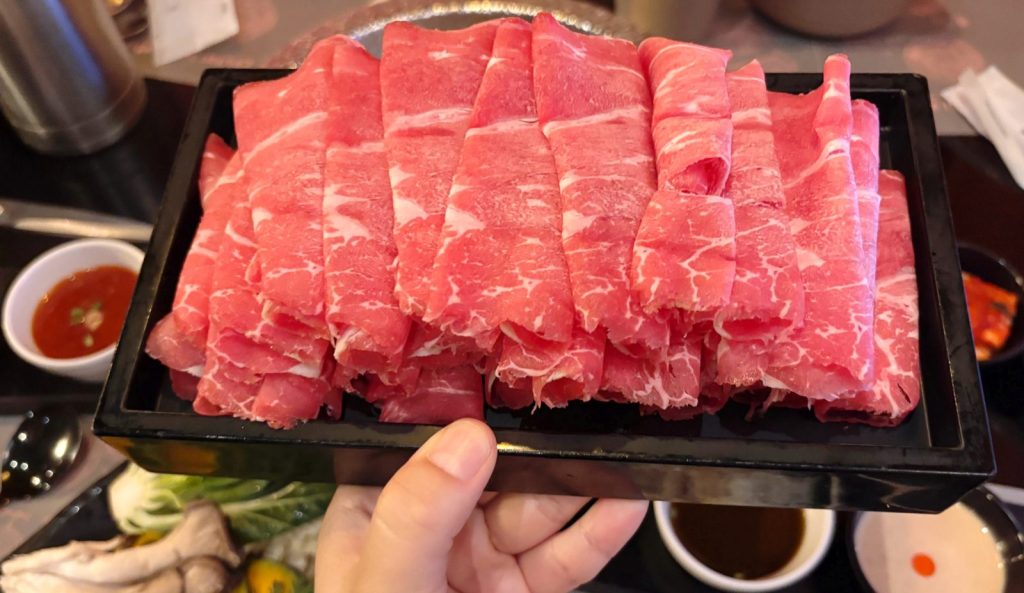
    The beef is sliced to order. When you order, they take it straight from the kitchen fridge and run it through the slicer, and it looked fresh and had no off smell at all.

    What we ordered

    1. Shabu-shabu set with chuck eye roll (샤브샤브 알목심, syabusyabu al-moksim)

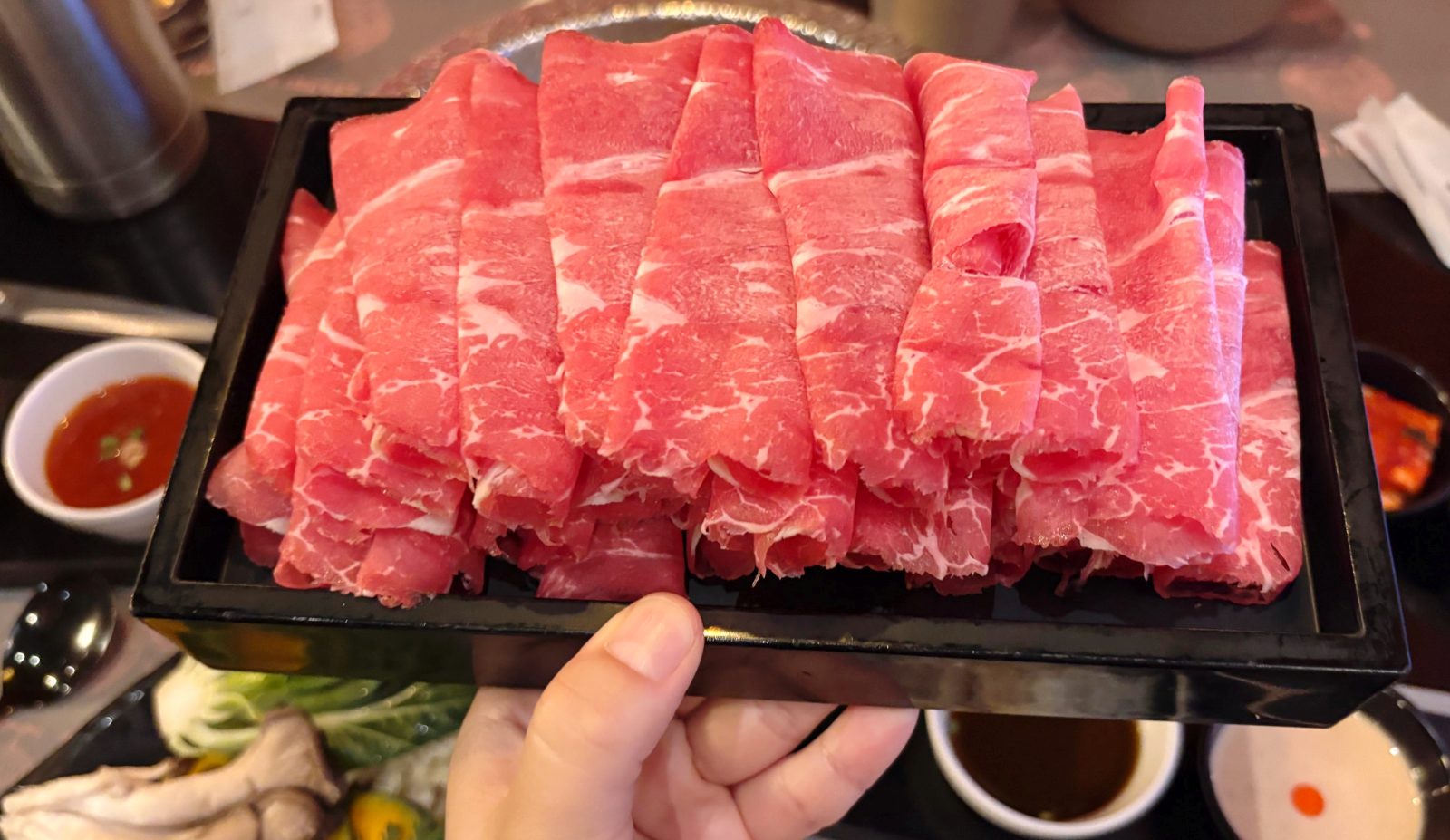
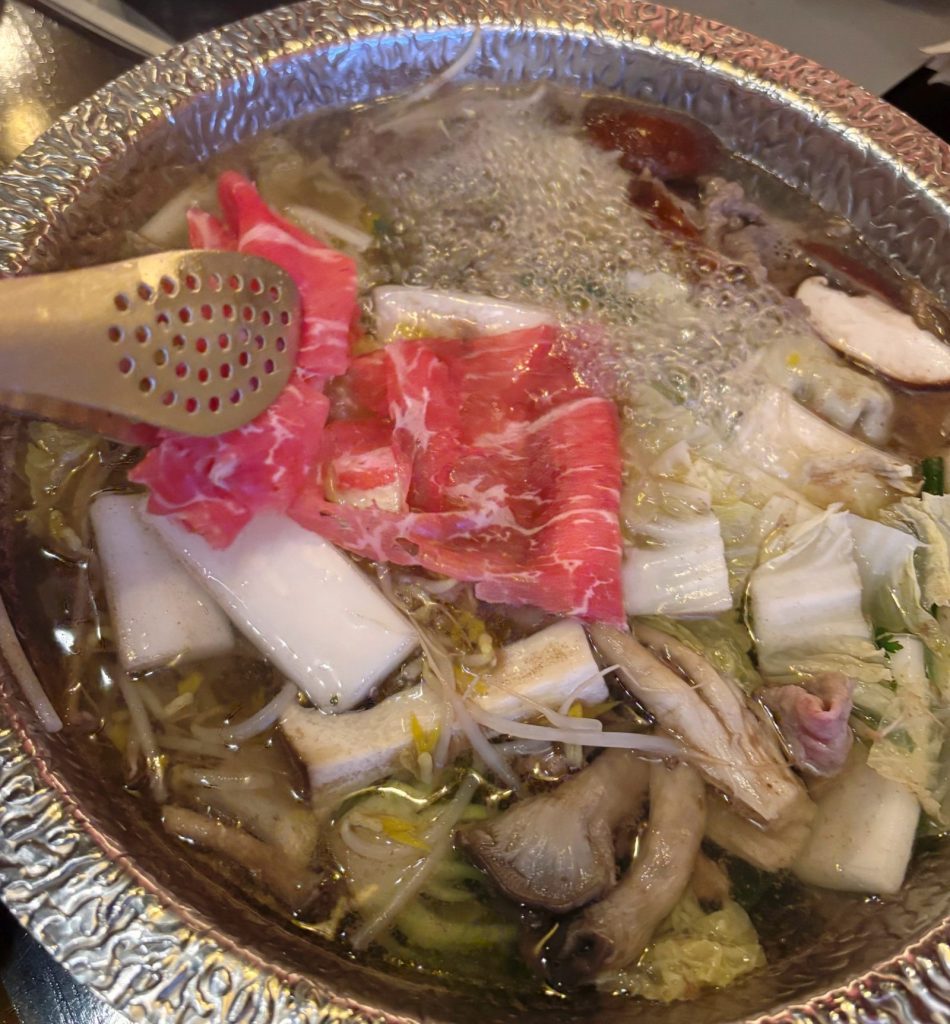
    We ordered the shabu-shabu set with al moksim (US beef chuck eye roll), unlimited vegetables, and porridge to finish. The slices were thin and very tender. My kids don’t usually manage chewy meat, but they ate this happily, along with the vegetables cooked in the clear broth.

    Tray of thinly sliced US beef chuck eye roll (al moksim) for shabu-shabu at Oksoban Gongdeok
    Thin slices of al moksim (chuck eye roll), sliced to order.
    Beef slices, cabbage, mushrooms and bean sprouts cooking in the shabu-shabu pot at Oksoban Gongdeok
    Beef and vegetables in the pot.

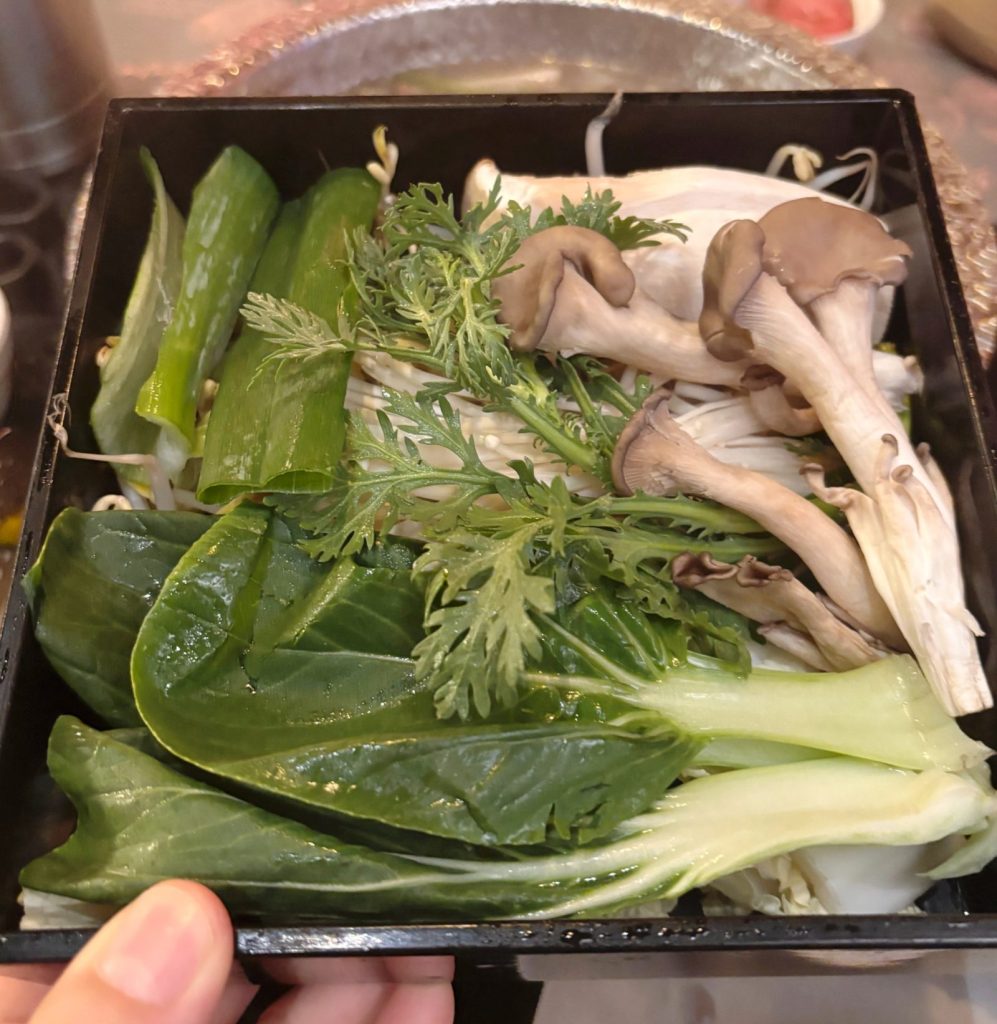
    The vegetables were fresh, and the staff checked our table and refilled them until we were full. My favorite was the thick green onion: once it softens in the broth it soaks up the beefy flavor and turns sweet, and I kept reaching for more.

    Refill tray of bok choy, crown daisy, oyster mushrooms and greens at Oksoban Gongdeok
    A vegetable refill tray brought to the table.
    Cooked beef dipped in creamy sesame sauce at Oksoban Gongdeok
    Beef dipped in the creamy sesame sauce.

    2. Bunmoja (분모자, bunmoja)

    Bunmoja are wide, chewy tapioca noodles, and they turned out to be the hit of the meal for our family. They have a bouncy, springy bite, and dunked generously in the sesame sauce they were so good that we ended up ordering an extra plate.

    Bowl of wide, glossy bunmoja tapioca rice cakes for the hot pot at Oksoban Gongdeok
    The extra bowl of bunmoja we ordered.

    3. Cold kake soba (가케소바, gake soba)

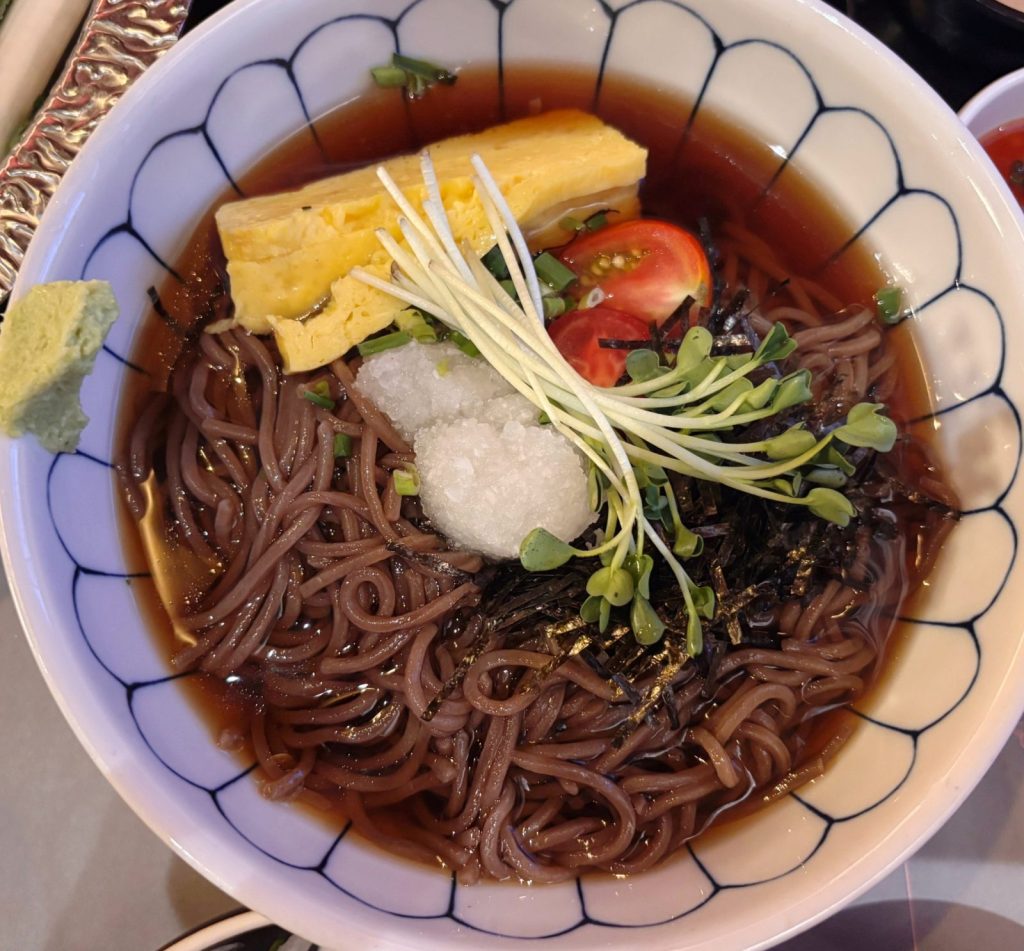
    It was a hot summer day, so we added a bowl of cold kake soba: buckwheat noodles in a chilled broth. It was a great way to wake up the appetite before the hot pot. The broth was clean but full of flavor, and the noodles were chewy. The kids loved it too and slurped up every last strand.

    Cold kake soba topped with rolled omelet, grated radish, sprouts and seaweed at Oksoban Gongdeok
    Cold kake soba, a summer side we added.

    4. Rice porridge to finish (죽, juk)

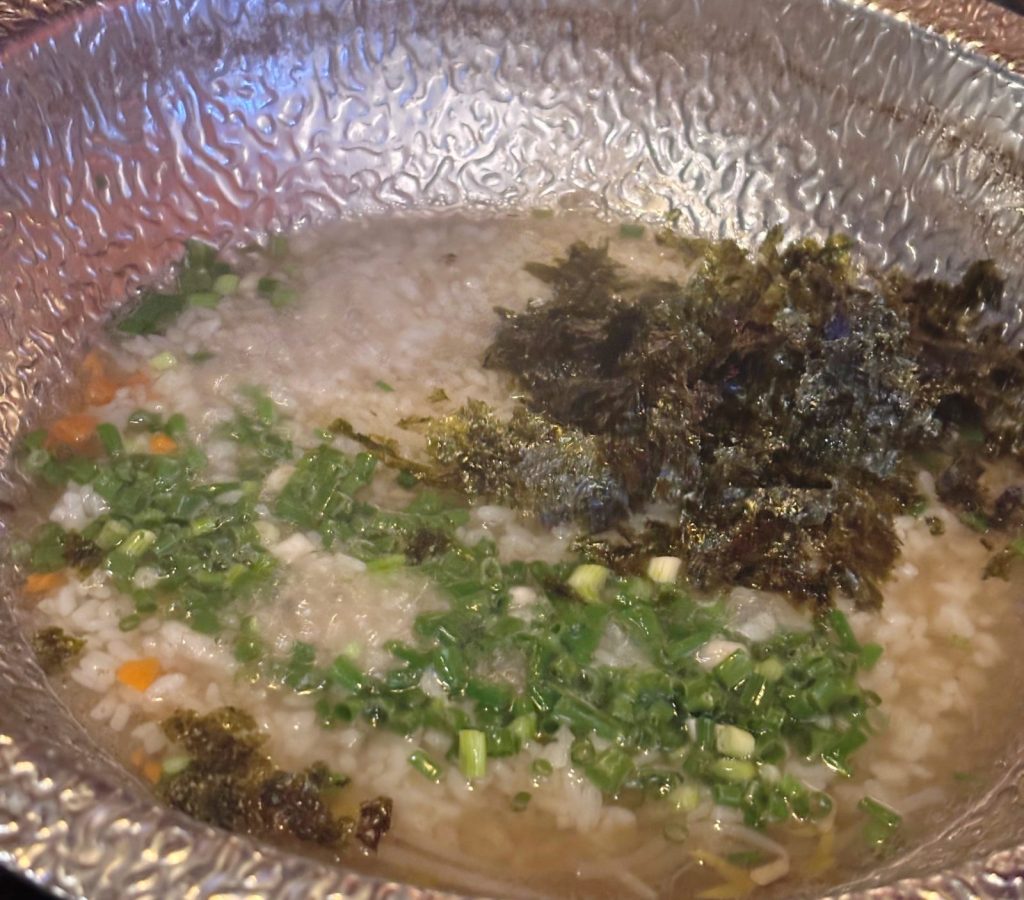
    Each shabu-shabu set ends with a choice of kalguksu noodles or porridge. We chose porridge, and a staff member cooked it in the pot for us, stirring in egg and plenty of seaweed flakes. It was nutty and savory with a gentle saltiness, soft and not heavy, a comforting way to finish.

    Rice porridge finished with egg, green onion and seaweed flakes in the hot pot at Oksoban Gongdeok
    Porridge cooked at the table with egg and seaweed.

    Menu and prices

    DishPrice
    Lunch set A, shabu-shabu or sukiyaki (Canadian beef, 80 g)
    런치 A세트 (전각)
    ₩16,900
    ~$12.10
    Lunch set B (US chuck eye roll, 80 g)
    런치 B세트 (알목심)
    ₩18,900
    ~$13.50
    Lunch set C (US chuck flap tail, 80 g)
    런치 C세트 (살치살)
    ₩21,900
    ~$15.60
    Lunch set D (Korean hanwoo, 80 g)
    런치 D세트 (한우설도)
    ₩23,900
    ~$17.10
    Dinner set A (Canadian beef, 100 g)
    디너 A세트 (전각)
    ₩20,900
    ~$14.90
    Dinner set B (US chuck eye roll, 100 g)
    디너 B세트 (알목심)
    ₩22,900
    ~$16.40
    Dinner set C (US chuck flap tail, 100 g)
    디너 C세트 (살치살)
    ₩25,900
    ~$18.50
    Dinner set D (Korean hanwoo, 100 g)
    디너 D세트 (한우설도)
    ₩27,900
    ~$19.90
    Unlimited chuck eye roll (lunch / dinner)
    (무한) 알목심
    ₩31,900 / ₩34,900
    ~$22.80 / $24.90
    Unlimited chuck flap tail (lunch / dinner)
    (무한) 살치살
    ₩36,900 / ₩39,900
    ~$26.40 / $28.50
    Unlimited Korean hanwoo (lunch / dinner)
    (무한) 한우설도
    ₩39,900 / ₩41,900
    ~$28.50 / $29.90

    *USD figures are rough estimates at about ₩1,400 to $1. Prices are from Naver Place (menu updated April 2026). Every set includes refillable vegetables plus a finish: kalguksu or porridge for shabu-shabu, fried rice or yaki udon for sukiyaki. The printed menu at our visit applied lunch prices to weekday lunch only, with dinner prices on weekday evenings and all day on weekends. Cold kake soba was a summer special at ₩10,000 on a sign outside in August, and Naver does not list it now. Prices can change.

    Tips for visitors

    • Book for weekends. We reserved on Naver and the room was full when we arrived.
    • Weekday lunch is the bargain. Lunch sets are ₩4,000 cheaper than dinner, but they only apply on weekdays, and lunch last order is 14:00.
    • Don’t get up for refills. Vegetables and side dishes come to you; just ask the staff for more.
    • Try the bunmoja with sesame sauce, and leave room for the porridge at the end.
    • Ordering phrase: “Yachae deo juseyo” (야채 더 주세요) means “More vegetables, please.”
    • Driving? Park in the Harrington Square garage and give your car number when you pay for free parking.

    Is it kid-friendly?

    Yes, in our experience. The clear broth is mild, the thin beef is easy for children to chew, and our kids ate the meat, vegetables and soba without any fuss. Naver lists high chairs, and the table service means you are not juggling small children and a salad bar at the same time.

    My verdict

    Oksoban Gongdeok feels like a step up from the usual refill hot pot place: a calm, polished room, fresh beef sliced to order, and staff who keep the vegetables coming so you can stay at the table and talk. Everyone in our family found something they loved, from the tender beef to the bunmoja and the porridge. I am already planning to come back for our next get-together in Gongdeok.

    Oksoban Gongdeok FAQ

    Where is Oksoban Gongdeok?

    Oksoban Gongdeok is in unit 11 on the ground floor of Hyosung Harrington Square Building B, 92 Mapo-daero, Mapo-gu. The restaurant says to take Exit 7 of Gongdeok Station (Lines 5 and 6, AREX, Gyeongui-Jungang Line), and the building is right in front of you. Naver also lists it about 97 m from Exit 9.

    What are Oksoban Gongdeok’s opening hours?

    Naver lists Oksoban Gongdeok as open every day from 11:00 to 22:00. On weekdays there is a break from 15:00 to 17:00 (lunch last order 14:00). Weekends and public holidays have no break. Last order is 21:00 every day.

    How much does a meal at Oksoban Gongdeok cost?

    At Oksoban Gongdeok, shabu-shabu and sukiyaki sets cost ₩16,900 to ₩23,900 at weekday lunch and ₩20,900 to ₩27,900 for dinner. The all-you-can-eat meat options run ₩31,900 to ₩41,900. Vegetables are refilled at no extra cost with every set.

    Do I need a reservation at Oksoban Gongdeok?

    For a weekend meal at Oksoban Gongdeok, I would book. We reserved through Naver before our weekend lunch visit, and the room was already full when we arrived. Without a booking we would have faced a long wait.

    Is Oksoban Gongdeok good for kids?

    It was for our family. The clear broth is mild, the thin beef is tender enough for children, and our kids happily ate the meat, vegetables and cold soba. Naver lists high chairs and group seating.

    More family-friendly meals: try Kosi Seongsu for Sanuki udon and tonkatsu near Seoul Forest, or Seogwan Myeonok in Hongdae, also in Mapo-gu. See all kid-friendly restaurant guides and Seoul restaurant guides.

    Visited: August 2026. Prices and hours last checked: October 21, 2026, on Naver. Please check Naver Map before you go.

    This post is based on my own visit and photos. I used AI tools to help with the English wording.
  • Kosi Seongsu: Sanuki Udon and Tonkatsu Near Seoul Forest

    Kosi Seongsu: Sanuki Udon and Tonkatsu Near Seoul Forest

    In short

    Kosi Seongsu (코시 성수점) is a Sanuki udon and tonkatsu restaurant about 115 m from Ttukseom Station Exit 6 (Line 2), a short walk from Seoul Forest. Udon and soba run ₩9,000–11,000 (about $6.40–7.90), and adding a pork cutlet set costs about ₩5,000 more. Open 11:00–21:00 daily with a 15:00–17:00 break. A calm, easy lunch for families and anyone exploring Seoul Forest or Seongsu.

    This was a lunch we found in a hurry. We had taken the kids to see a children’s musical at Seoul Forest Theater, and by the time the curtain came down it was exactly lunchtime. I searched for tonkatsu near Seoul Forest on the spot, and Kosi Seongsu came up. It was only about seven minutes away on foot, which made it an easy walk with children in tow.

    Kosi is a Japanese-style spot that pairs handmade Sanuki udon with crispy pork cutlets. According to its Naver listing, the name comes from the Japanese word for that springy, chewy bite in good udon noodles, and after this meal I can say the name fits.

    Quick facts

    • Korean name코시 성수점 (Kosi, Seongsu branch)
    • Address1F, 31 Sangwon 1-gil, Seongdong-gu, Seoul
      서울 성동구 상원1길 31 1층
    • SubwayTtukseom Station (뚝섬역, Line 2), Exit 6, about 115 m. Seoul Forest Station (서울숲역, Suin-Bundang Line), Exit 1, about 5 minutes
    • HoursDaily 11:00–21:00, break 15:00–17:00, last order 20:30
    • PriceUdon and soba ₩9,000–11,000 (about $6.40–7.90), tonkatsu ₩11,500–14,500, noodle + tonkatsu sets about ₩14,000–16,000
    • Good forFamilies with kids, a lunch stop near Seoul Forest, udon and tonkatsu fans
    • Phone02-6465-9797
    • NotesReservations, takeout and high chairs available. Two free parking spaces in front of the shop (1 hour). Expect a line at weekend lunch.
    • MapOpen in Naver Map

    Finding it

    The closest subway stop is Ttukseom Station on Line 2. Leave by Exit 6 and the restaurant is roughly 115 m away on Sangwon 1-gil. If you are coming from Seoul Forest or Seoul Forest Theater like we were, it is a walk of about seven minutes.

    📍 Kosi Seongsu (코시 성수점), 1F, 31 Sangwon 1-gil, Seongdong-gu · Naver Map · Google Maps

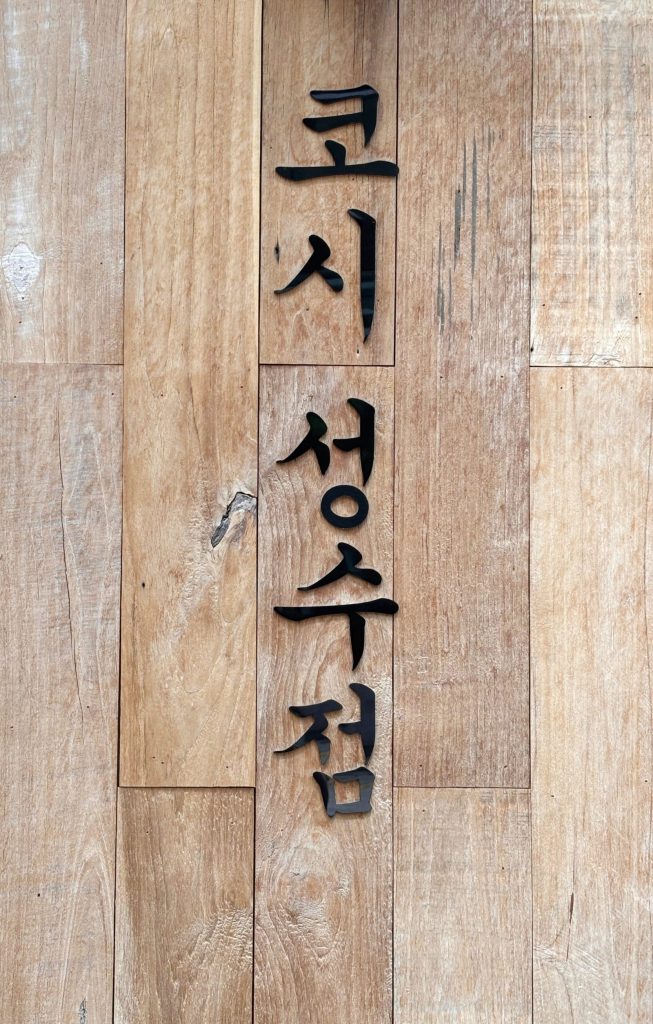
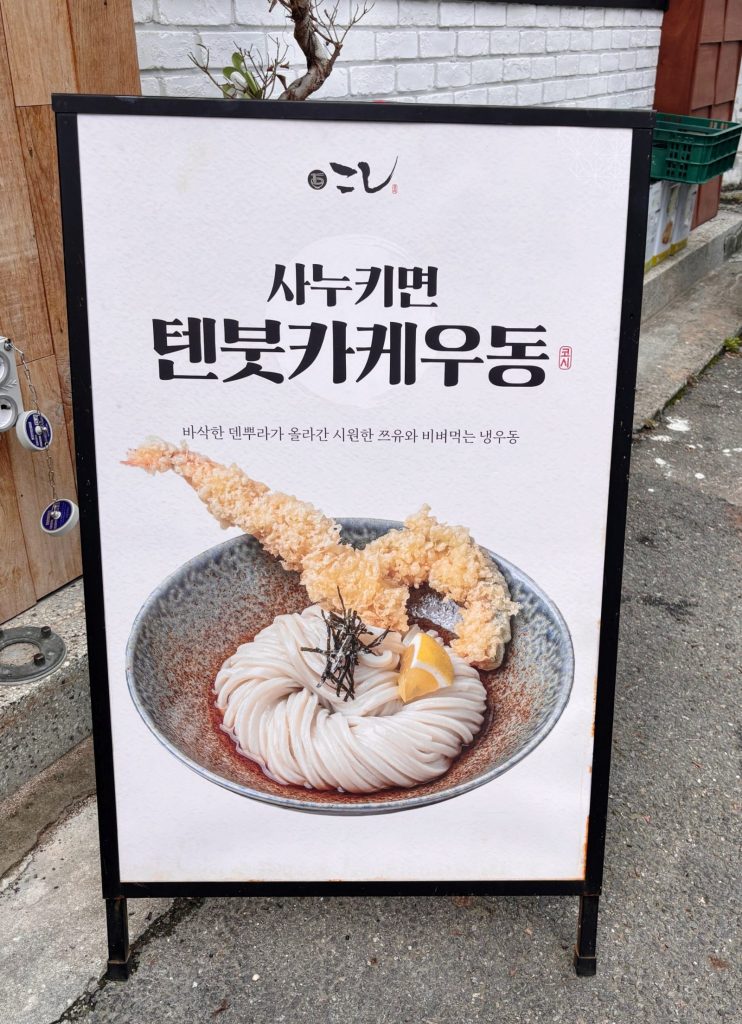
    Look for a wooden facade with “코시 성수점” written vertically on the wall, and a sidewalk board advertising their ten bukkake udon.

    Kosi Seongsu name carved on a wooden wall at the restaurant entrance
    The name is written vertically on the wooden wall.
    Sidewalk sign advertising Sanuki ten bukkake udon outside Kosi Seongsu
    The sidewalk sign shows off their tempura bukkake udon.

    We went on a Sunday at lunchtime, and there was already a line when we arrived. Turnover was not slow, but if you are heading over straight after a show, build in some waiting time.

    What we ordered

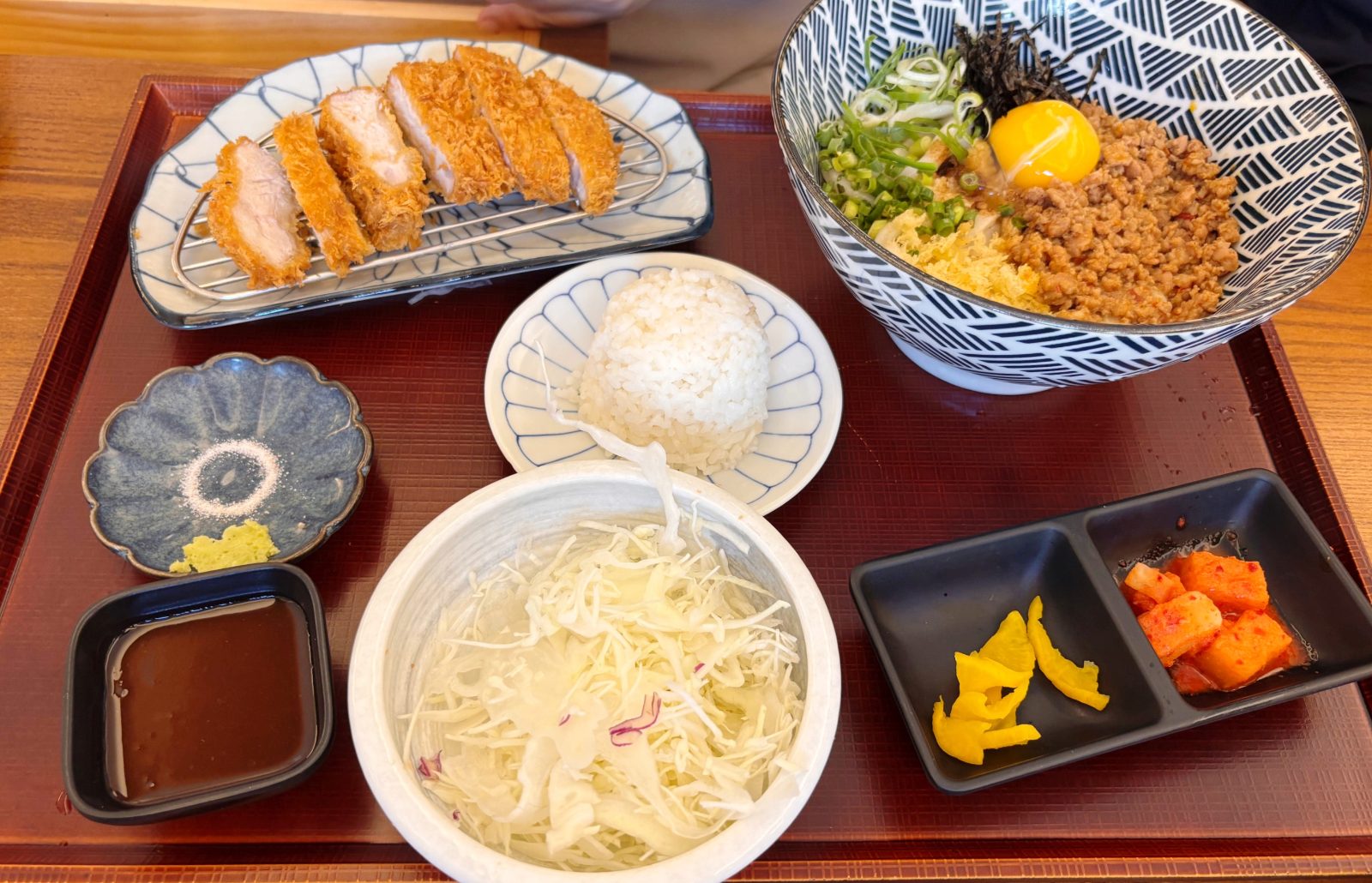
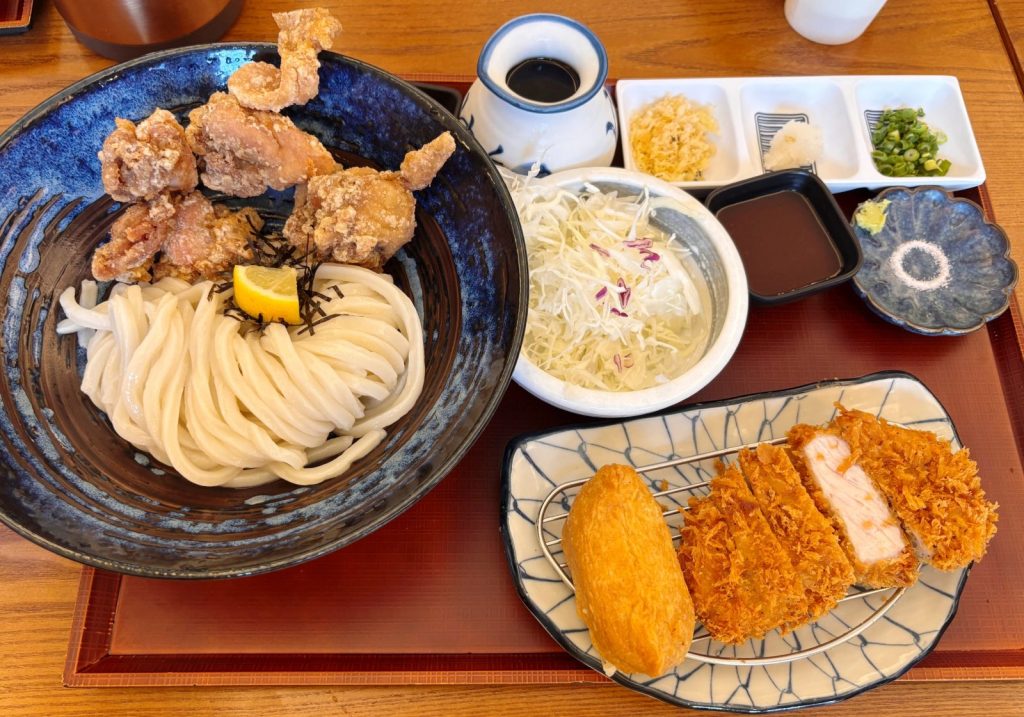
    To make choosing easier, here is how our table worked out. My child picked the zaru soba. I had the maze udon upgraded to a set with tonkatsu, and because it was hot out we also ordered the toriten bukkake udon as a set. One warm noodle to mix, one cold noodle and one light soba meant everyone could try a bit of everything.

    One thing to know: at Kosi, tonkatsu comes with noodles when you add a set (정식, jeongsik). According to the menu, a set adds a 120 g pork cutlet to your udon or soba.

    1. Zaru soba (자루소바, jaru soba)

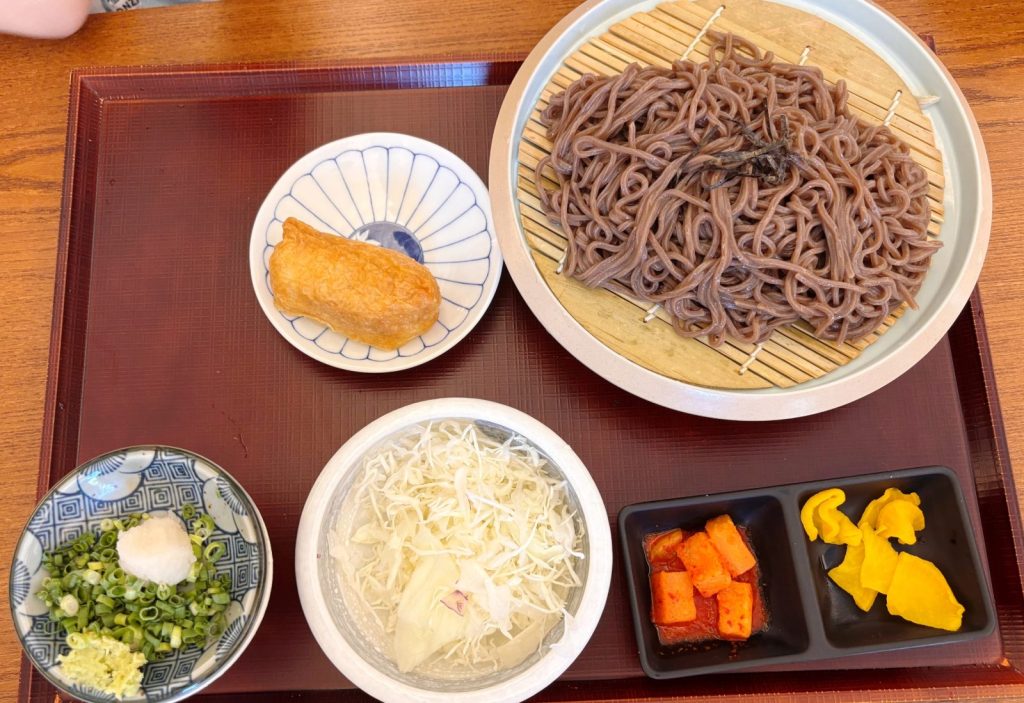
    My little one ate the cold buckwheat noodles completely plain: no grated radish, no green onion, no wasabi, just noodles dipped in the broth. Even so, I got a big thumbs-up and “this is so good.” The dipping broth was not salty, so it was easy for a child to eat. The tray also came with one piece of inari sushi, and it was nicely plump and filled.

    Zaru soba with dipping broth, inari sushi, cabbage and pickles at Kosi Seongsu
    Zaru soba with dipping broth and a piece of inari sushi.

    2. Maze udon with a tonkatsu set (마제우동 정식, maje udong jeongsik)

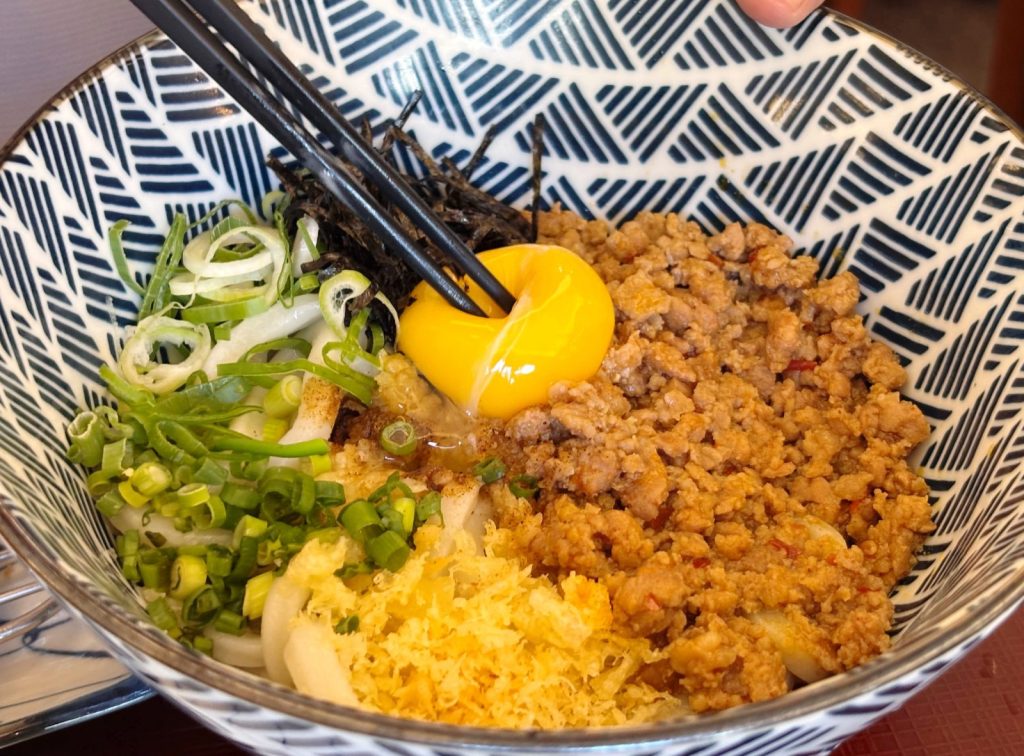
    Maze udon is a Japanese-style mixed noodle dish: thick noodles topped with seasoned minced meat and other toppings, which you toss together with the sauce. The noodles were wonderfully bouncy. The egg yolk on top was fresh, and once I mixed it into the sauce the flavor of the noodles really came through. This is the one I would recommend without hesitation.

    Maze udon topped with egg yolk, minced meat and green onions at Kosi Seongsu
    Maze udon with egg yolk, minced meat and green onions.
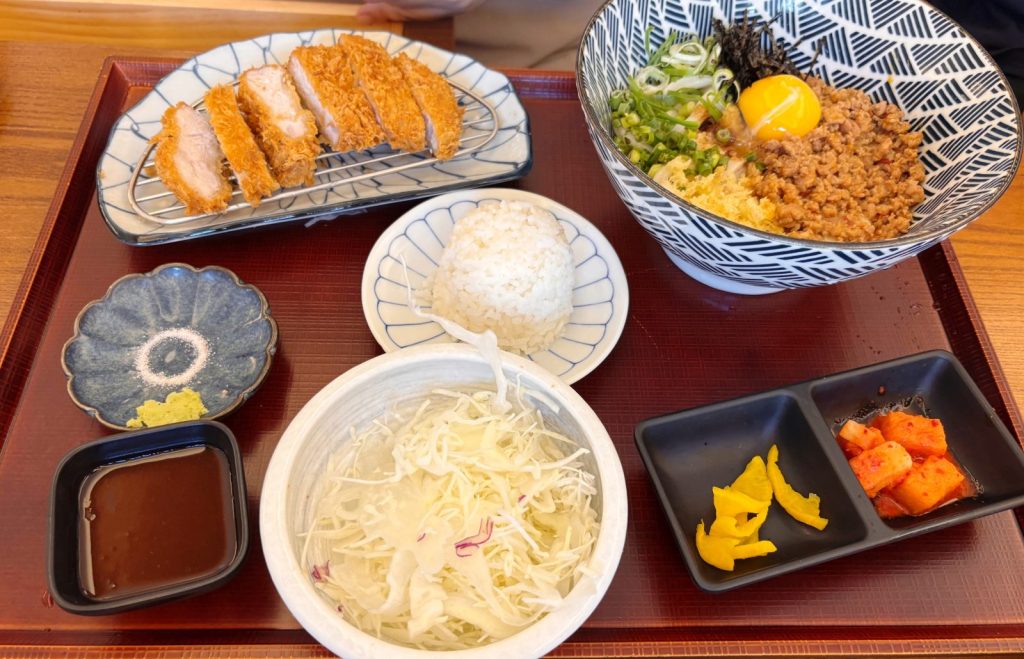
    Maze udon with a pork cutlet set, shredded cabbage and pickles on a tray at Kosi Seongsu
    Maze udon upgraded to a set with tonkatsu.

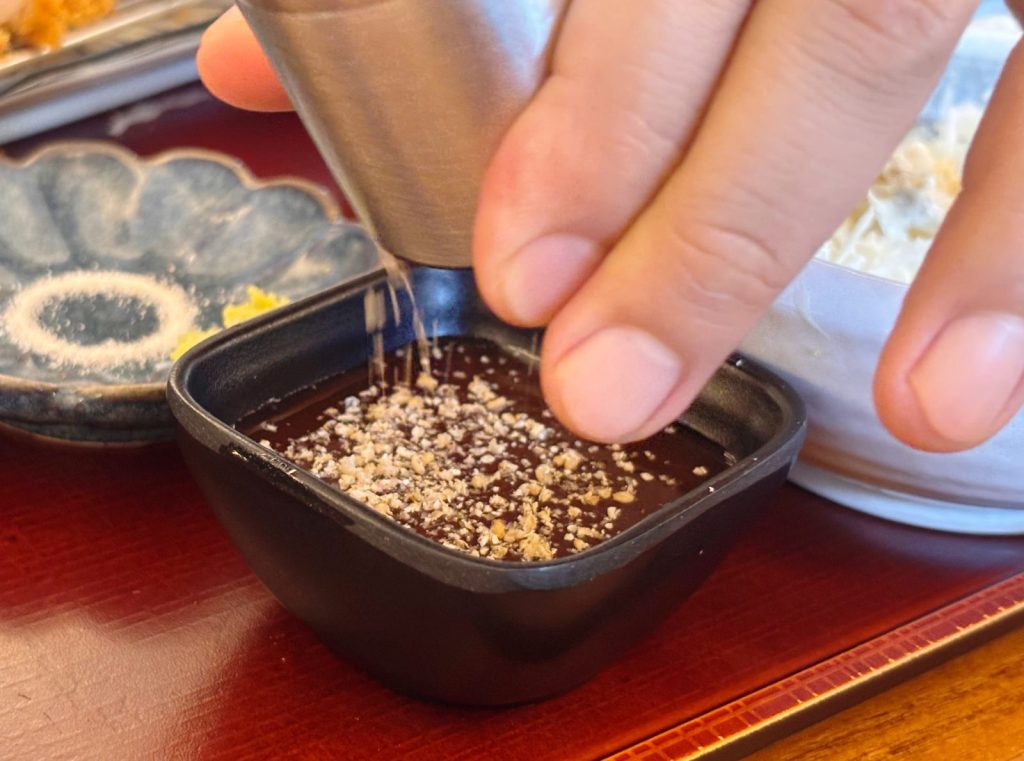
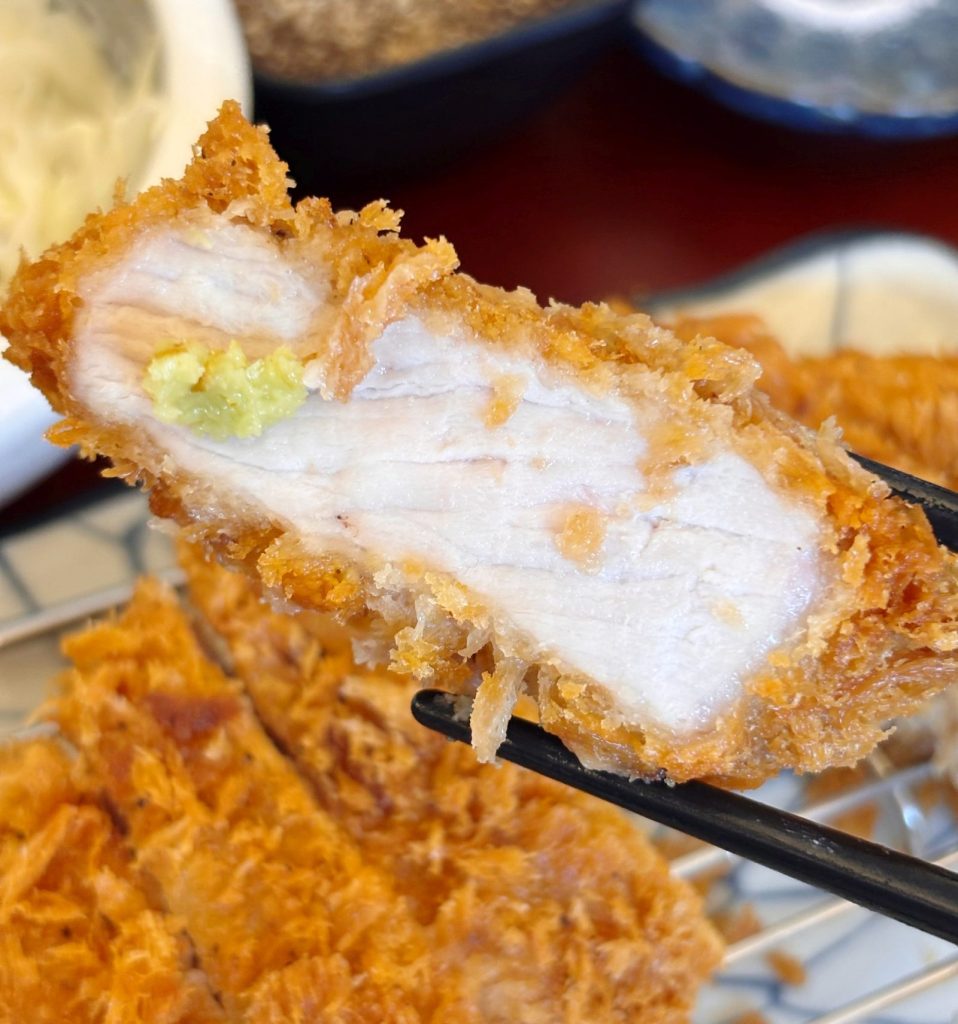
    For the tonkatsu, I ground plenty of sesame seeds into the dipping sauce, and it made the sauce noticeably better. The cutlet was thick, which could easily feel heavy, but it was not greasy at all, just nutty and savory. A small dab of wasabi on each bite kept things fresh.

    Grinding sesame seeds into tonkatsu sauce at Kosi Seongsu
    Grind the sesame seeds straight into the tonkatsu sauce.
    Thick pork loin cutlet with a dab of wasabi at Kosi Seongsu
    Thick pork cutlet with a little wasabi.

    3. Toriten bukkake udon set (토리텐붓카케우동 정식, toriten butkake udong jeongsik)

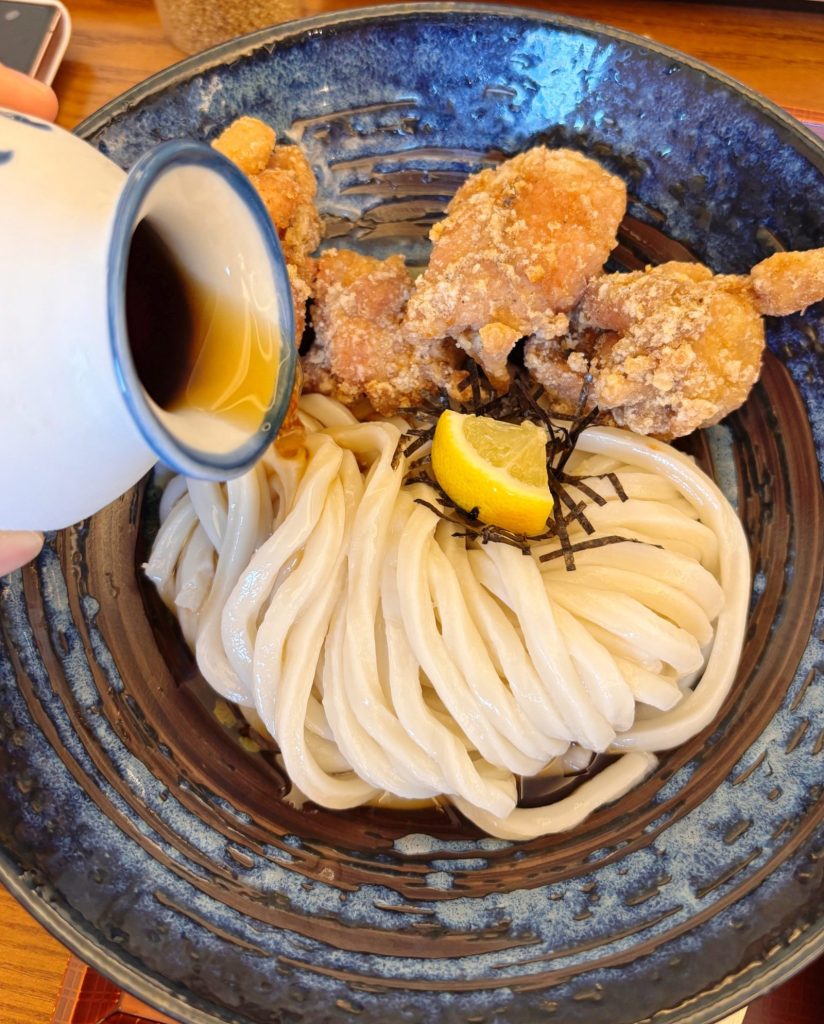
    It was a hot day, so cold udon was calling. Bukkake udon is chilled noodles that you dress with a small amount of cold tsuyu (soy-based sauce) rather than a full bowl of soup, and “toriten” means it comes topped with fried chicken. We poured the sauce over so the noodles were just coated, then added tempura flakes and green onion.

    Pouring cold tsuyu over toriten bukkake udon at Kosi Seongsu
    Pouring the cold sauce over the toriten bukkake udon.

    The chewy noodles soaked up the sauce beautifully, and they stayed firm right to the last bite. We shared the fried chicken with the kids, and they ate it well. Even the sliced cabbage on the side was tasty with a spoonful of the sauce on top.

    Toriten bukkake udon with fried chicken and a pork cutlet set at Kosi Seongsu
    Toriten bukkake udon set, with tonkatsu on the side.
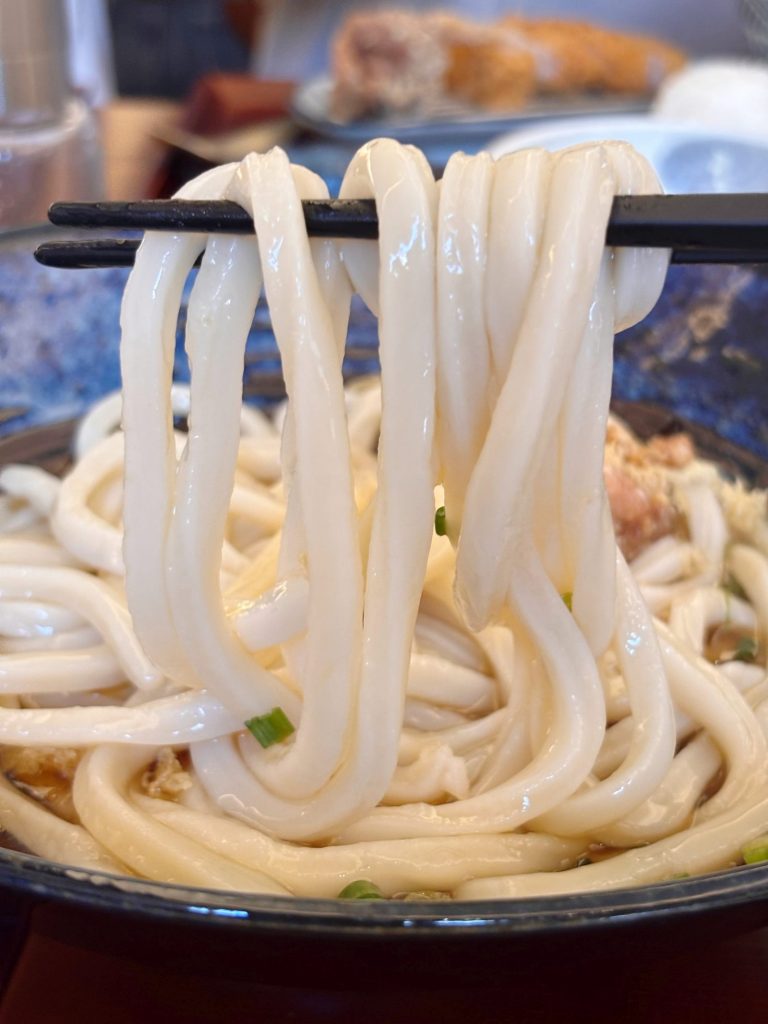
    Chewy Sanuki udon noodles lifted with chopsticks at Kosi Seongsu
    The noodles stayed springy to the end.

    Menu and prices

    DishPrice
    Bukkake udon (cold)
    붓카케우동
    ₩9,000
    ~$6.40
    Zaru udon
    자루우동
    ₩9,500
    ~$6.80
    Zaru soba
    자루소바
    ₩10,500
    ~$7.50
    Maze udon
    사누키제면 마제우동
    ₩11,000
    ~$7.90
    Toriten bukkake udon
    토리텐붓카케우동
    ₩11,000
    ~$7.90
    Ten bukkake udon (shrimp and pumpkin tempura)
    텐붓카케우동
    ₩11,000
    ~$7.90
    Kake udon (hot)
    카케우동(온)
    ₩9,000
    ~$6.40
    Pork loin tonkatsu
    생등심 돈카츠
    ₩11,500
    ~$8.20
    Half and half (pork loin + cheese cutlet)
    생등심 반반카츠
    ₩13,500
    ~$9.60
    Katsudon
    수제 카츠동
    ₩11,000
    ~$7.90
    Zaru soba set (with tonkatsu)
    자루소바 정식
    ₩15,500
    ~$11.10
    Maze udon or toriten bukkake udon set
    마제우동 / 토리텐붓카케우동 정식
    ₩16,000
    ~$11.40

    *USD figures are rough estimates at about ₩1,400 to $1. Single-dish prices are from Naver Place (menu updated April 2026). Set prices are from the printed menu at our visit, since Naver does not list them. Prices can change.

    Tips for visitors

    • Mind the break time. The kitchen closes from 15:00 to 17:00, so a late lunch after a matinee needs some planning.
    • Expect a weekend line. We waited at Sunday lunch; turnover was steady.
    • Want tonkatsu and noodles? Order a set (jeongsik), which adds a cutlet to your udon or soba.
    • Grind the sesame. Add plenty of ground sesame to the tonkatsu sauce, and try a little wasabi on the cutlet.
    • Bukkake udon tip: pour the cold sauce in gradually and mix as you go, then add tempura flakes and green onion to taste.
    • Parking. There are only two free spaces in front of the shop for one hour, so the subway is easier.
    • Ordering phrase: “Jeongsik-euro juseyo” (정식으로 주세요) means “Make it a set, please.”

    Is it kid-friendly?

    Yes, in our experience. The atmosphere is calm, the broths and sauces are not harsh, so picking something for the kids was easy, and Naver lists high chairs. Being able to share udon, soba and tonkatsu at one table also makes it a good fit for families who all want something different.

    My verdict

    If you are looking for tonkatsu near Seoul Forest and want great udon on the same tray, I would happily recommend Kosi Seongsu. The noodles have real bounce, the cutlet is thick without being greasy, and it is a calm place to eat with kids. Just allow for a wait on weekends. Next time we are around Seoul Forest, I would like to go back.

    Kosi Seongsu FAQ

    Where is Kosi Seongsu?

    Kosi Seongsu is on the ground floor of 31 Sangwon 1-gil, Seongdong-gu, Seoul. Naver puts it about 115 m from Exit 6 of Ttukseom Station (Line 2), and the restaurant says it is about a five-minute walk from Exit 1 of Seoul Forest Station. From Seoul Forest Theater it took us around seven minutes on foot.

    What are Kosi Seongsu’s opening hours?

    Naver lists Kosi Seongsu as open every day from 11:00 to 21:00, with a break from 15:00 to 17:00 and last order at 20:30.

    What is a “set” (jeongsik) at Kosi Seongsu?

    At Kosi Seongsu you can upgrade an udon or soba to a set, which adds a 120 g pork cutlet (tonkatsu) to the tray. If you want tonkatsu with your noodles, this is the easiest way to get both.

    Is there a wait at Kosi Seongsu?

    We arrived at Sunday lunchtime and there was already a line. It moved at a reasonable pace, but on weekends, especially right after a show at Seoul Forest Theater, plan for some waiting time.

    Is Kosi Seongsu good for kids?

    It was for us. The room is calm, the broths and sauces are not harsh, and Naver lists high chairs. My child loved the plain zaru soba, and the kids happily shared the fried chicken from our cold udon.

    More easy family meals: try Sammi Tantanmyeon in Sinchon for honey chashu lo mein, or Namaste Dongmyo for mild Indian curry by the toy street. See all kid-friendly restaurant guides and Seoul restaurant guides.

    Visited: August 2026. Prices and hours last checked: October 20, 2026, on Naver. Please check Naver Map before you go.

    This post is based on my own visit and photos. I used AI tools to help with the English wording.
  • Namaste Dongmyo: Indian Curry Across from Dongdaemun Toy Street

    Namaste Dongmyo: Indian Curry Across from Dongdaemun Toy Street

    In short

    Namaste Dongmyo (나마스테 동묘점) is a second-floor Indian and Nepali restaurant about 29 m from Dongmyo Station Exit 5 (Lines 1 and 6), directly across from the Dongdaemun toy street. Curries such as chicken tikka masala cost ₩13,500 (about $9.60), naan is ₩3,000, and it is open 11:00–22:00 every day. A relaxed pick for families, curry fans and anyone exploring Dongmyo and Dongdaemun.

    We found Namaste Dongmyo almost by accident. We had just finished a keycap-making session at Pyeonghwa Market in Dongdaemun and thought about eating right there, but decided to walk a little further so we could also look around the Dongdaemun toy street. That walk led us here.

    The location turned out to be the best part of the plan. The restaurant sits right opposite the toy street, so we had lunch first and went straight to the toy shops afterward without any backtracking. If you are spending a day around Dongmyo’s flea markets or the toy street, it slots in very neatly.

    Quick facts

    • Korean name나마스테 동묘점 (Namaste, Dongmyo branch)
    • Address2F, 18 Jibong-ro, Jongno-gu, Seoul
      서울 종로구 지봉로 18 2층
    • SubwayDongmyo Station (동묘앞역, Lines 1 and 6), Exit 5, about 29 m
    • HoursDaily 11:00–22:00, last order 21:00
    • PriceCurries ₩13,000–14,000 (about $9–10), naan ₩2,500–7,000, thali set ₩15,000, couple set ₩50,000
    • Good forFamilies with kids, curry lovers, lunch before or after the toy street or Dongmyo flea market
    • Phone02-2232-2286
    • NotesReservations, group seating and takeout available. Free parking in the building lot on weekdays when there is space; on weekends use the paid public lot at Changsin 1-dong Community Center (about 110 m). No pets.
    • MapOpen in Naver Map

    Finding it

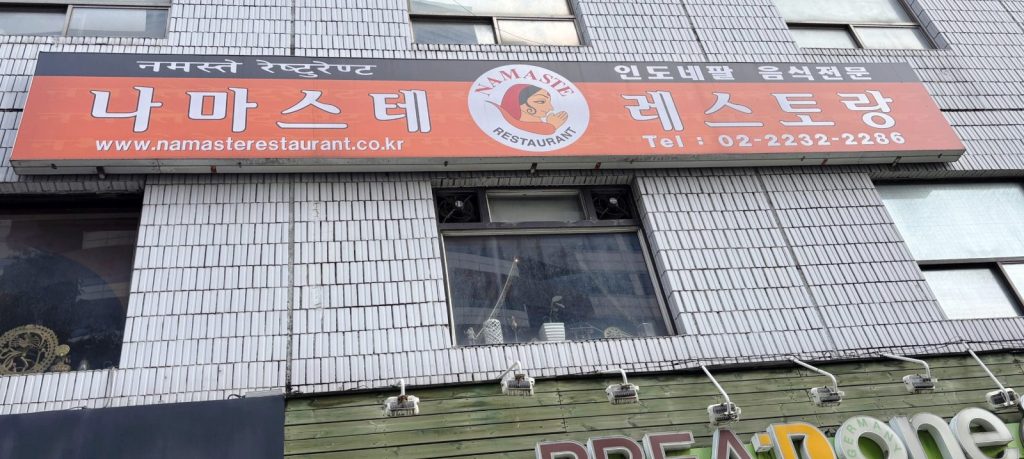
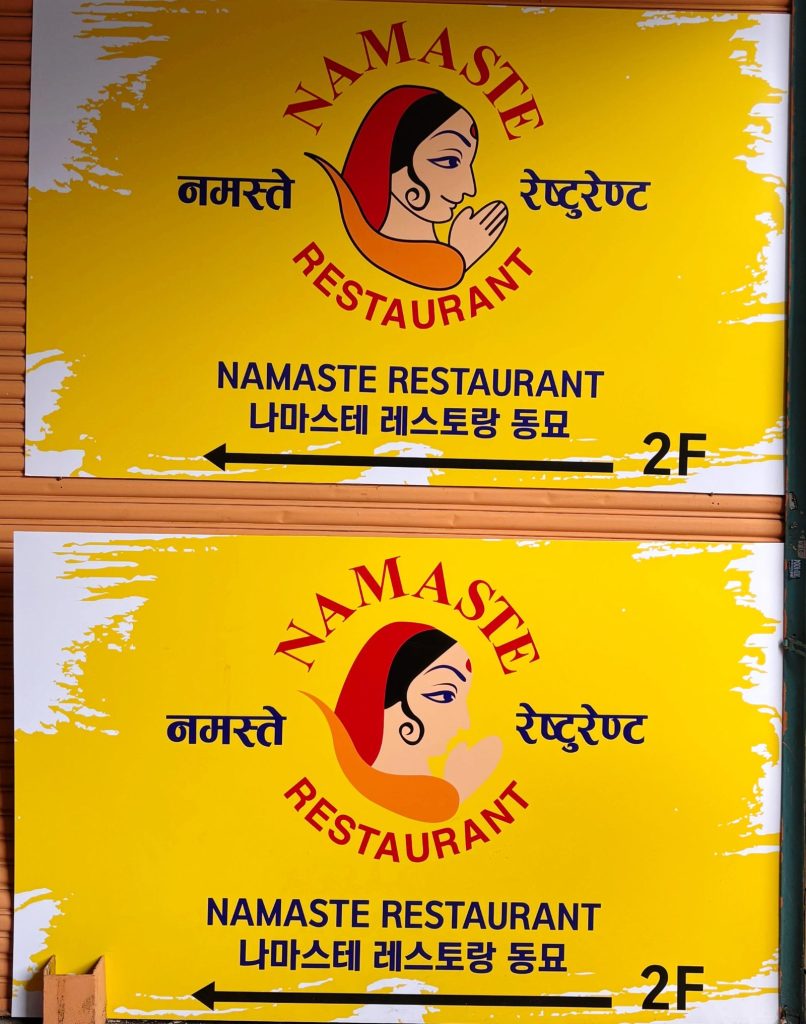
    Take the subway to Dongmyo Station and use Exit 5. Naver says the restaurant is only about 29 m from the exit, in the building just in front of you. The one catch is that it is on the second floor, so it is easy to walk past if you only scan the shopfronts at street level. Look up for the red Namaste sign, and follow the yellow “2F” signs at the entrance.

    📍 Namaste Dongmyo (나마스테 동묘점), 2F, 18 Jibong-ro, Jongno-gu · Naver Map · Google Maps

    Red Namaste restaurant sign on the second floor of a building near Dongmyo-ap Station
    Look up: the restaurant is on the second floor.
    Yellow Namaste Restaurant signs pointing to the second floor at Dongmyo
    Yellow signs at street level point you up to 2F.

    Walking in, I was surprised by how neat everything was. It did not match the image I usually have of an Indian restaurant. The tables were set like a classic Korean-style Western restaurant, and the plates and cutlery were genuinely pretty, which also made the food look great in photos. Most importantly for us, it felt easy to sit there with the kids.

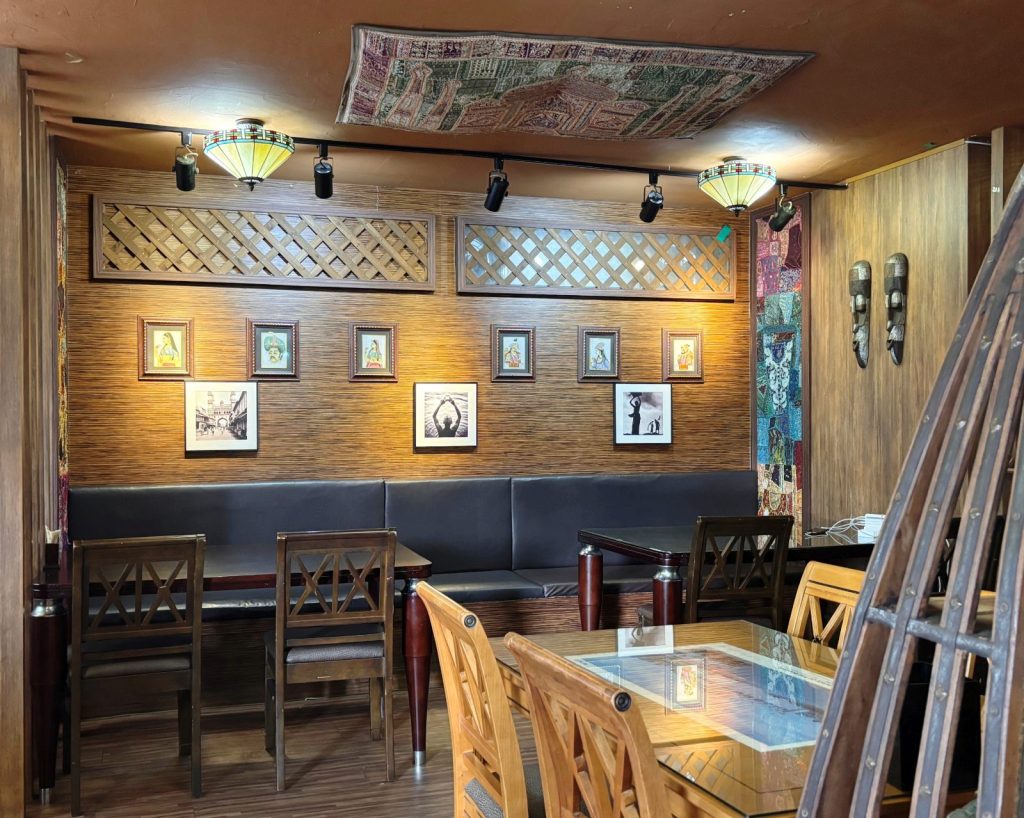
    Wood-paneled dining room with set tables inside Namaste Dongmyo
    A tidy, wood-paneled dining room.
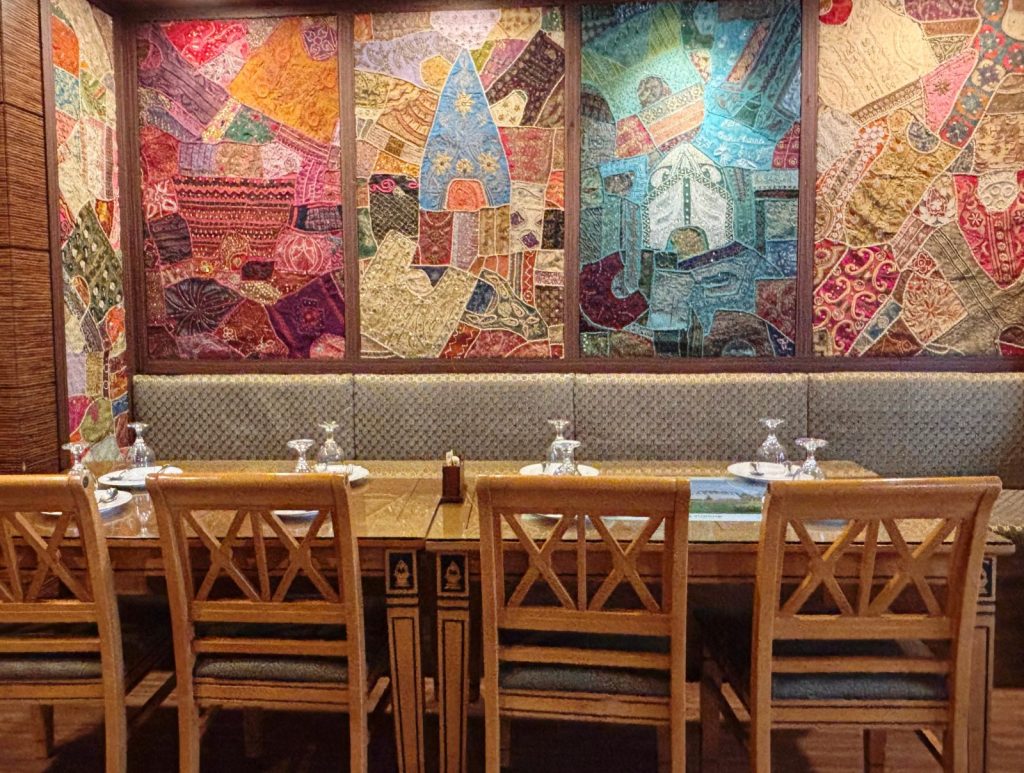
    Colorful Indian tapestry wall above booth seating at Namaste Dongmyo
    Colorful textiles on the walls add an Indian touch.

    What we ordered

    For the table we ordered chicken tikka masala, chicken butter curry, chaumin (Nepali stir-fried noodles), a butter naan, a garlic naan, a bowl of plain rice and a mango sweet lassi. We did not leave a single thing behind.

    1. Chicken tikka masala (치킨 티카 마살라, chikin tika masalla)

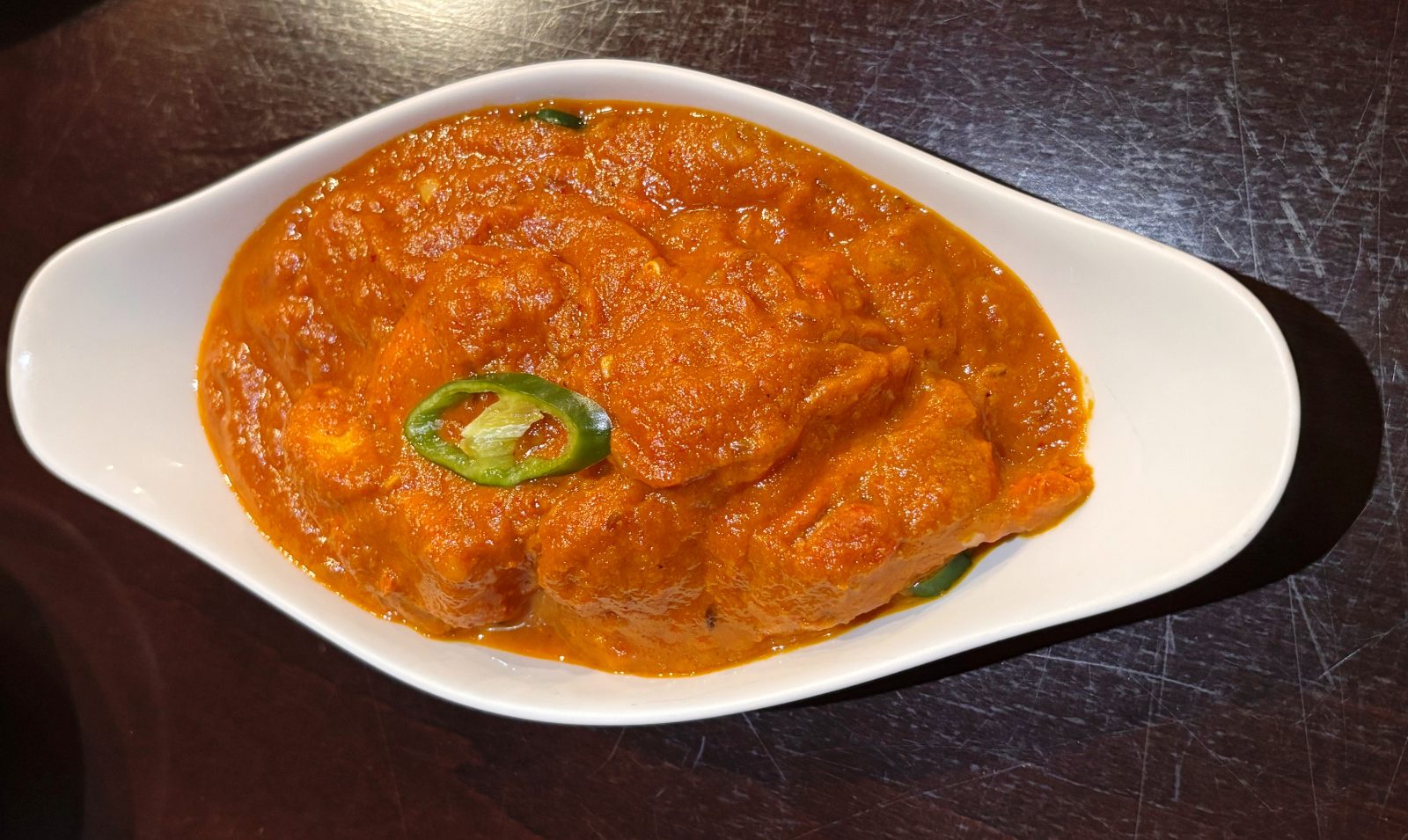
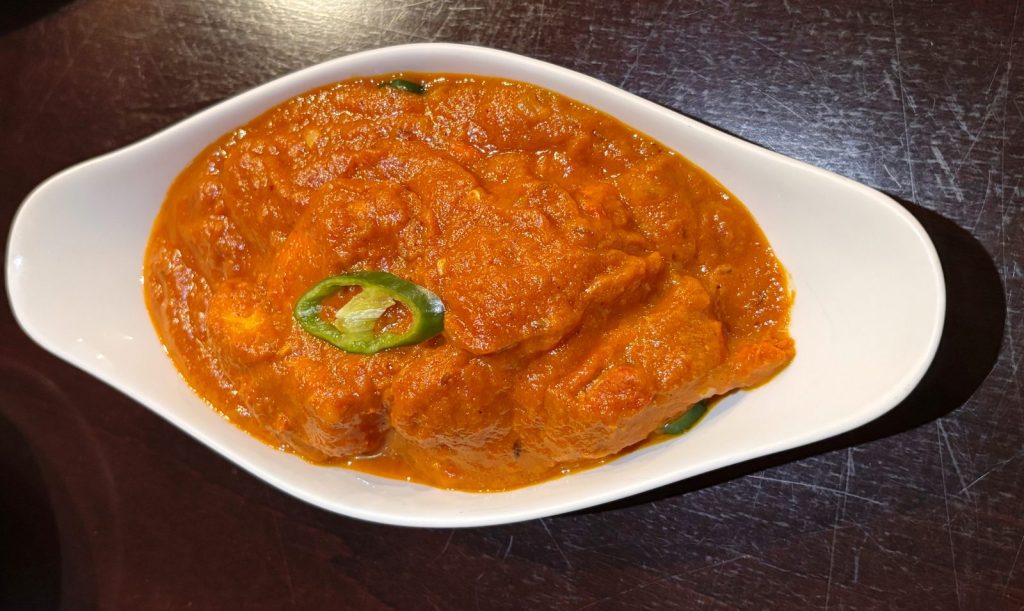
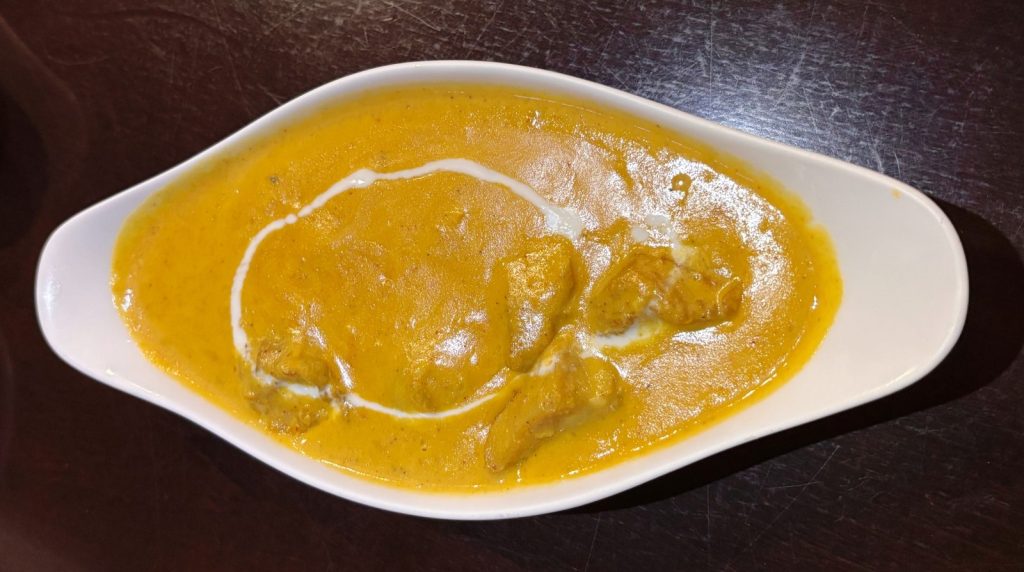
    My first spoonful was spicier than I expected, in a good way. The chicken inside was so tender that it split with a light press of the spoon. The curry tasted clean, with no off flavors, and that steady heat made it very easy to keep eating.

    Chicken tikka masala with sliced green chili in an oval white dish at Namaste Dongmyo
    Chicken tikka masala, topped with sliced green chili.

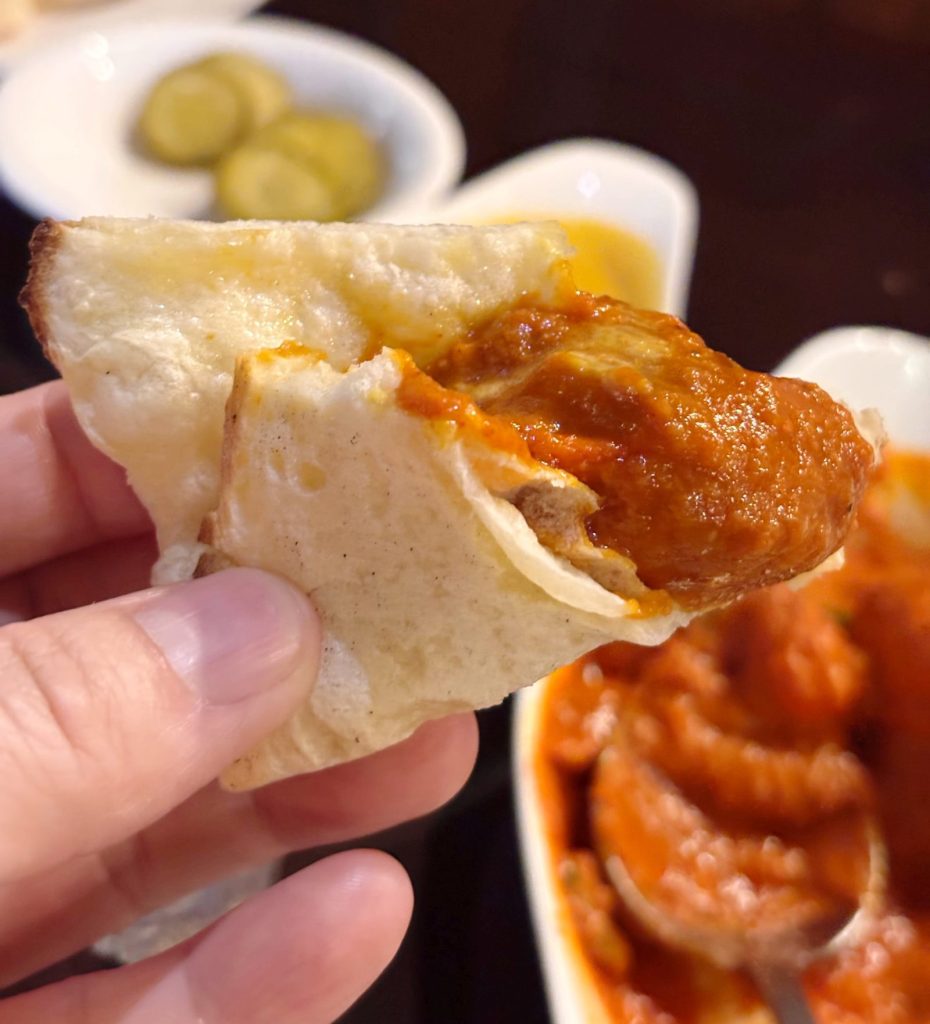
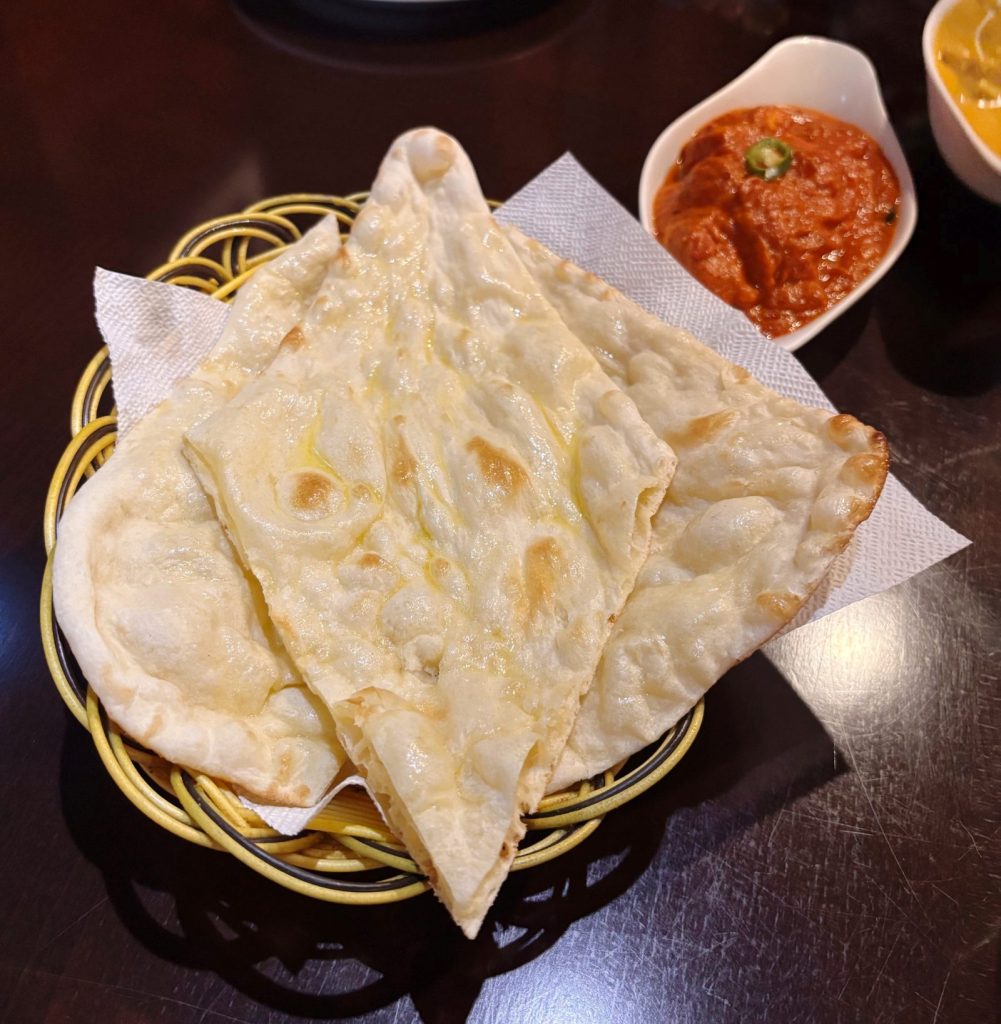
    It was even better wrapped in garlic naan. The toasty, nutty bread and the gentle garlic aroma softened the masala’s kick perfectly. If you order one combination here, make it this one.

    Garlic naan dipped in chicken tikka masala at Namaste Dongmyo
    Garlic naan and tikka masala: the pairing I would order again.
    Basket of freshly baked naan with curry on the side at Namaste Dongmyo
    The naan arrived freshly baked and still warm.

    2. Chicken butter curry (치킨버터커리, chikin beoteo keori)

    We ordered this one so the kids would have something easy to eat, but it ended up being my personal favorite of the day. The sweetness from the onions blends into the curry and gives it a smooth, rich flavor. It is not spicy at all, so the kids mixed it into naan and rice and ate happily. If you do not handle spice well, or you are visiting with children, put this on your order.

    Creamy chicken butter curry in an oval white dish at Namaste Dongmyo
    Chicken butter curry: mild, creamy and my top pick.

    3. Chaumin (차우민, chaumin)

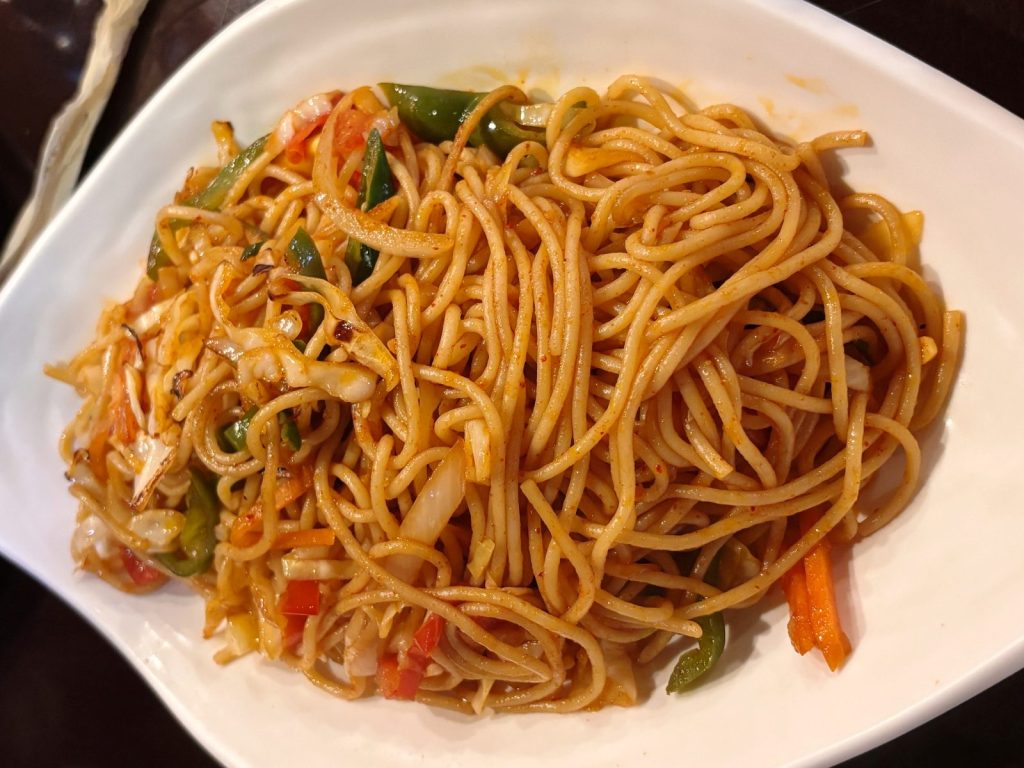
    Chaumin is a Nepali-style fried noodle dish. There were far more vegetables in it than I expected, and the noodles were nicely cooked and tossed in a spicy sauce. It is a little oily, so after a while it starts to feel heavy, but a bite of the tikka masala in between resets your palate. Going back and forth between the two was half the fun. The portion is generous and easy to share.

    Nepali-style chowmein stir-fried noodles with vegetables at Namaste Dongmyo
    Chaumin, packed with vegetables.

    4. Mango sweet lassi (망고 스위트 라씨, manggo seuwiteu rassi)

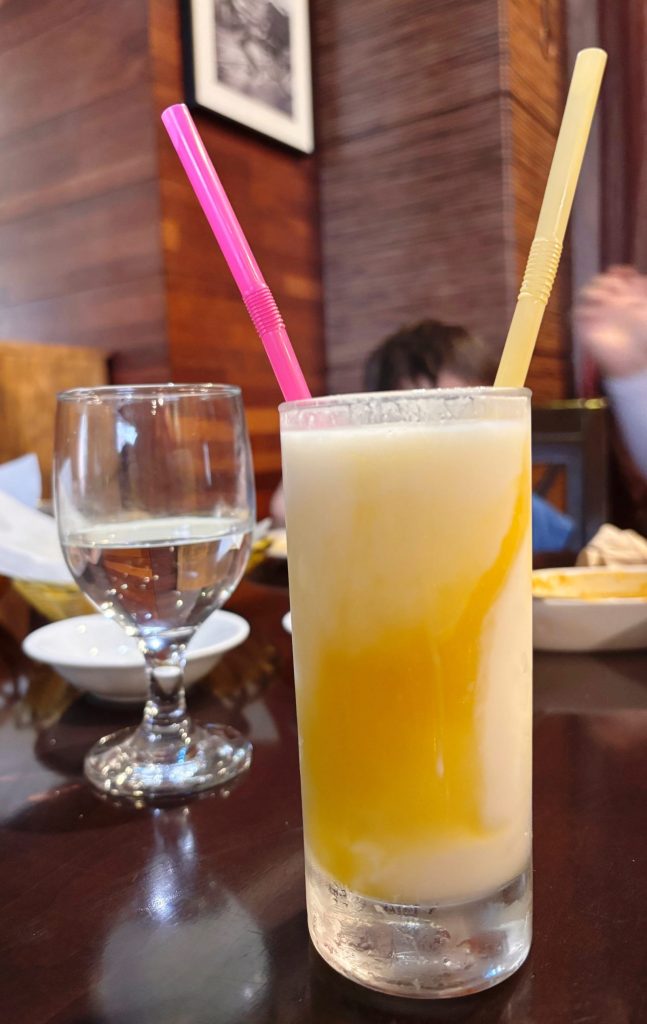
    This was a little reward for the kids after they ate well. Lassi is a yogurt-based drink, so it is soft and gentle rather than sharp, and it is perfect after spicy curry. The kids loved it.

    Tall glass of mango sweet lassi with straws at Namaste Dongmyo
    Mango sweet lassi to finish.

    Menu and prices

    DishPrice
    Chicken tikka masala
    치킨 티카 마살라
    ₩13,500
    ~$9.60
    Chicken butter curry
    치킨버터커리
    ₩13,500
    ~$9.60
    Palak paneer (spinach and cheese curry)
    팔락파니르
    ₩13,500
    ~$9.60
    Chaumin (Nepali fried noodles)
    차우민
    ₩10,000
    ~$7.10
    Garlic naan / Butter naan
    마늘 난 / 버터 난
    ₩3,000
    ~$2.10
    Plain rice
    기본 밥
    ₩1,500
    ~$1.10
    Indian thali (1-person set)
    인디안탈리
    ₩15,000
    ~$10.70
    Couple set (for 2)
    커플세트(2인)
    ₩50,000
    ~$35.70
    Tandoori chicken (whole)
    탄두리치킨
    ₩18,000
    ~$12.90
    Lamb biryani
    양고기 브리야니
    ₩14,000
    ~$10
    Samosa (2 pcs)
    사모사
    ₩5,000
    ~$3.60

    *USD figures are rough estimates at about ₩1,400 to $1. Prices come from Naver Place (menu updated July 2026) and the printed menu at our visit; the lassi price is not listed on Naver. Prices can change.

    Tips for visitors

    • Look up. The restaurant is on the second floor, so check the signs above street level.
    • Mix your naan. If you order two or more curries, get different naan, like butter and garlic, and find the best match for each curry.
    • Balance the heat. Pair the spicier tikka masala with the mild butter curry, especially with kids at the table.
    • Plan around the toy street. It is right across the road, so lunch here and shopping there work well back to back.
    • Parking. On weekends, head for the paid public lot at Changsin 1-dong Community Center; the subway is easier.
    • Ordering phrase: “Igeo juseyo” (이거 주세요) means “This one, please.” Pointing at the photo menu works fine.

    Is it kid-friendly?

    Yes, in our experience. The room is calm and comfortable, the mild chicken butter curry went down easily with naan and rice, and the mango lassi was a hit. Skip the tikka masala for little ones, since it has real heat.

    My verdict

    The curries were clean, the naan came out freshly baked and warm, and above all we could eat comfortably with the kids. If you are craving Indian food near Dongmyo Station, or planning a family outing to the Dongdaemun toy street, Namaste Dongmyo is well worth the stop.

    Namaste Dongmyo FAQ

    Where is Namaste Dongmyo?

    Namaste Dongmyo is on the second floor of 18 Jibong-ro, Jongno-gu, Seoul. Naver puts it about 29 m from Exit 5 of Dongmyo Station (Lines 1 and 6), right across from the Dongdaemun stationery and toy street.

    What are Namaste Dongmyo’s opening hours?

    Naver lists Namaste Dongmyo as open every day from 11:00 to 22:00, with last order at 21:00.

    Is the curry at Namaste Dongmyo spicy?

    It depends on the dish. The chicken tikka masala at Namaste Dongmyo was spicier than I expected, while the chicken butter curry is mild, creamy and slightly sweet, so it suits kids and anyone who avoids heat.

    What should I order at Namaste Dongmyo?

    For two to four people, I would get the chicken tikka masala (₩13,500), the chicken butter curry (₩13,500), the chaumin noodles (₩10,000), a garlic naan and a butter naan (₩3,000 each), plus a mango sweet lassi to cool things down.

    Is Namaste Dongmyo good for kids?

    It was for us. The dining room is calm and tidy, the chicken butter curry is not spicy, and our kids happily ate it with naan and rice, then finished a mango sweet lassi. Being opposite the toy street is a bonus.

    More family-friendly meals: try Hyunsuni in Yongsan for tteokbokki, or Sammi Tantanmyeon in Sinchon for honey chashu lo mein. See all kid-friendly restaurant guides and Seoul restaurant guides.

    Visited: September 2026. Prices and hours last checked: October 19, 2026, on Naver. Please check Naver Map before you go.

    This post is based on my own visit and photos. I used AI tools to help with the English wording.
  • Sammi Tantanmyeon Sinchon: Dan Dan Noodles & Honey Chashu Lo Mein

    Sammi Tantanmyeon Sinchon: Dan Dan Noodles & Honey Chashu Lo Mein

    In short

    Sammi Tantanmyeon (삼미탄탄면) Sinchon is a roomy Chinese noodle shop about 270 m from Sinchon Station Exit 3 (Line 2). The signature chashu dan dan noodles cost ₩10,500 (about $7.50), and the mild honey sauce chashu lo mein (₩13,000) is a hit with kids. It is open 11:00–22:20 daily and suits families, friends and solo diners who like a bit of heat.

    When people in Korea think of Chinese food, they usually picture jjajangmyeon (black bean noodles) and jjamppong (spicy seafood noodle soup). Sammi Tantanmyeon Sinchon is a nice change from that. The menu is built around dan dan noodles, lo mein, rice bowls and dim sum, and the shop says it aims for Sichuan-style dan dan noodles adjusted for Korean tastes.

    We went for a weekend lunch with the kids after a long “what should we eat” debate. The first thing I noticed was the space: big, bright and comfortable, with an interior that honestly made me feel like I had stepped into a noodle shop in Taiwan. Even in the middle of busy Sinchon, it felt like a short trip abroad.

    Quick facts

    • Korean name삼미탄탄면 신촌점 (Sammi Tantanmyeon, Sinchon branch)
    • Address1F, 16 Myeongmul-gil, Seodaemun-gu, Seoul
      서울 서대문구 명물길 16 1층
    • SubwaySinchon Station (Line 2), Exit 3, about 270 m (3 to 4 minutes on foot)
    • HoursDaily 11:00–22:20, last order 22:00
    • PriceNoodles ₩9,500–13,000 (about $7–9), dim sum ₩9,500, larger dishes ₩13,000–26,000
    • Good forFamilies with kids, spicy-noodle fans, a casual lunch in Sinchon, solo meals
    • PhoneNot listed on Naver Place
    • NotesNo parking (use nearby paid lots). Group tables for 4 to 6. Takeout available. Wheelchair-accessible entrance.
    • MapOpen in Naver Map

    Finding it

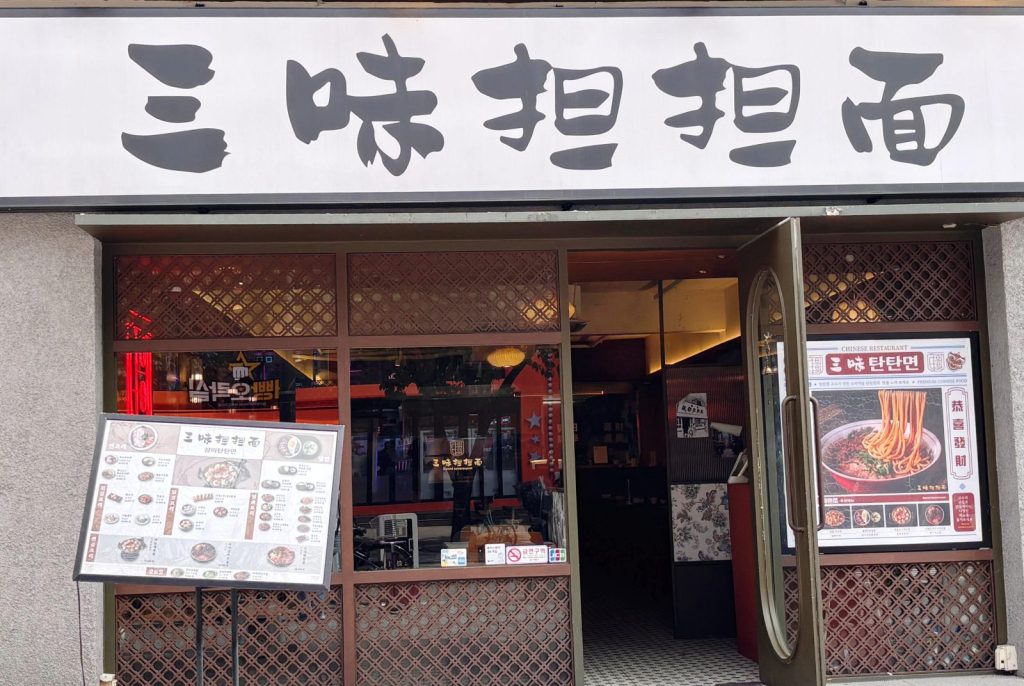
    Come out of Sinchon Station Exit 3 and walk toward the Hyundai Department Store U-Plex building, which takes about two minutes. In front of U-Plex, look to your right and you will see an ABC-Mart shoe store. Sammi Tantanmyeon is right next to it, with a white sign showing its Chinese name, 三味担担面.

    📍 Sammi Tantanmyeon Sinchon (삼미탄탄면 신촌점), 1F, 16 Myeongmul-gil, Seodaemun-gu · Naver Map · Google Maps

    Storefront of Sammi Tantanmyeon Sinchon with its Chinese sign 三味担担面
    The white sign reads 三味担担面, the Chinese name of Sammi Tantanmyeon.

    Inside there are booths along wood-paneled walls plus plenty of tables, and the spacing is generous. Even with kids at a busy weekend lunch, it never felt cramped or noisy.

    Booth seating and wood-paneled walls inside Sammi Tantanmyeon Sinchon
    Booth seating along the wall.
    Spacious dining room with tiled floor at Sammi Tantanmyeon Sinchon
    The dining room is large, so groups and families fit easily.

    What is dan dan noodles?

    Dan dan noodles (担担面, tantanmyeon in Korean) are a Sichuan street noodle dish. The name comes from the shoulder pole vendors once used to carry their noodles around. Here the broth is red with chili oil and rounded out with peanut sauce, and the shop explains that its chashu is pork neck simmered in a house sauce and then rested so the flavor soaks in. The noodles are pulled when you order rather than prepared in advance.

    What we ordered

    We ordered three dishes and shared them: the chashu dan dan noodles, the honey sauce chashu lo mein and the pork and garlic scape rice bowl.

    1. Chashu dan dan noodles (차슈탄탄면, chasyu tantanmyeon)

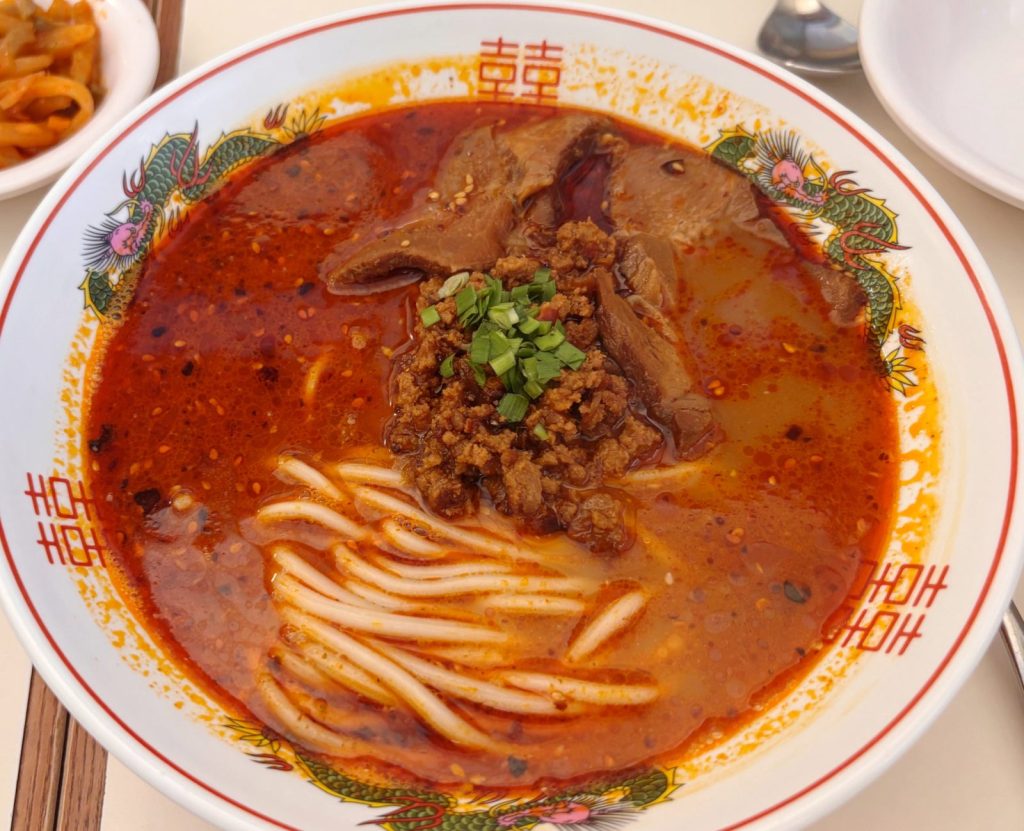
    This one is genuinely spicy, and that is exactly why I liked it. The chili-oil broth clings to the noodles and I slurped through the bowl without stopping. The heat is strong but the finish is clean, not heavy or muddy, so you keep reaching for another bite. The chashu was tender with no gamey smell, and the pork flavor still came through the spicy broth.

    Chashu dan dan noodles in red chili oil broth at Sammi Tantanmyeon Sinchon
    Chashu dan dan noodles: red chili-oil broth, chashu and minced pork on top.

    It is the bowl I would order on a day when I want something fiery to shake off stress. Next time I want to finish the leftover broth with rice, because it would work so well.

    Lifting noodles and chashu pork from the spicy dan dan broth at Sammi Tantanmyeon
    The chashu stays soft even sitting in the spicy broth.

    2. Honey sauce chashu lo mein (허니소스 차슈 로미엔, heoni soseu chasyu romien)

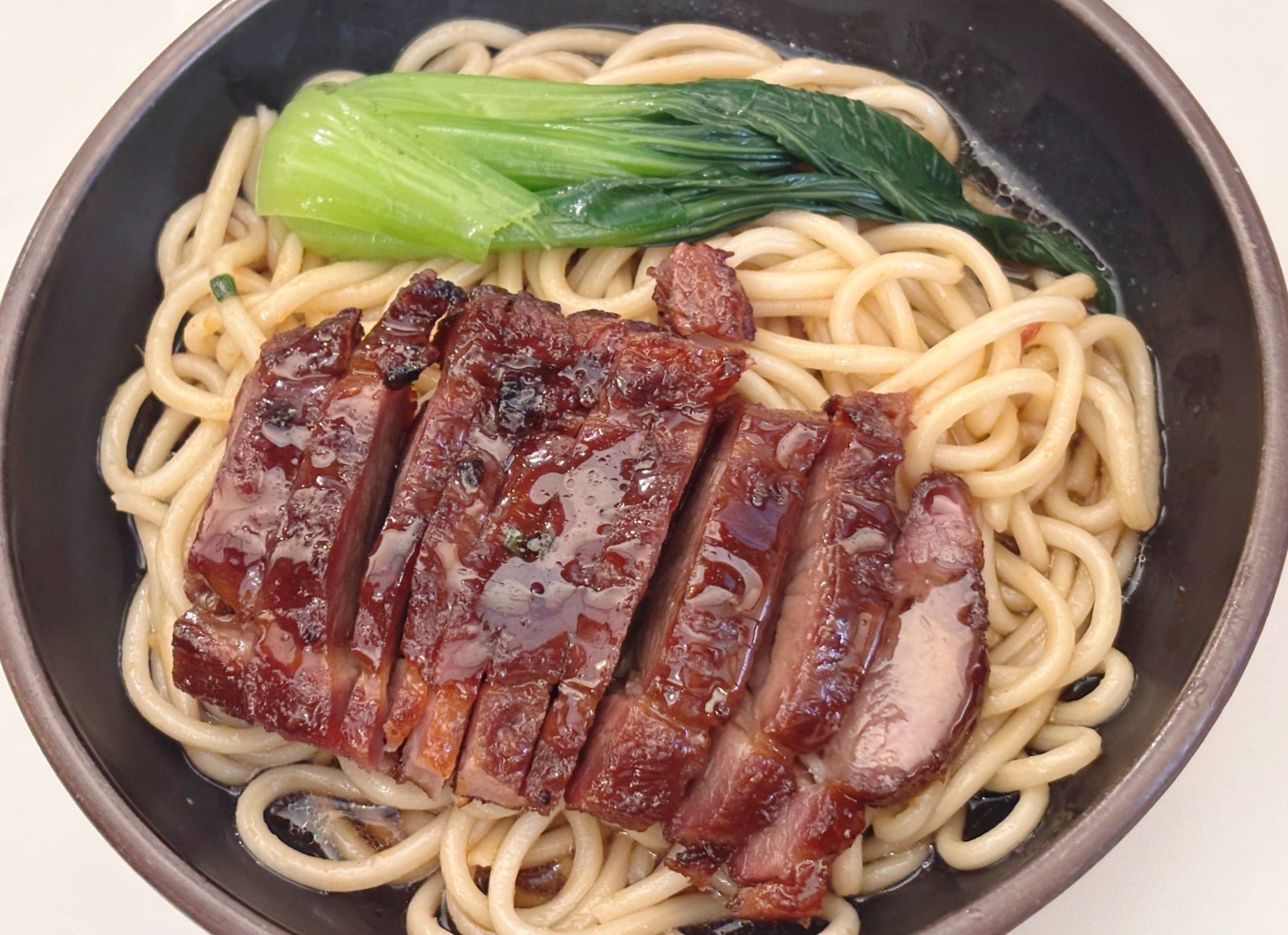
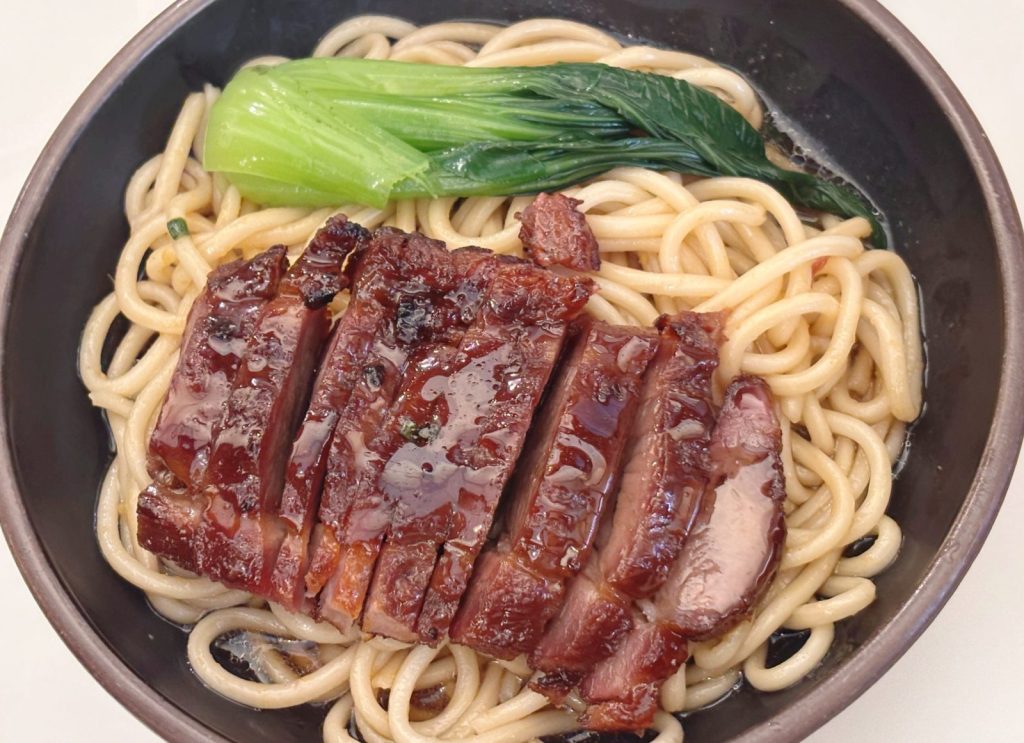
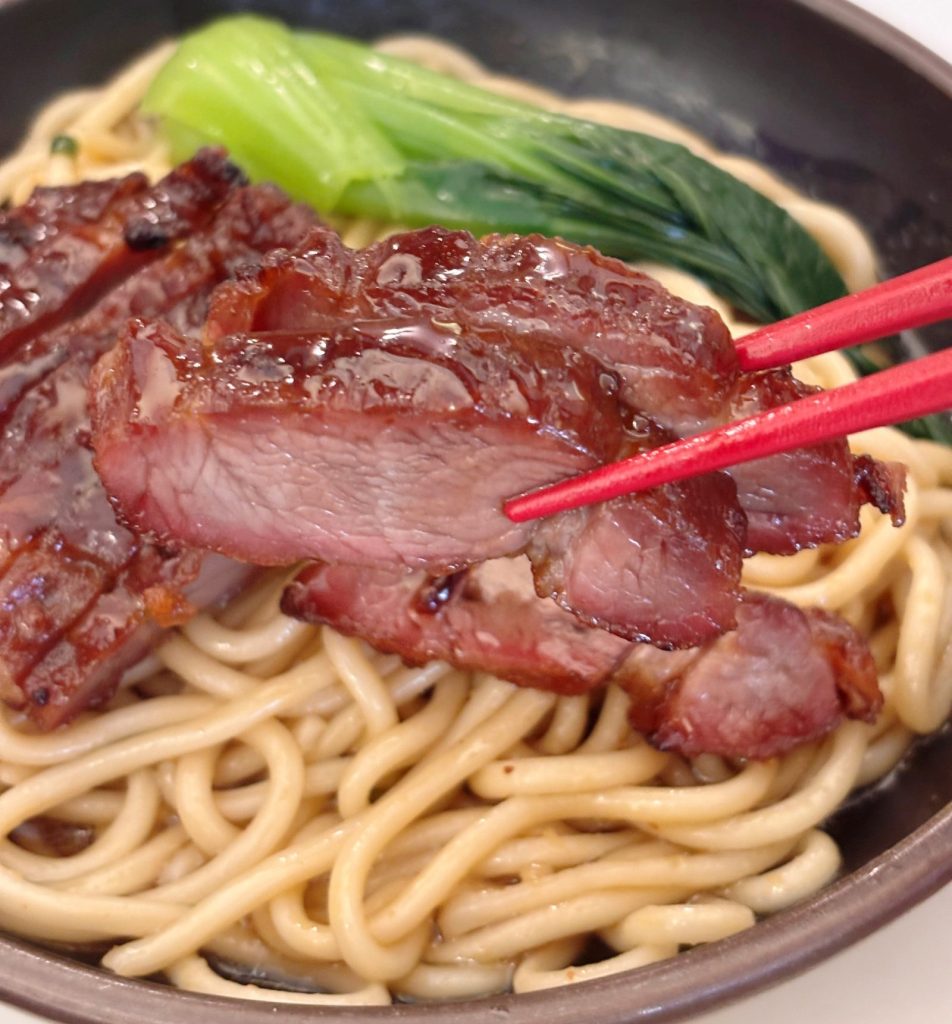
    This was the dish I fell for first. The chashu is sweet, salty and tender, with no porky smell at all, and the sauce coats medium-thick noodles evenly. One bite of the pork honestly made my eyes go wide. It looks bold and heavily sauced, yet it does not taste harsh, and I did not get tired of it all the way to the bottom of the bowl. Even the bok choy on the side was good enough that nothing was left.

    Honey sauce chashu lo mein with sliced pork and bok choy at Sammi Tantanmyeon Sinchon
    Honey sauce chashu lo mein, our favorite of the day.

    The kids loved this one. One of mine is usually picky about meat, but asked for this before anything else. It is sweet without being greasy, so it works for adults too. If you are eating Chinese food in Sinchon with children, this is the bowl to order.

    Close-up of glossy honey sauce chashu pork over lo mein noodles
    Glossy honey-glazed chashu over the noodles.

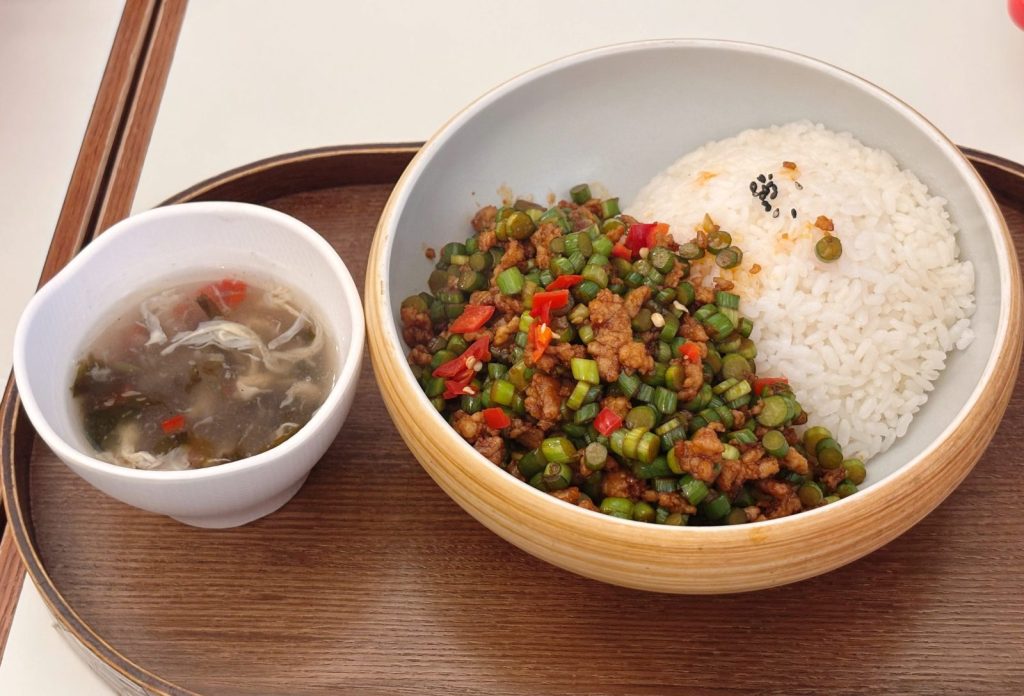
    3. Pork and garlic scape rice bowl (돼지고기 마늘쫑 덮밥, dwaejigogi maneuljjong deopbap)

    The portion is generous on both the topping and the rice, so one bowl is a full meal. Like the other dishes, it looks intense but tastes clean right to the end. The garlic scapes keep their aroma and a nice crunch, and the minced pork is moist rather than dry, which makes it go perfectly with rice.

    Pork and garlic scape rice bowl served on a tray at Sammi Tantanmyeon Sinchon
    The pork and garlic scape rice bowl.
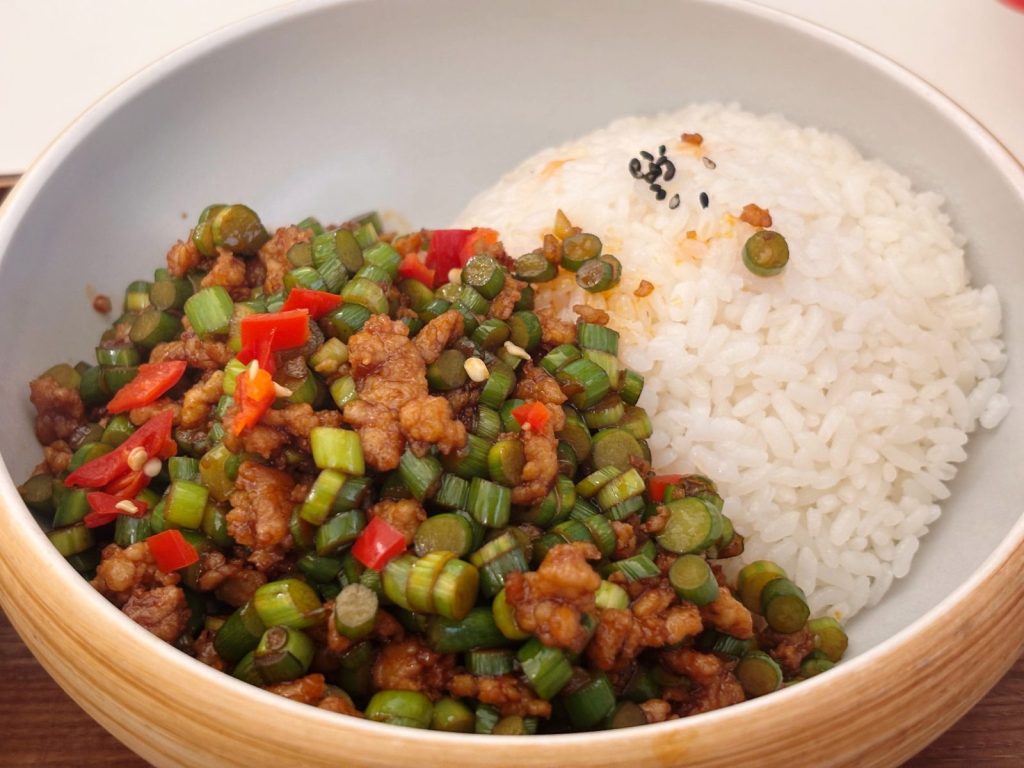
    Minced pork with garlic scapes and red chili next to white rice
    Minced pork, garlic scapes and red chili next to plain rice.

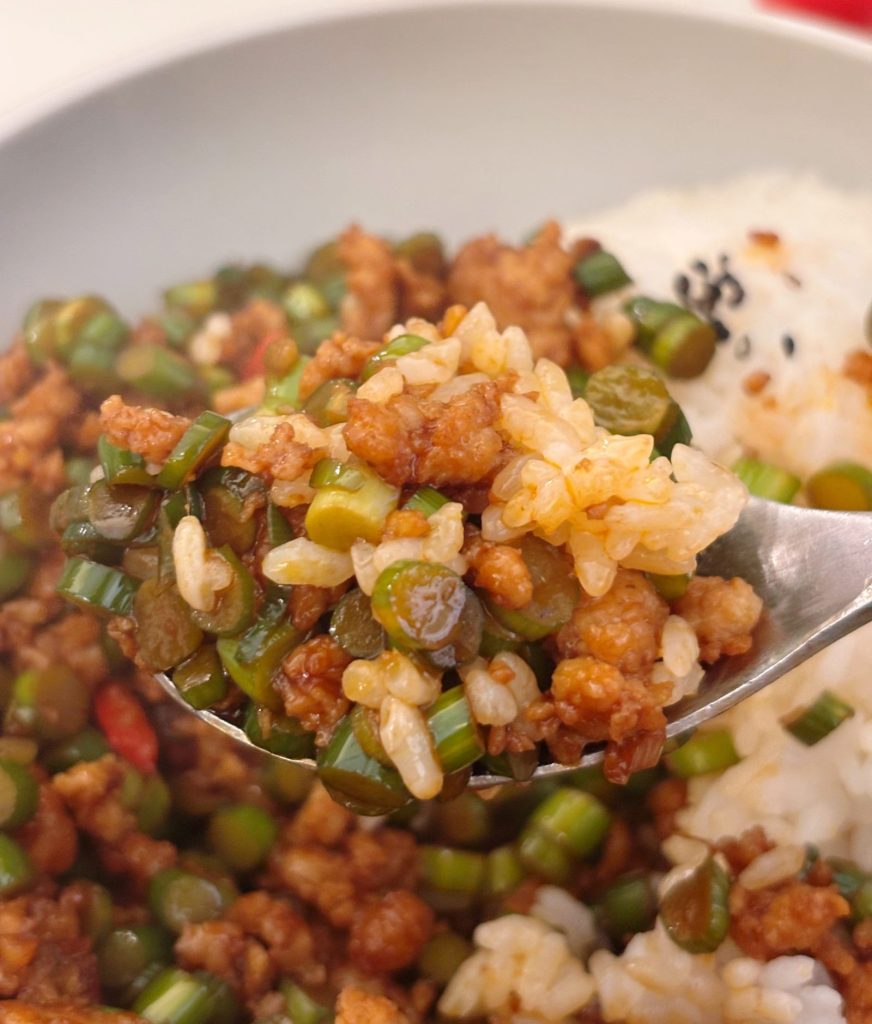
    Mix the topping into the rice and take a big spoonful: the garlic scape fragrance and the savory pork come up together. It is a good pick if you do not feel like noodles or want something filling.

    A spoonful of rice mixed with pork and garlic scapes
    Mixed and ready to eat.

    Menu and prices

    DishPrice
    Chashu dan dan noodles
    차슈탄탄면
    ₩10,500
    ~$7.50
    Chashu dry dan dan noodles
    차슈비빔면
    ₩9,500
    ~$6.80
    Honey sauce chashu lo mein
    허니소스 차슈 로미엔
    ₩13,000
    ~$9.30
    Honey sauce chashu rice bowl
    허니소스 차슈 덮밥
    ₩13,000
    ~$9.30
    Pork and garlic scape rice bowl
    돼지고기 마늘쫑 덮밥
    ₩9,800
    ~$7
    Seafood chow mein
    해물차우면
    ₩11,800
    ~$8.40
    Shumai / Xiaolongbao (dim sum)
    쇼마이 / 소롱포
    ₩9,500
    ~$6.80
    Mapo tofu
    마라두부
    ₩10,900
    ~$7.80
    Youlinji (fried chicken, lemon soy sauce)
    유린기
    ₩15,000
    ~$10.70
    Steamed garlic shrimp with glass noodles
    마늘새우찜
    ₩23,800
    ~$17

    *USD figures are rough estimates at about ₩1,400 to $1. Prices are from Naver Place (menu last updated by the shop in March 2026). Prices can change.

    Tips for visitors

    • Pick your spice level by dish. The dan dan noodles are hot; the lo mein and the garlic scape rice bowl are much easier on sensitive palates.
    • Share. Ordering a spicy bowl and a mild bowl and swapping back and forth gives a nice balance.
    • Give the kitchen a little time. The shop says dishes are cooked to order and noodles are pulled fresh, so food can take a bit longer at busy times.
    • Take the subway. There is no parking; Sinchon Station Exit 3 is a few minutes away.
    • Late lunch or dinner is fine. There is no break time listed, and last order is 22:00.
    • Ordering phrase: “Igeo juseyo” (이거 주세요) means “This one, please.” Pointing at the menu works perfectly.

    Is it kid-friendly?

    For us, yes. The room is spacious, so we found seats easily even at weekend lunchtime, and the honey sauce chashu lo mein went down very well with the kids. Skip the dan dan noodles for little ones, since they are clearly spicy.

    My verdict

    All three dishes had one thing in common: they look intense, but they taste clean. Get the chashu dan dan noodles if you want heat, the honey sauce chashu lo mein if you are with kids, and the pork and garlic scape rice bowl if you want a hearty meal. Add the big, comfortable room with its Taiwan-like feel, and Sammi Tantanmyeon Sinchon made for a very satisfying weekend lunch. It is an easy recommendation for a family meal or lunch with friends, and we plan to go back to try more of the menu.

    Sammi Tantanmyeon Sinchon FAQ

    Where is Sammi Tantanmyeon Sinchon?

    It is at 16 Myeongmul-gil, Seodaemun-gu, on the ground floor, about 270 m from Exit 3 of Sinchon Station (Line 2). Walk toward the Hyundai U-Plex building and look to the right for ABC-Mart; the restaurant is right next to it.

    What are Sammi Tantanmyeon Sinchon’s opening hours?

    Naver lists it as open every day from 11:00 to 22:20, with last order at 22:00. No break time is listed.

    How spicy are the dan dan noodles at Sammi Tantanmyeon Sinchon?

    The chashu dan dan noodles are properly spicy, built on chili oil and a peanut sauce. If you do not handle heat well, the honey sauce chashu lo mein or the pork and garlic scape rice bowl are much gentler choices.

    What should I order at Sammi Tantanmyeon Sinchon?

    For a first visit I would share the chashu dan dan noodles (₩10,500), the honey sauce chashu lo mein (₩13,000) and the pork and garlic scape rice bowl (₩9,800). Together they cover spicy, sweet-savory and filling.

    Is Sammi Tantanmyeon Sinchon good for kids?

    It worked well for us. The dining room is roomy, so we sat comfortably with the kids on a weekend lunch, and the honey sauce chashu lo mein is mild and sweet enough that they finished their bowls.

    Exploring nearby? Try Seogwan Myeonok in Hongdae for Pyongyang cold noodles, or Hyunsuni in Yongsan for tteokbokki with kids. See all kid-friendly restaurant guides and Seoul restaurant guides.

    Visited: September 2026. Prices and hours last checked: October 19, 2026, on Naver. Please check Naver Map before you go.

    This post is based on my own visit and photos. I used AI tools to help with the English wording.
  • Hyunsuni Yongsan: Tteokbokki Combo Near Sinyongsan Station (Kid-Friendly)

    Hyunsuni Yongsan: Tteokbokki Combo Near Sinyongsan Station (Kid-Friendly)

    In short

    Hyunsuni (현선이네) Yongsan is a popular tteokbokki and bunsik (Korean snack food) shop about 180 m from Sinyongsan Station, close to Yongsan I’Park Mall. Single tteokbokki costs ₩6,000 (about $4) with your choice of spice level, and combo sets bundle tteokbokki, sundae, mini gimbap and fritters. It is open 11:00–24:00 daily and has high chairs for kids.

    Tteokbokki, chewy rice cakes in a red, spicy-sweet sauce, is the most Korean snack you can eat, and Hyunsuni Yongsan is one of my regular places for it. This visit was special, though: it was my 7-year-old’s first time at a tteokbokki shop. When kids are small, spicy food keeps you away from places like this, so sitting across the table from my child here felt surprisingly new.

    Quick facts

    • Korean name현선이네 용산본점 (Hyunsuni, Yongsan main branch)
    • Address2-13 Hangang-daero 39-gil, Yongsan-gu, Seoul
      서울 용산구 한강대로39길 2-13
    • SubwaySinyongsan Station (Line 4), Exit 5 or 6, about 180 m (3-minute walk)
    • HoursDaily 11:00–24:00, last order 22:40. Monday break 14:30–16:00
    • PriceTteokbokki ₩6,000 (about $4), sets ₩13,000–26,000
    • Good forFamilies with kids, a cheap and filling lunch, first-time tteokbokki eaters
    • ExtrasHigh chairs, group seating, takeout. No parking (use paid lots nearby)
    • Phone+82 507-1361-8901
    • MapOpen in Naver Map

    Finding it

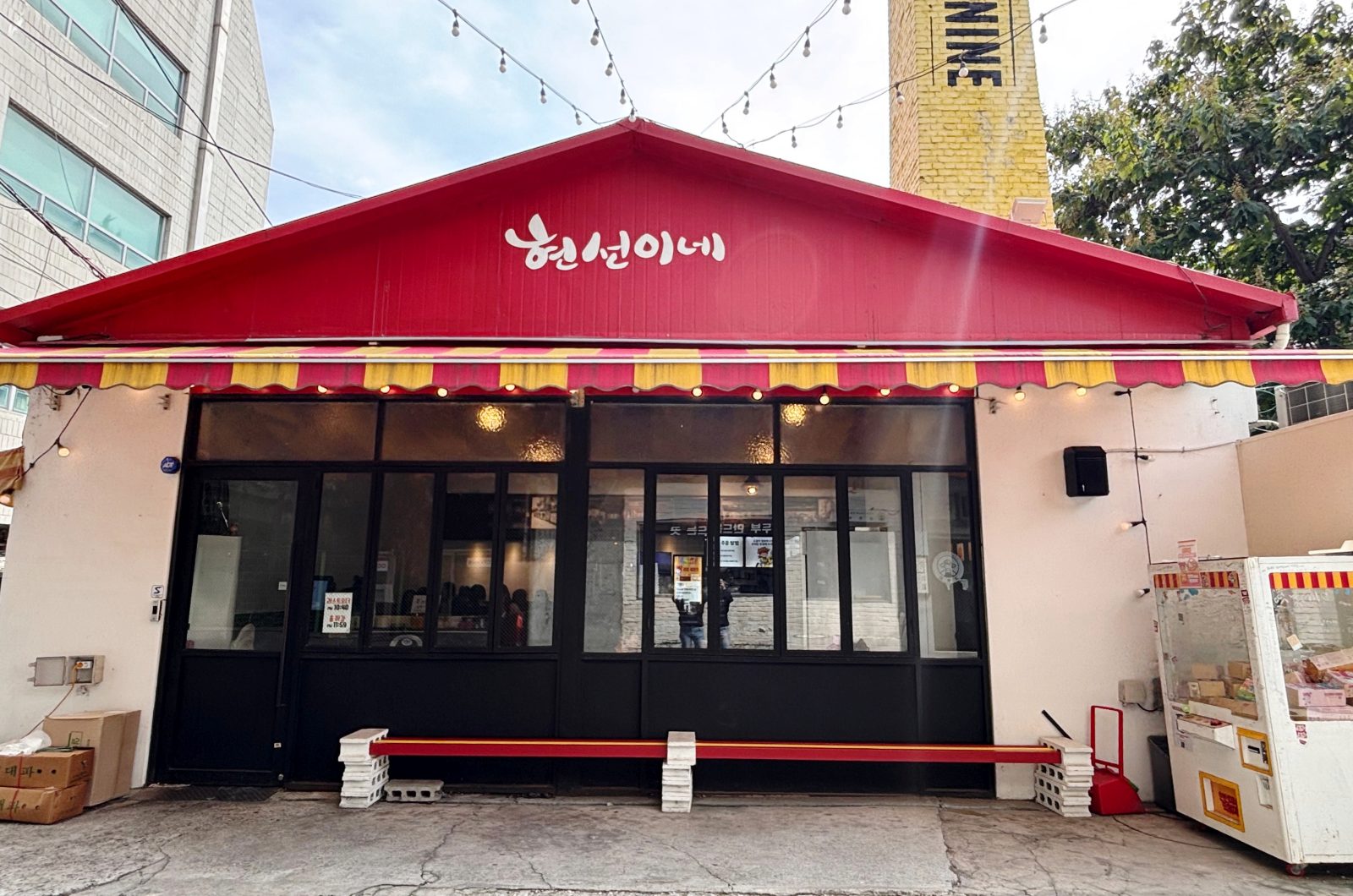
    Take Exit 5 of Sinyongsan Station (Line 4), walk a few steps to the crossroads, then head into the side street between a pub and a real estate office. The shop has a red roof and a yellow chimney, so it is hard to miss. Yongsan I’Park Mall and Yongsan Station are also within walking distance.

    📍 Hyunsuni Yongsan (현선이네 용산본점), 2-13 Hangang-daero 39-gil, Yongsan-gu, Seoul · Naver Map · Google Maps

    Red-roofed storefront of Hyunsuni tteokbokki near Sinyongsan Station, Seoul

    We went at lunchtime on a weekend, and the room still felt relaxed, so my child had no trouble sitting comfortably through the meal.

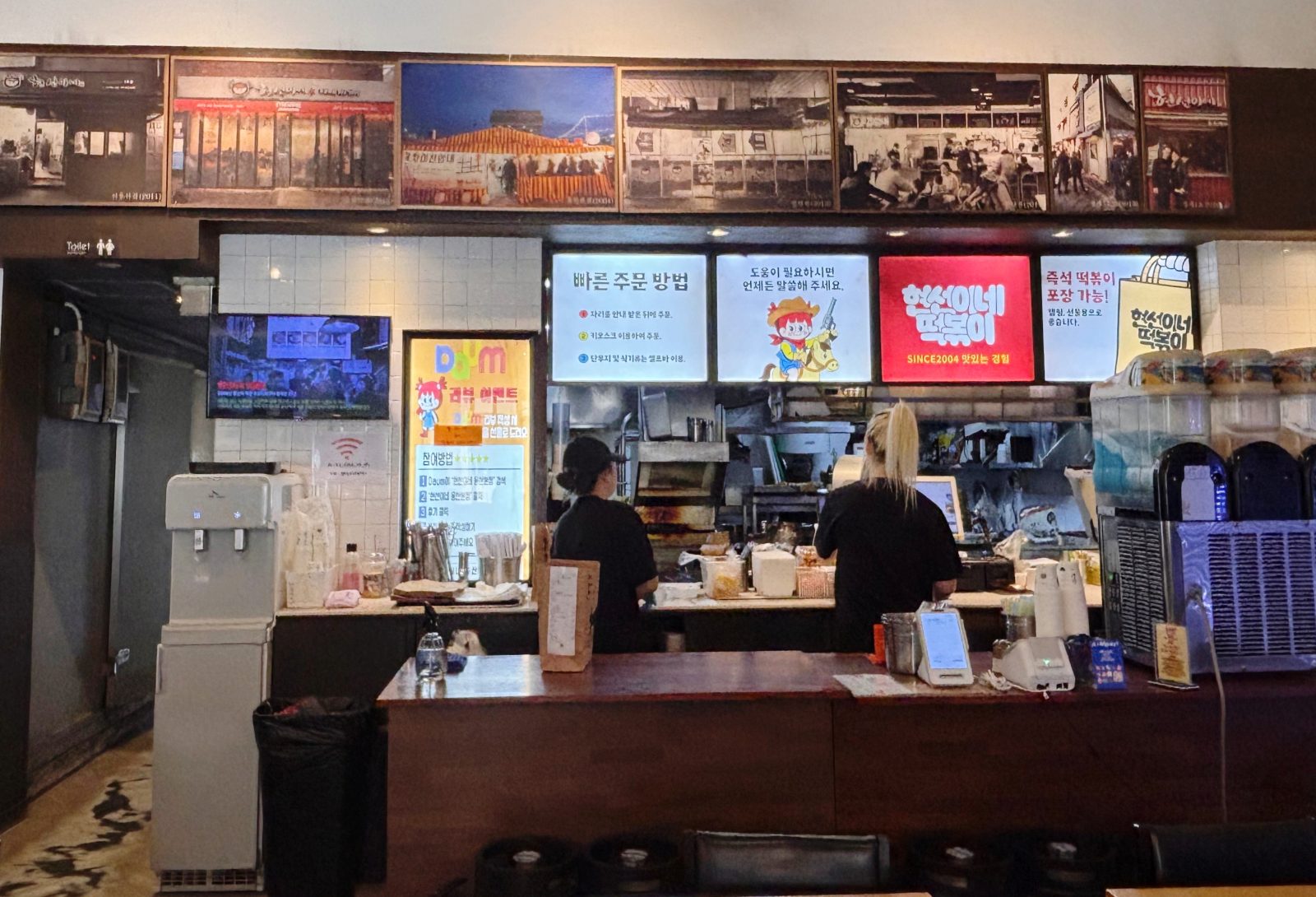
    Order counter and menu screens inside Hyunsuni Yongsan

    What is tteokbokki?

    Tteokbokki (떡볶이) is cylinder-shaped rice cakes simmered in a gochujang-based sauce. It is usually served with other bunsik favorites: sundae (Korean sausage made with glass noodles), gimbap (seaweed rice rolls) and twigim (fritters), which you dip into the tteokbokki sauce. Hyunsuni serves a broth-style tteokbokki, with more soupy sauce than the thick, sticky kind.

    What we ordered: the combo set

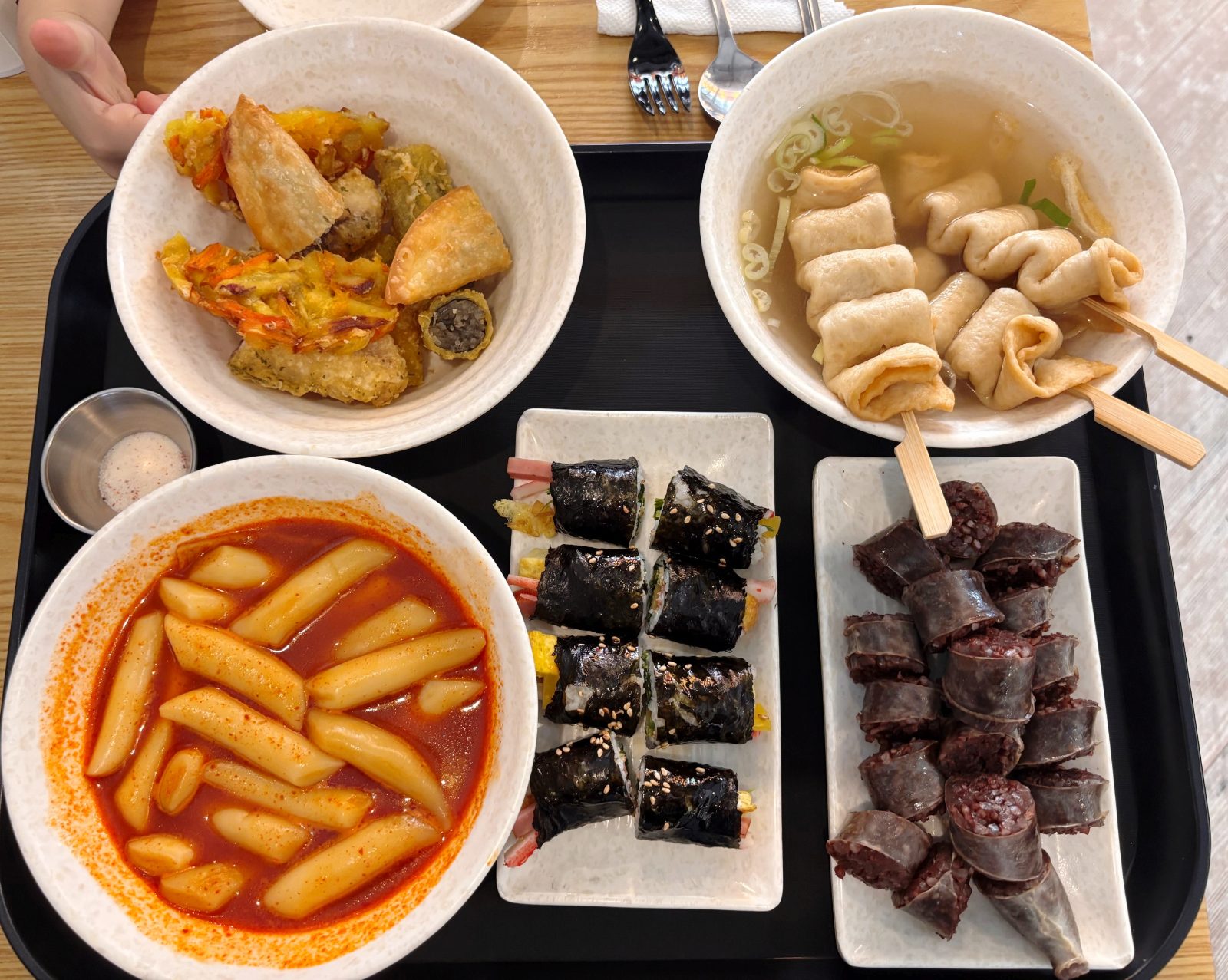
    We ordered the Hyunsuni combo set without thinking twice. It lets you try tteokbokki, sundae, mini gimbap and fritters in one go, and ours came with curly fish cake skewers in hot broth as well. It is a perfect order for a first visit or when you are eating with kids.

    Combo set at Hyunsuni Yongsan: mild broth tteokbokki, sundae, mini gimbap, fritters and curly fish cake skewers

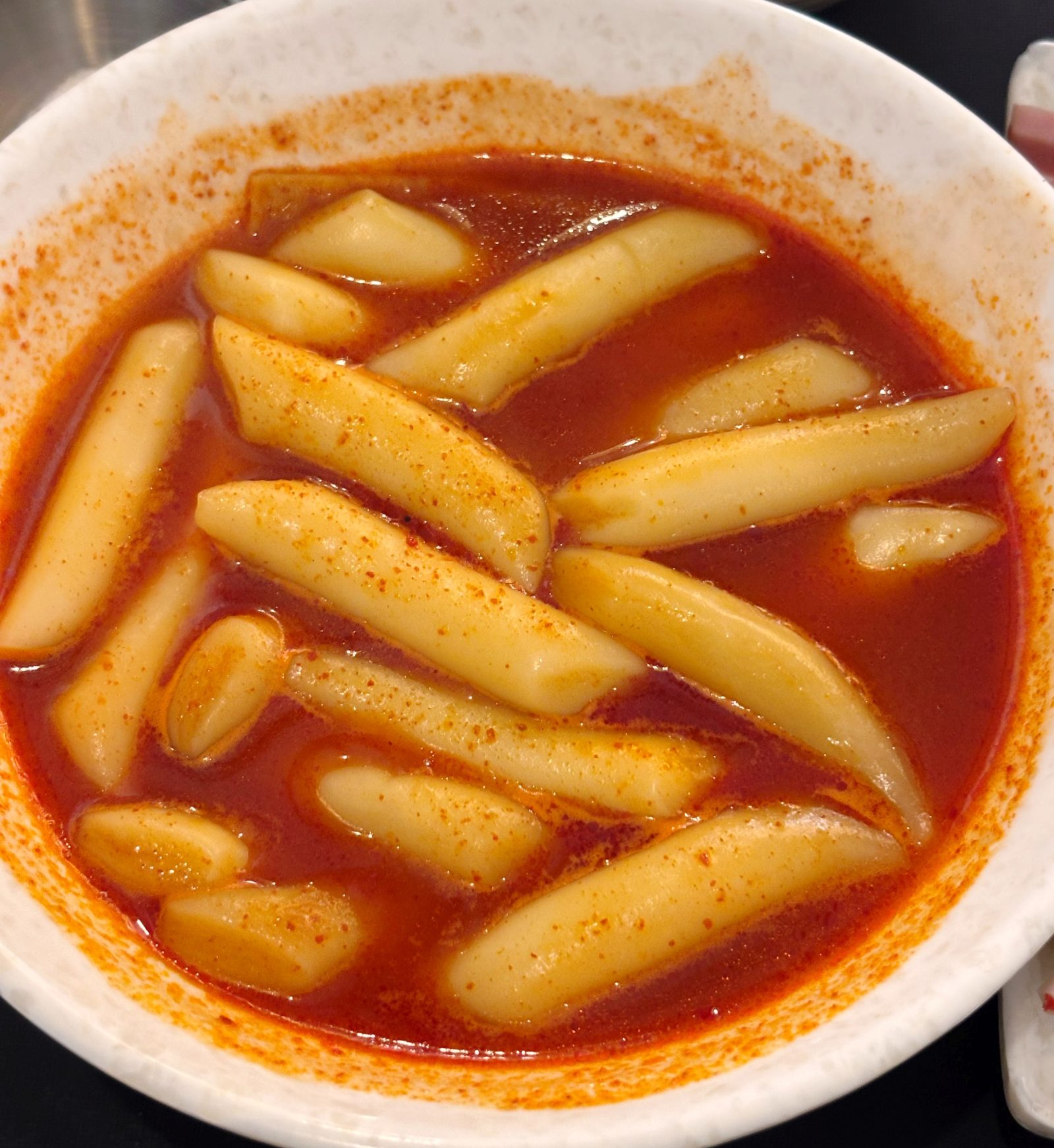
    1. Mild broth tteokbokki (순한맛 국물떡볶이)

    Because of my child, I ordered the mild version. Mild still has a little kick, so I was a bit worried, but my 7-year-old kept drinking water and kept eating, a lot. Watching them reach for more of their very first tteokbokki made me oddly proud.

    The broth is savory enough to eat with a spoon, and the best part is dunking the fritters in it. Even for adults the mild level was not bland; I ended up finishing most of the bowl with my child. If you like heat, order the regular or a spicier level.

    Mild broth tteokbokki (rice cakes in a red, soupy sauce)

    2. Sundae (순대)

    We ordered the sundae without the offal that is often served on the side, just the sausage itself. It is great dipped in the tteokbokki broth, and my child ate it without any hesitation. If organ meat is not your thing, ask for “sundae only” too.

    Sliced sundae (Korean blood sausage) served without offal

    3. Mini gimbap (꼬마김밥)

    The little gimbap rolls are seasoned on the salty side, which makes them a good match for tteokbokki. Dip one lightly in the broth and the salty and spicy flavors come together. Having tteokbokki, sundae and gimbap on one table also made it fun for my child to pick and choose.

    Mini gimbap rolls with pickled radish and ham

    4. Fritters (튀김)

    The fritters were crisp and not greasy, so we could keep eating to the end. My pick of the day was the vegetable fritter: crunchy on its own and even better soaked in the broth. It was the first thing to disappear. The seaweed rolls and sweet potato fritters were good too. My child quickly learned to dip the fritters in the broth just like me.

    Crispy Korean fritters (twigim) from the combo set
    Vegetable fritter dipped in tteokbokki broth
    The vegetable fritter dipped in tteokbokki broth was my favorite bite.
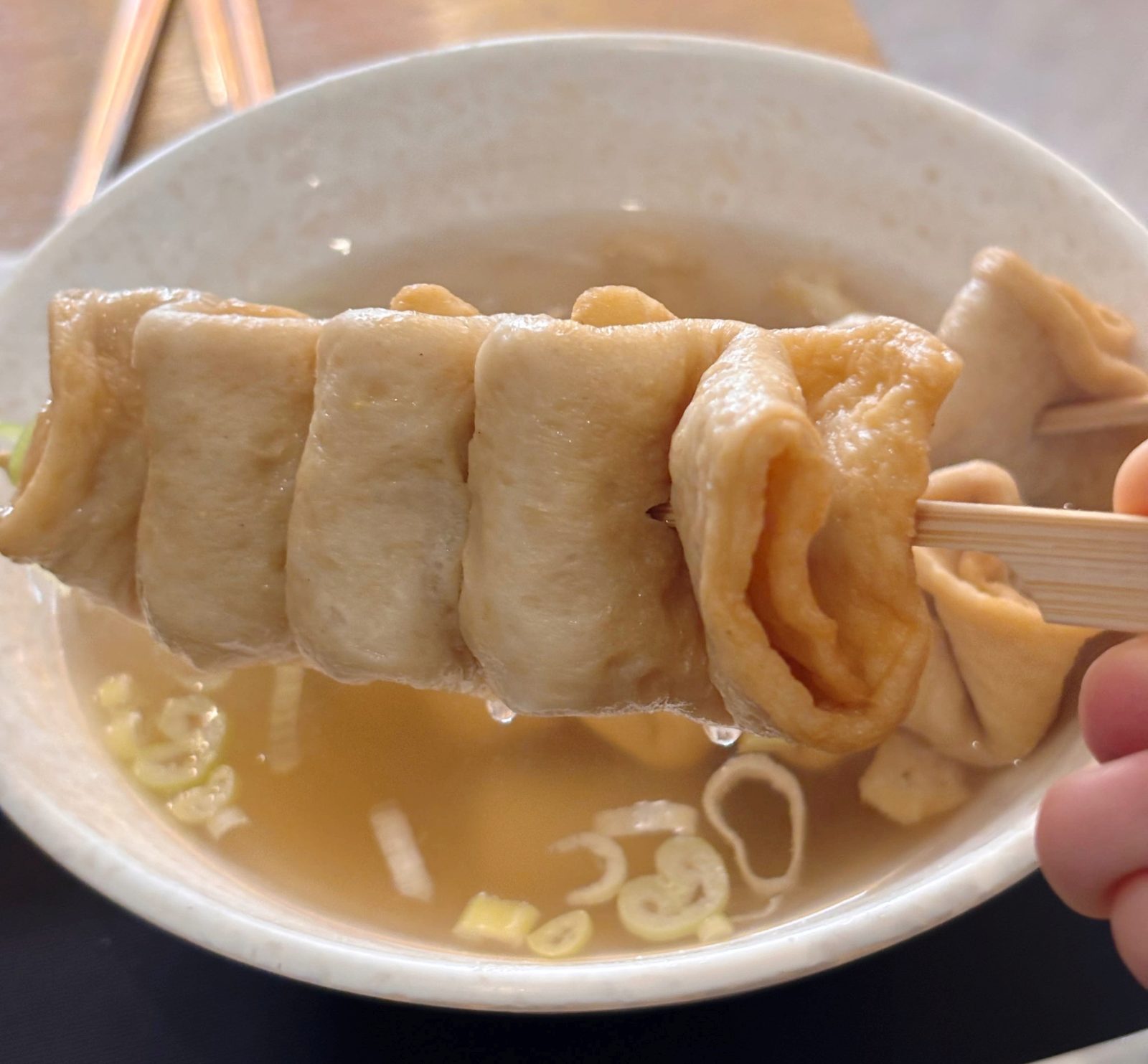
    Curly fish cake skewers in hot fish cake broth
    The set we had also came with curly fish cakes in broth.

    One combo set was plenty for my child and me, so it also felt like good value. Next time I plan to add extra vegetable fritters.

    Menu and prices

    Prices from the shop’s current Naver menu:

    DishPrice
    Tteokbokki (mild, medium or very spicy)
    떡볶이 (순한맛/중간맛/매운맛)
    ₩6,000
    ~$4
    Hyunsuni set (tteokbokki, fritters, mini gimbap, sundae)
    현선이세트
    ₩23,000
    ~$16
    Hyunsuni combo set for 3 (adds 3 curly fish cakes)
    현선이콤보세트
    ₩26,000
    ~$19
    Baby set (half tteokbokki, 4 fritters, half sundae, 2 gimbap)
    베이비세트
    ₩13,000
    ~$9
    DIY tteokbokki hot pot for 2
    즉석떡볶이
    ₩22,000
    ~$16
    Homemade sundae
    수제순대
    ₩6,500
    ~$5
    Assorted fritters (5 pieces)
    모듬튀김
    ₩6,000
    ~$4
    Vegetable fritter (1 piece)
    야채튀김
    ₩1,200
    ~$1

    *USD figures are rough estimates at about ₩1,400 to $1. Prices can change.

    Is it kid-friendly?

    Yes, and it is one of the easiest ways to introduce kids to Korean street food. There are high chairs, the mild tteokbokki is manageable for older kids (keep water nearby), and sundae, gimbap and fritters are not spicy at all. The baby set on the menu is a smaller portion designed for exactly this.

    We made it part of a Yongsan day out: my child played at a slime café in Yongsan I’Park Mall first, and then we walked over for lunch. Afterwards we promised each other to come back for another parent-and-kid date.

    Tips for visitors

    • Choose your spice level. “Sunhanmat” means mild; the shop says its very spicy level is four times hotter than Buldak noodles.
    • Dip everything. Fritters, sundae and gimbap all taste better soaked in the tteokbokki broth.
    • Take the subway. There is no parking; Sinyongsan Station is a 3-minute walk.
    • Monday break. The kitchen closes 14:30–16:00 on Mondays only.
    • Ordering phrase: “Sunhanmat-euro juseyo” means “Mild, please.”

    My verdict

    Hyunsuni Yongsan is a cheerful, affordable place to try tteokbokki the way Koreans actually eat it, with sundae, gimbap and crispy fritters to dip in the broth. It has long been a favorite of mine, and now it is also the place where my child ate tteokbokki for the first time. If you are exploring Yongsan, especially with kids, it is an easy and tasty stop.

    Hyunsuni Yongsan FAQ

    Where is Hyunsuni Yongsan?

    In an alley about 180 m from Sinyongsan Station (Line 4). From Exit 5, walk a few meters to the crossroads and take the side street; look for the yellow chimney and red roof.

    What are Hyunsuni Yongsan’s opening hours?

    11:00 to 24:00 every day, with last order at 22:40. On Mondays there is a break from 14:30 to 16:00.

    Is the tteokbokki at Hyunsuni Yongsan very spicy?

    You can choose the spice level. The mild version still has a little kick but my 7-year-old managed it with water. The “very spicy” option is described by the shop as four times hotter than Buldak.

    What should I order at Hyunsuni Yongsan?

    The combo set is the easiest choice: tteokbokki, sundae, mini gimbap, assorted fritters and curly fish cakes. Single-serving tteokbokki is ₩6,000.

    Is Hyunsuni Yongsan good for kids?

    Yes. It has high chairs, the mild tteokbokki is manageable for older children, and Yongsan I’Park Mall is a short walk away. There is no parking, so take the subway.

    More family-friendly meals: see all kid-friendly restaurant guides, or try Baekri Gomtang in Hongdae for a non-spicy beef soup.

    Hours and menu last checked: October 16, 2026, on Naver. Please check Naver Map before you go.

    This post is based on my own visit and photos. I used AI tools to help with the English wording.
  • Nani Yeouido: Izakaya with Private Booths at Yeouido Station Exit 3

    Nani Yeouido: Izakaya with Private Booths at Yeouido Station Exit 3

    In short

    Nani is a Japanese-style izakaya on the 3rd floor of the S-Trenue building, about 80 m from Yeouido Station Exit 3 in Seoul’s business district. It is known for partitioned booth seating and drinking snacks such as beef tataki and yakisoba with Asahi draft beer. It opens Monday to Saturday from 17:00 to 02:00 and is closed on Sundays.

    Yeouido is Seoul’s finance district, packed with office towers, so after-work drinking spots fill up fast. I was meeting a friend I had not seen in a while and wanted somewhere close to the station where we could actually hear each other. Nani (나니) Yeouido turned out to be exactly that: an izakaya with partitioned seats, a view of the city at night, and snacks made for beer.

    Quick facts

    • Korean name나니 여의도점 (Nani Yeouido)
    • Address3F, S-Trenue Building, 37 Gukjegeumyung-ro 2-gil, Yeongdeungpo-gu, Seoul
      서울 영등포구 국제금융로2길 37 에스트레뉴빌딩 3층
    • SubwayYeouido Station (Lines 5 and 9), Exit 3, about 80 m (1-minute walk)
    • HoursMon–Sat 17:00–02:00 (last order 01:00). Closed Sundays
    • PriceMost dishes ₩29,000–35,000 (about $21–25), meant for sharing
    • Good forAfter-work drinks, catching up with friends, small groups
    • ExtrasReservations on Naver (2–10 people), group seating, parking on B2–B3
    • Phone+82 507-1374-6007
    • MapOpen in Naver Map

    Finding it

    Come out of Exit 3 of Yeouido Station and the S-Trenue building is right in front of you. Take the elevator to the 3rd floor. Because it is so close to the station, it is an easy meeting point after work, which matters in Yeouido, where it can be hard to find a table in the evening.

    📍 Nani Yeouido (나니 여의도점), 3F S-Trenue Building, 37 Gukjegeumyung-ro 2-gil, Seoul · Naver Map · Google Maps

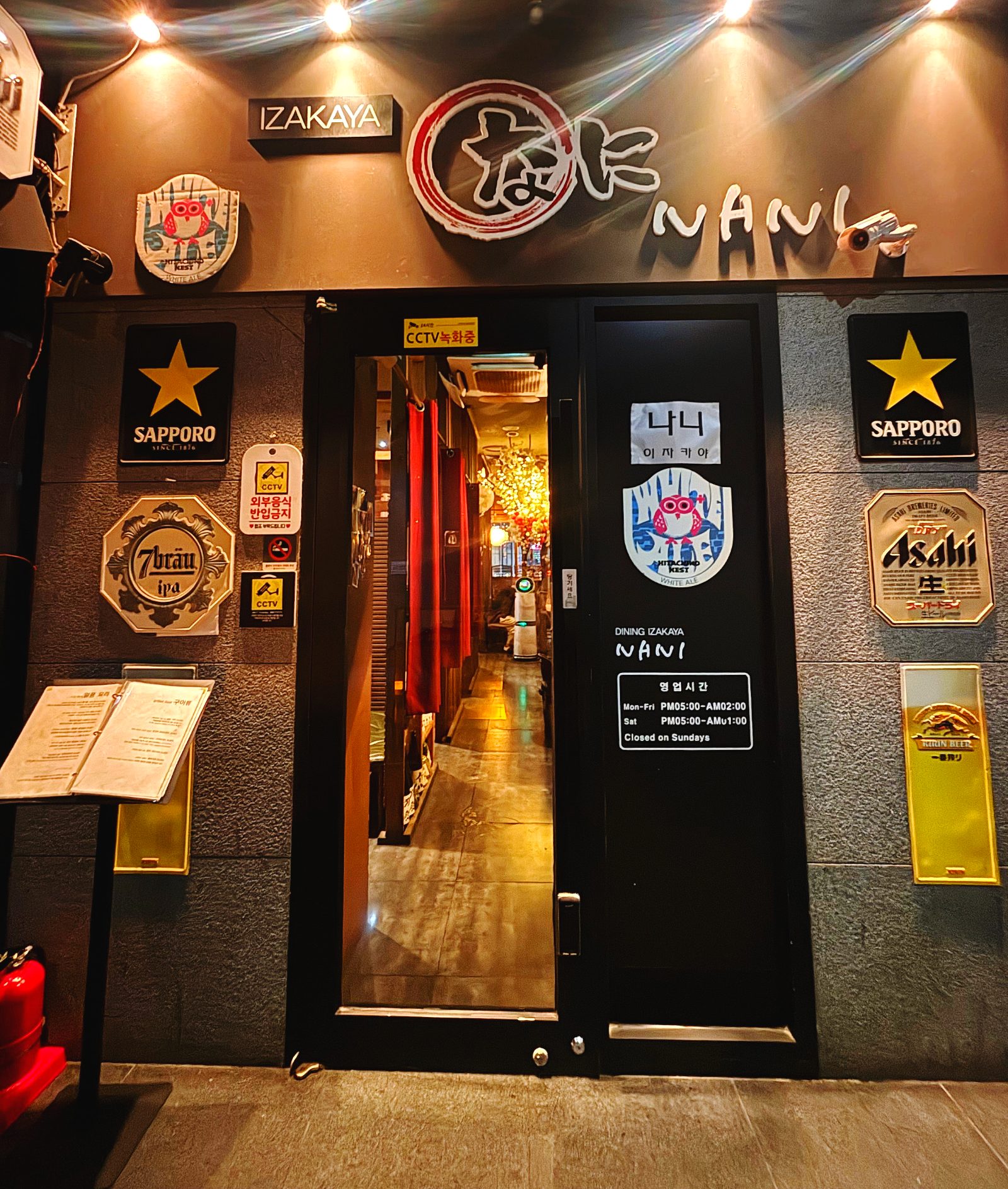
    Japanese-style entrance of Nani izakaya on the 3rd floor of S-Trenue building, Yeouido
    The entrance already feels like a Japanese pub.

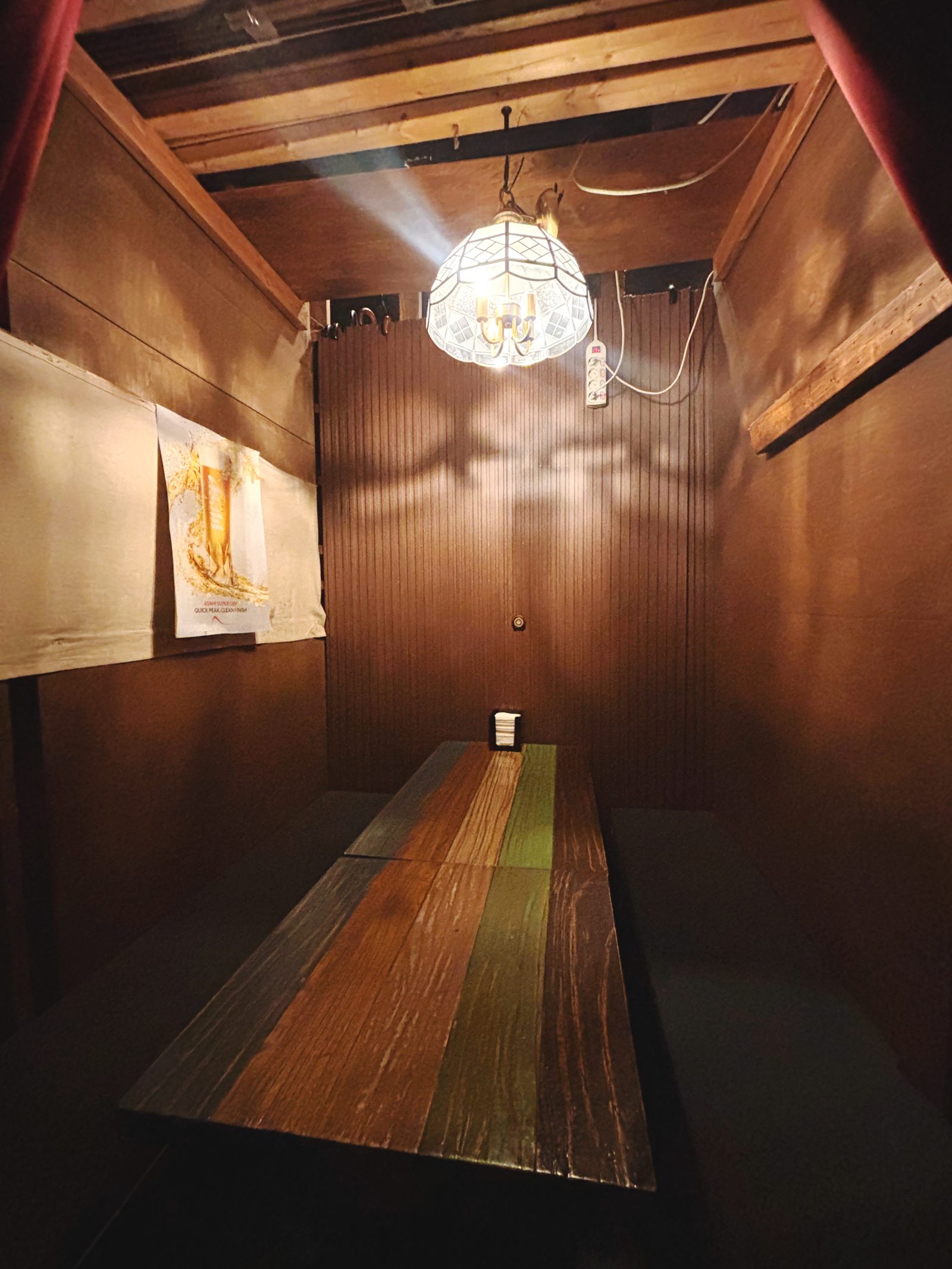
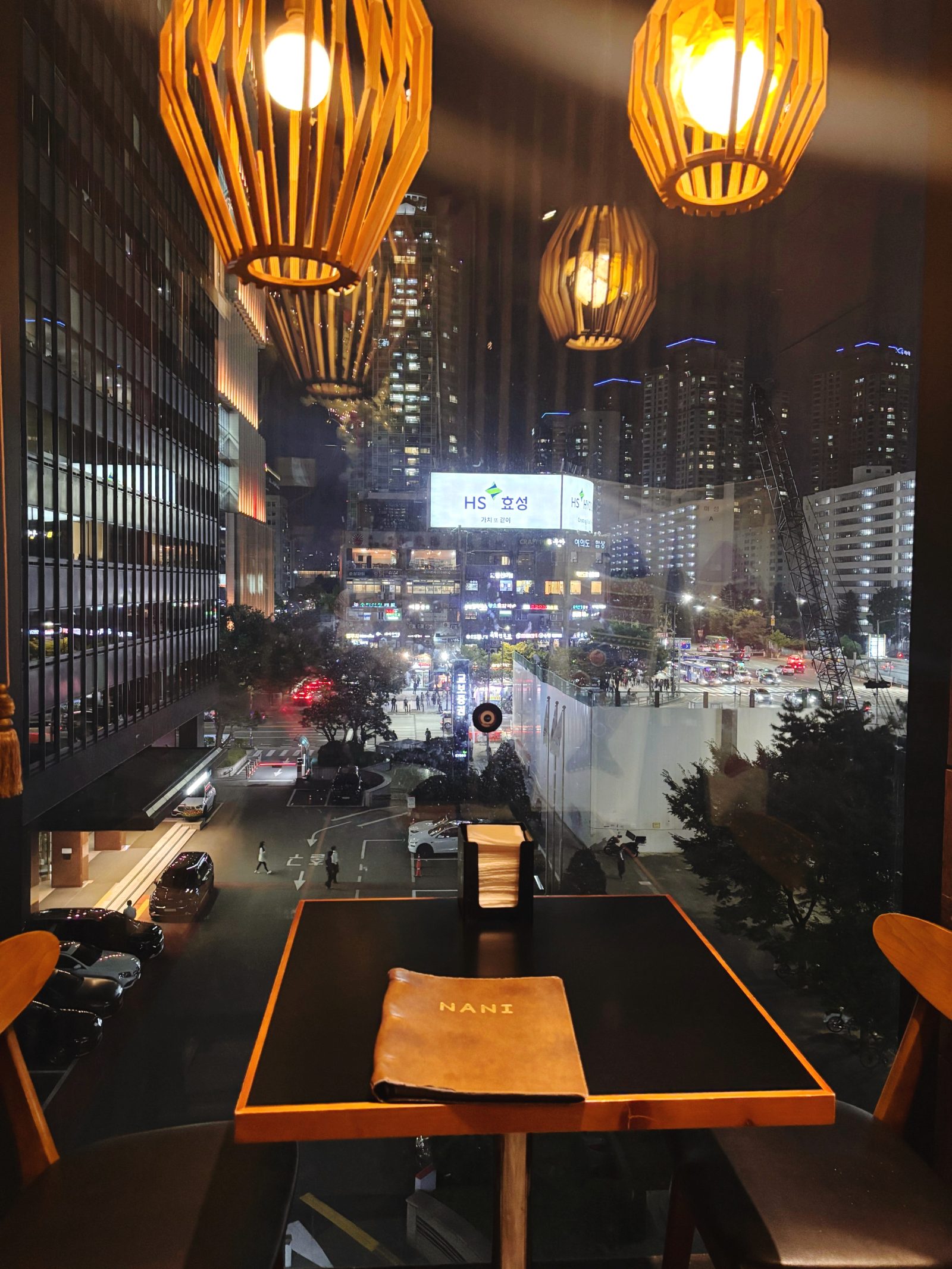
    The entrance is full of Japanese pub-style signs and decorations. Inside, the seats are separated by partitions, so you are not sitting on top of the next table. With warm lighting and a view over Yeouido at night from the window side, it felt relaxed rather than noisy.

    Partitioned private booth seating at Nani Yeouido
    Window seats with a night view of Yeouido at Nani izakaya
    Window seats look out over Yeouido after dark.

    What I liked most was how easy it was to talk. When you have a lot to catch up on, not having to shout over other tables makes a big difference.

    What we ordered

    1. Beef tataki (소고기 다다끼, so-gogi da-da-kki)

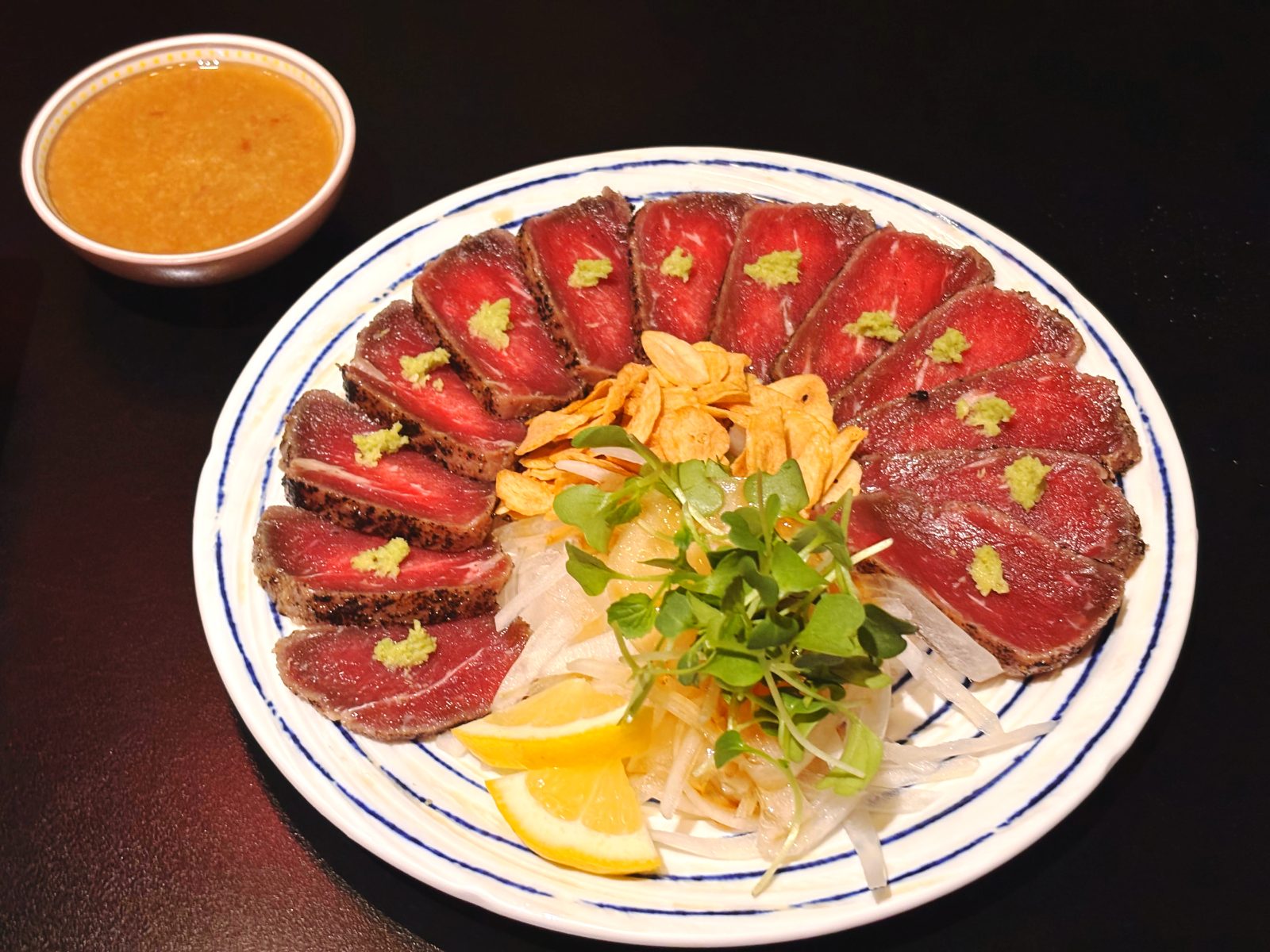
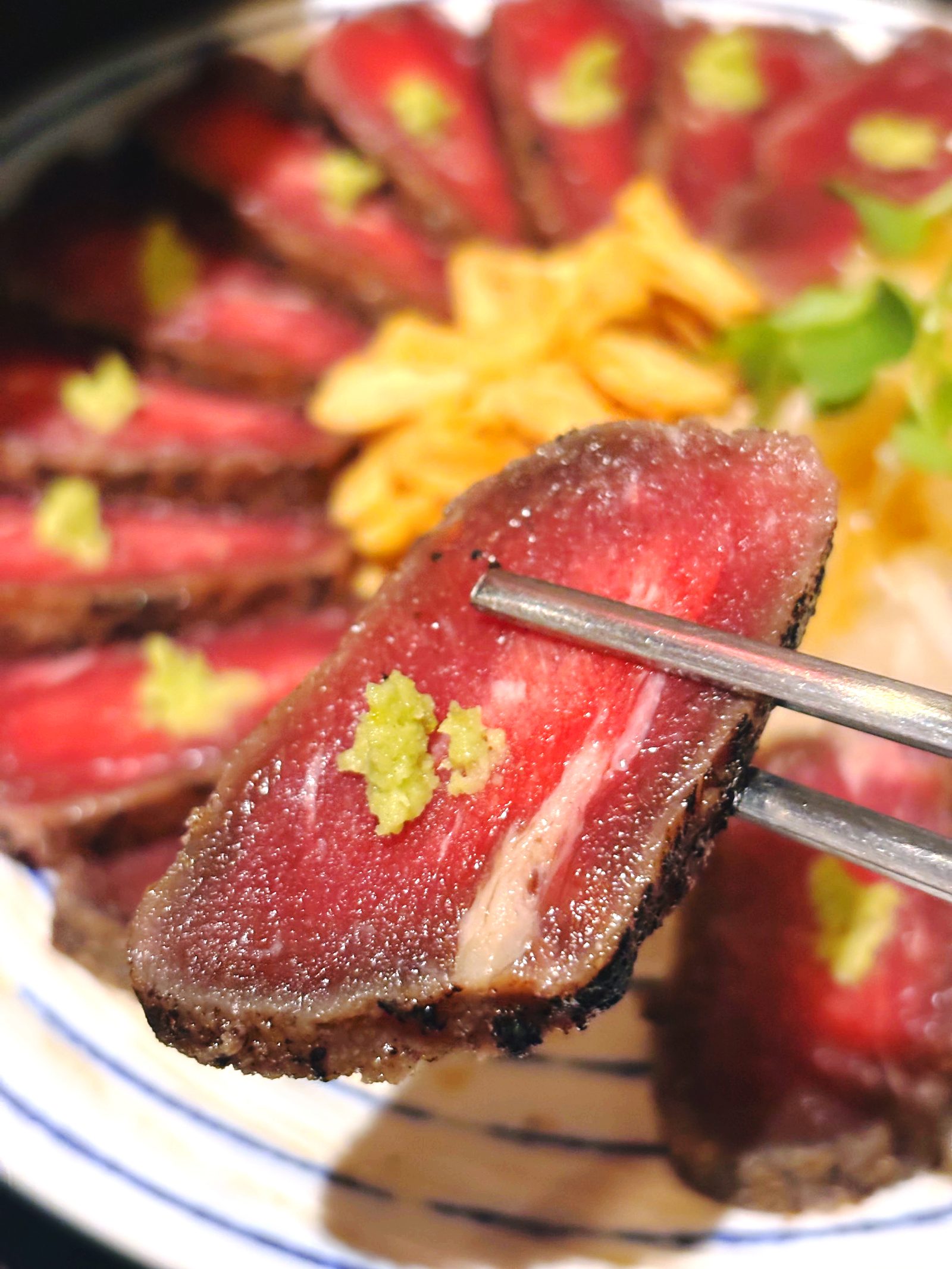
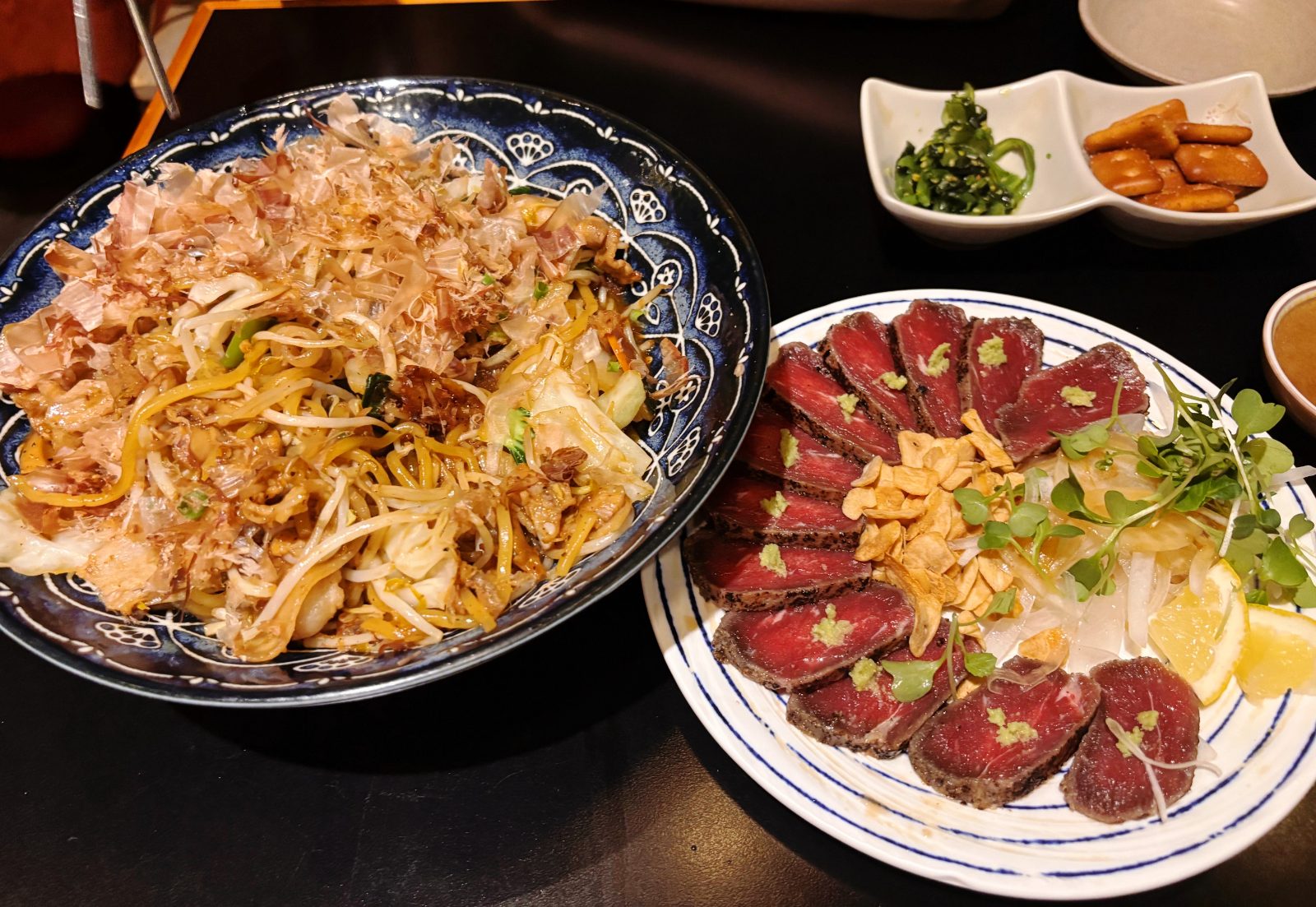
    Our first plate was beef tataki: thin slices of beef seared on the outside and left red in the middle. It had a good, beefy flavor and came with a dipping sauce. Each slice is topped with wasabi, and there are sliced onions and crispy garlic chips to eat with it.

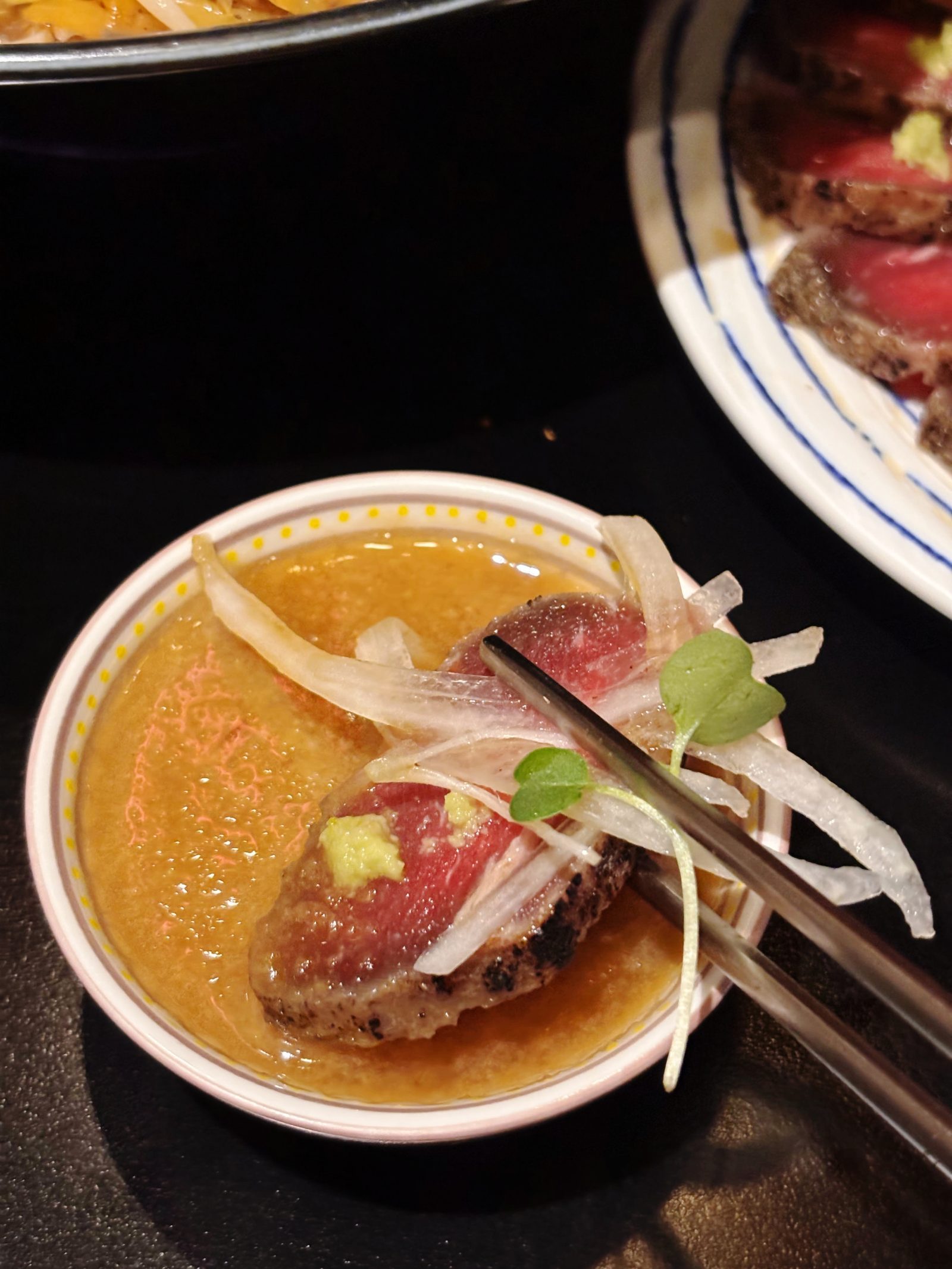
    Overall it is on the salty side, which is exactly why it works with beer. Dip it in the sauce for more savoriness, or wrap a slice around some onion for a cleaner bite. If you are not sure what to start with, this is the plate I would order first.

    Beef tataki with wasabi, sliced onion and garlic chips at Nani izakaya near Yeouido Station, Seoul
    A slice of seared beef tataki topped with wasabi
    Dipping beef tataki into its sauce
    Dip the tataki in the sauce that comes on the side.

    2. Asahi draft beer (아사히 생맥주)

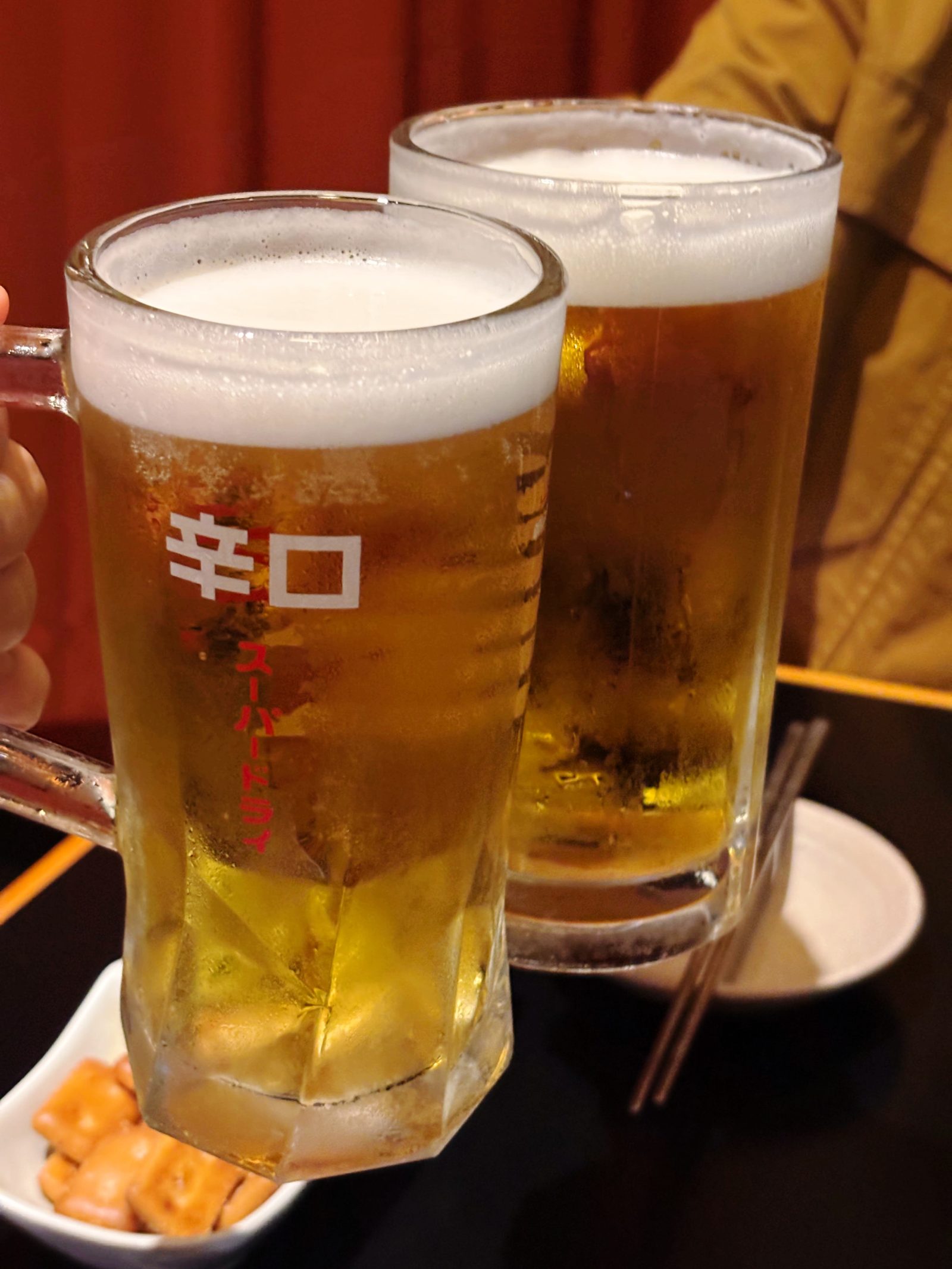
    Not much to say here except that it was very smooth and went down easily with the salty snacks. Even on a night when you are not drinking much, a draft beer and one or two plates make for a satisfying evening.

    Two glasses of Asahi draft beer

    3. Yakisoba (야끼소바)

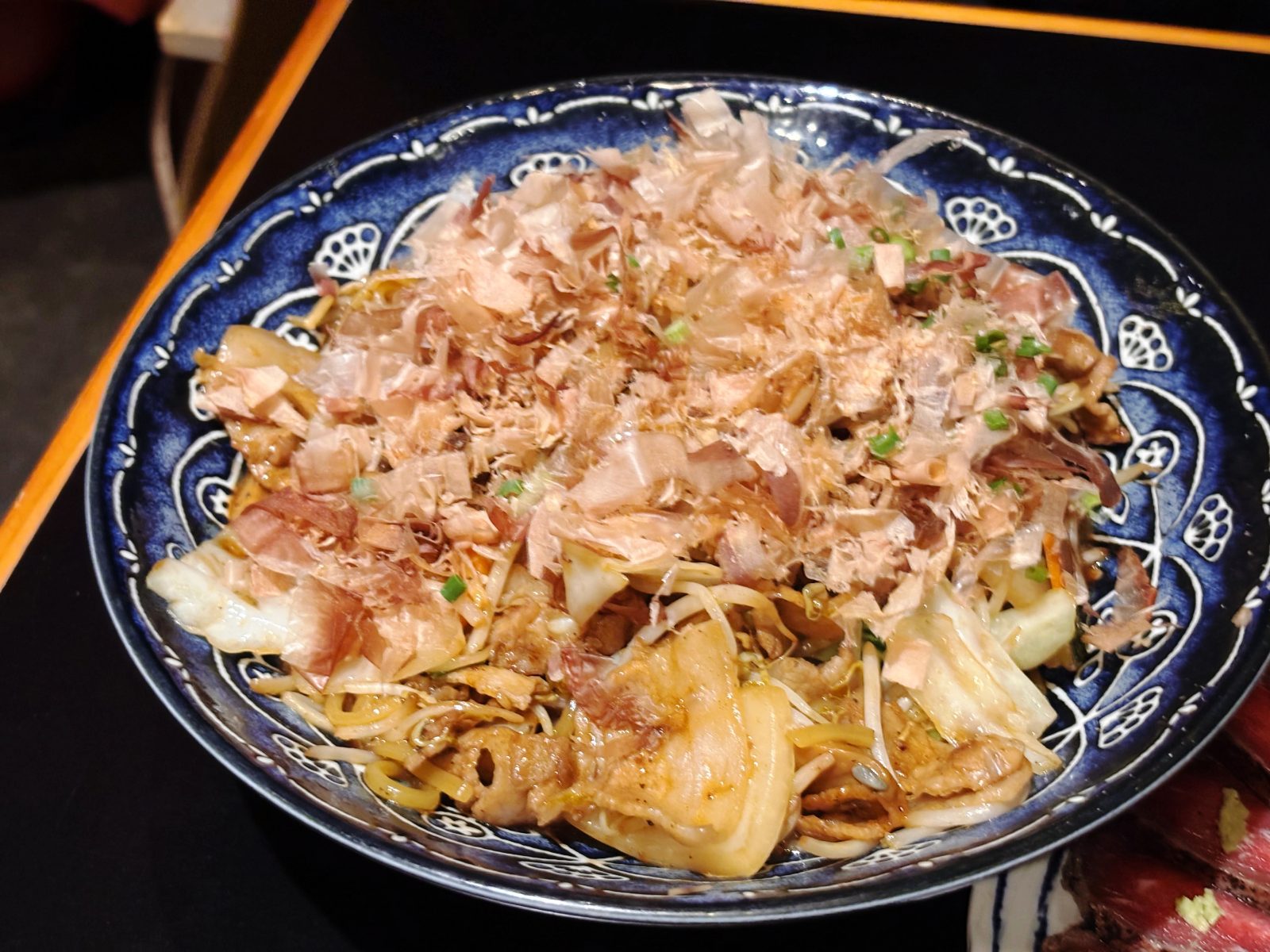
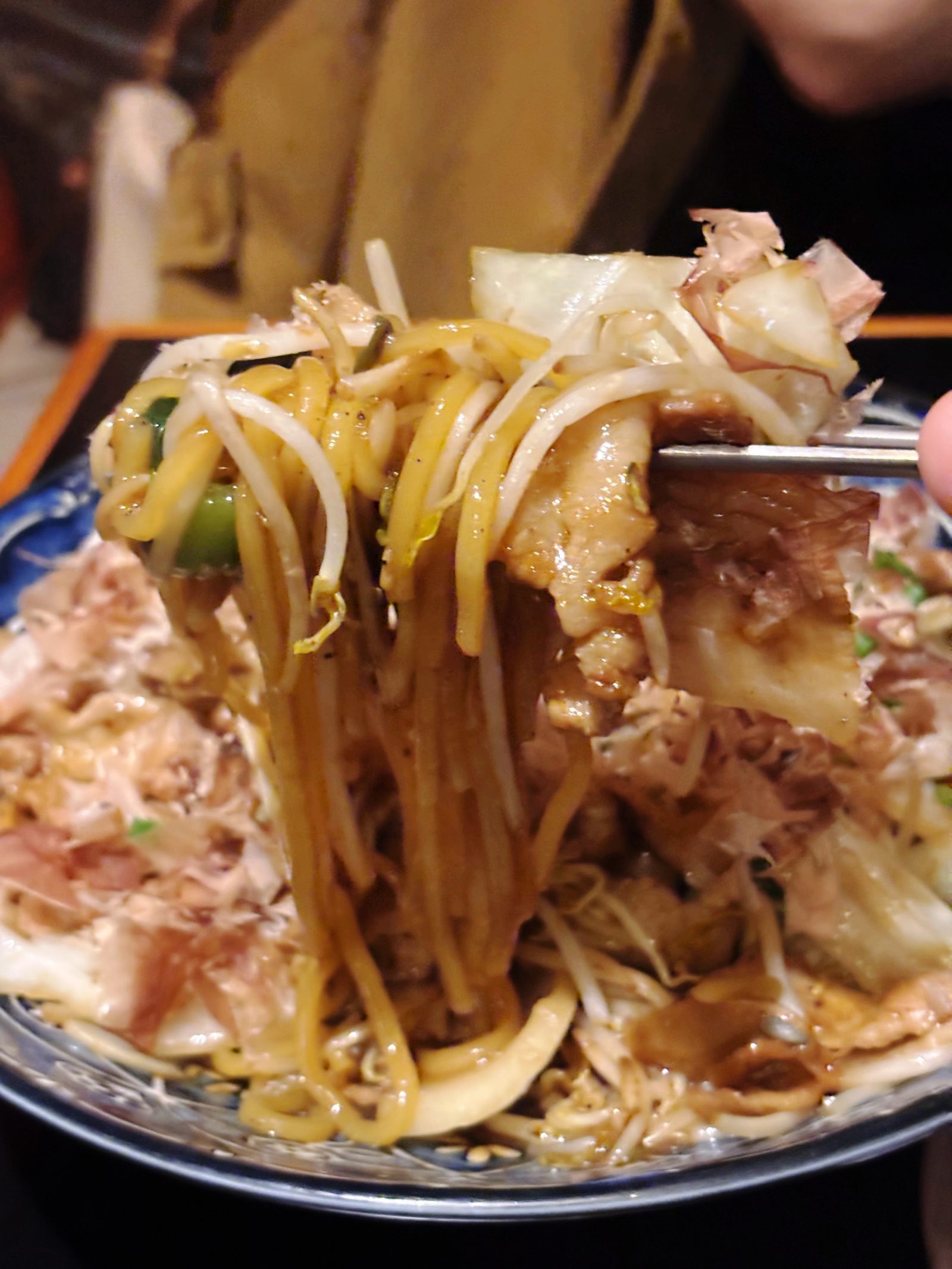
    The yakisoba portion was huge. It was packed with cabbage, bean sprouts and carrot, topped with bonito flakes, and had a nice smoky, wok-fried flavor. The noodles were bouncy and well seasoned, salty enough to call for another sip of beer.

    It is easily enough for two to share, so it works as a meal as well as a drinking snack. With so many vegetables it never felt greasy, and going back and forth between the yakisoba and the tataki kept things balanced.

    Yakisoba topped with bonito flakes, cabbage and bean sprouts
    Chewy yakisoba noodles with vegetables
    Yakisoba and beef tataki on the table at Nani Yeouido
    Beef tataki and yakisoba: an easy order for two.

    Menu and prices

    Prices below come from the restaurant’s Naver menu (updated August 2026). Beef tataki and yakisoba were not on the online list when I checked, so check the menu board for their current prices.

    DishPrice
    Assorted sashimi
    모듬사시미
    ₩55,000
    ~$39
    Lamb shoulder rack (Australian, chilled)
    고급양갈비숄더랙
    ₩43,000
    ~$31
    Nagasaki seafood hot pot (spicy or mild)
    나가사키해물나베
    ₩35,000
    ~$25
    Brisket tantan hot pot
    차돌 탄탄나베
    ₩35,000
    ~$25
    Grilled scallops with butter and cheese
    관자버터치즈구이
    ₩31,000
    ~$22
    Tempura
    덴뿌라
    ₩30,000
    ~$21
    Tuna tataki
    마구로다다끼
    ₩29,000
    ~$21
    Pork belly yaki udon
    삼겹볶음우동
    ₩29,000
    ~$21
    Seafood okonomiyaki
    해물오꼬노미야끼
    ₩29,000
    ~$21
    Mochi tofu
    모찌리도후
    ₩15,000
    ~$11

    *USD figures are rough estimates at about ₩1,400 to $1. Prices can change.

    Tips for visitors

    • Book ahead on weekdays. Yeouido is busy right after office hours; Naver reservations are open for 2–10 people.
    • Closed on Sundays. It opens at 17:00 Monday to Saturday and stays open until 2 a.m.
    • Order to share. Plates are large and priced for sharing, so two dishes plus drinks is plenty for two people.
    • Ask for a window seat if you want the night view; most other seats are in partitioned booths.
    • Ordering phrase: “Saengmaekju du jan juseyo” means “Two draft beers, please.”

    My verdict

    Nani Yeouido is an easy pick when you want a drink near Yeouido Station without a loud, crowded room. The beef tataki, the generous yakisoba and a cold Asahi made a simple but very satisfying combination, and the partitioned seats let us talk all evening. I would recommend it for office workers, friends catching up, or anyone staying around Yeouido who wants a relaxed Japanese-style pub.

    Nani Yeouido FAQ

    Where is Nani Yeouido?

    On the 3rd floor of the S-Trenue building at 37 Gukjegeumyung-ro 2-gil, about 80 m from Exit 3 of Yeouido Station (Lines 5 and 9).

    What are Nani Yeouido’s opening hours?

    Monday to Saturday 17:00 to 02:00 the next day, last order at 01:00. Closed on Sundays.

    What should I order at Nani Yeouido?

    Beef tataki and a big plate of yakisoba with Asahi draft beer was a great combination for two. The menu also has sashimi, nabe hot pots, tempura and lamb shoulder rack.

    Does Nani Yeouido have private seating?

    Yes. Most tables are separated by partitions, which makes it easy to talk without raising your voice. Some window seats look out over Yeouido at night.

    Can I book a table or park at Nani Yeouido?

    Reservations for 2 to 10 people are available on Naver, group seating is available, and the building has underground parking on B2 and B3.

    More places around Seoul: browse all Seoul restaurant guides, or try Decalcomanie in Haebangchon for another relaxed dinner spot.

    Visited: October 2026. Hours and menu last checked: October 16, 2026, on Naver. Please check Naver Map before you go.

    This post is based on my own visit and photos. I used AI tools to help with the English wording.
  • Decalcomanie Haebangchon: Famous Honey Cod & Pasta Near Itaewon

    Decalcomanie Haebangchon: Famous Honey Cod & Pasta Near Itaewon

    In short

    Decalcomanie is a small Western-style bistro inside Sinheung Market in Haebangchon, uphill from Itaewon in Seoul, best known for its ₩9,900 honey cod with Uiseong garlic aioli. A set for two (steak, basil pasta, honey cod and two ades) costs ₩59,800 (about $43). It is open 11:00–21:00, often has a wait, and is a no-kids zone.

    Haebangchon is the hillside neighborhood above Itaewon, full of small bars and cafés with views toward Namsan. Tucked inside its old Sinheung Market is Decalcomanie (데칼코마니), a small Western-style bistro known for one surprising dish: honey cod. I went for our wedding anniversary dinner, and it turned out to be exactly the kind of cozy, unfussy place I hoped for.

    Quick facts

    • Korean name데칼코마니 (Decalcomanie)
    • Address97-4 Sinheung-ro, Yongsan-gu, Seoul, ground floor inside Sinheung Market
      서울 용산구 신흥로 97-4 신흥시장 1층
    • Getting thereUp the hill in Haebangchon, above Itaewon. From Noksapyeong Station (Line 6) it is roughly 1.2 km, mostly uphill, so many people take a short taxi ride.
    • HoursDaily 11:00–21:00. Break 14:30–17:00 Mon–Thu, 15:00–17:00 Fri, no break on weekends
    • PricePasta ₩17,900–18,900, set for two ₩59,800 (about $43)
    • Good forDate night, anniversaries, a relaxed dinner for two to four
    • NoteNo-kids zone. No on-site parking (public lots nearby).
    • Phone+82 507-1436-0815
    • MapOpen in Naver Map

    Finding it

    Decalcomanie is not on the main road. Look for Sinheung Market and walk inside; the restaurant faces the market lane, with a few green outdoor tables in front. Haebangchon sits on a steep hill, so if you are coming from Noksapyeong or Itaewon, a taxi saves your legs, especially in the evening.

    📍 Decalcomanie (데칼코마니), Sinheung Market, 97-4 Sinheung-ro, Yongsan-gu, Seoul · Naver Map · Google Maps

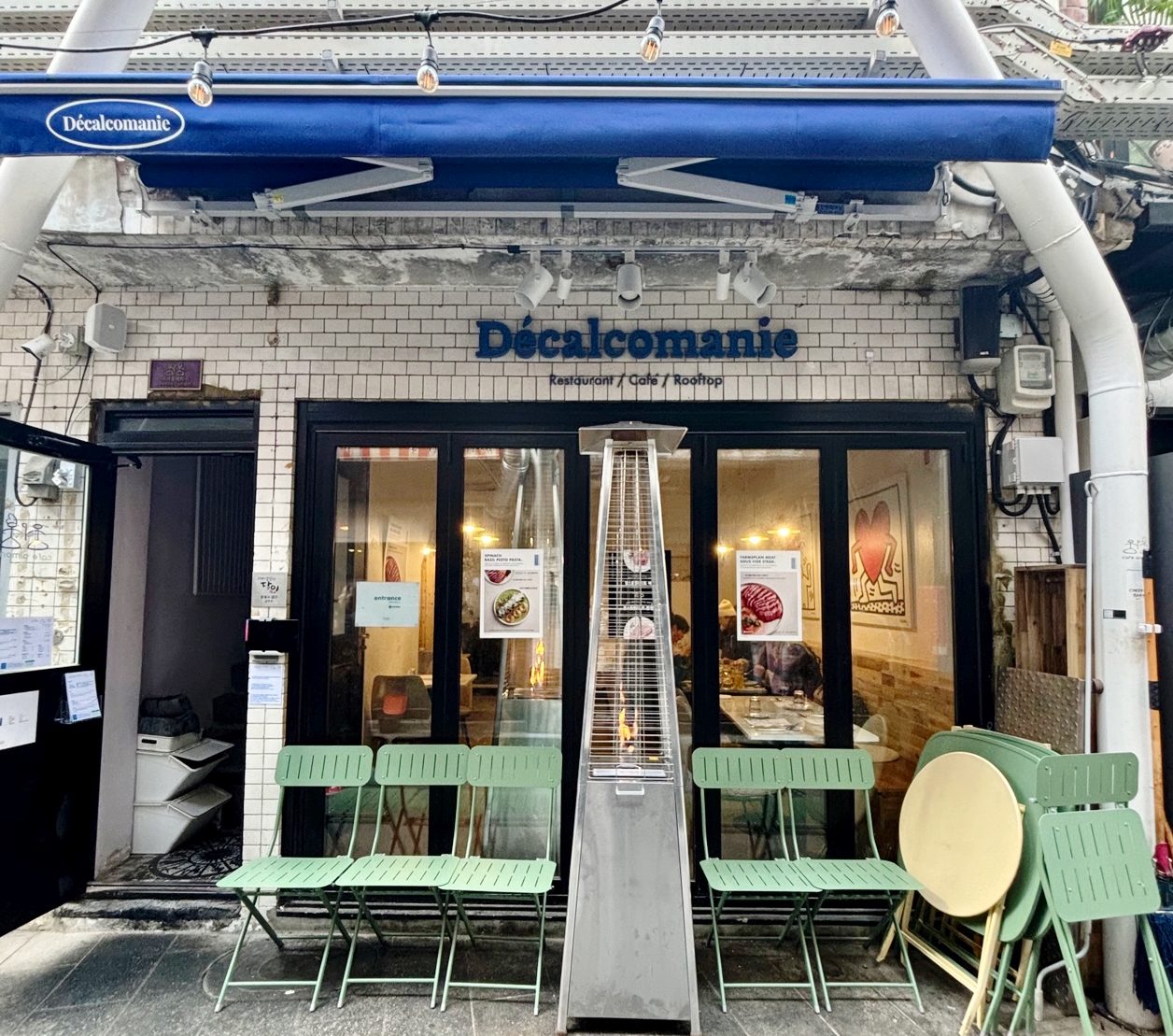
    Decalcomanie storefront with outdoor tables inside Sinheung Market, Haebangchon

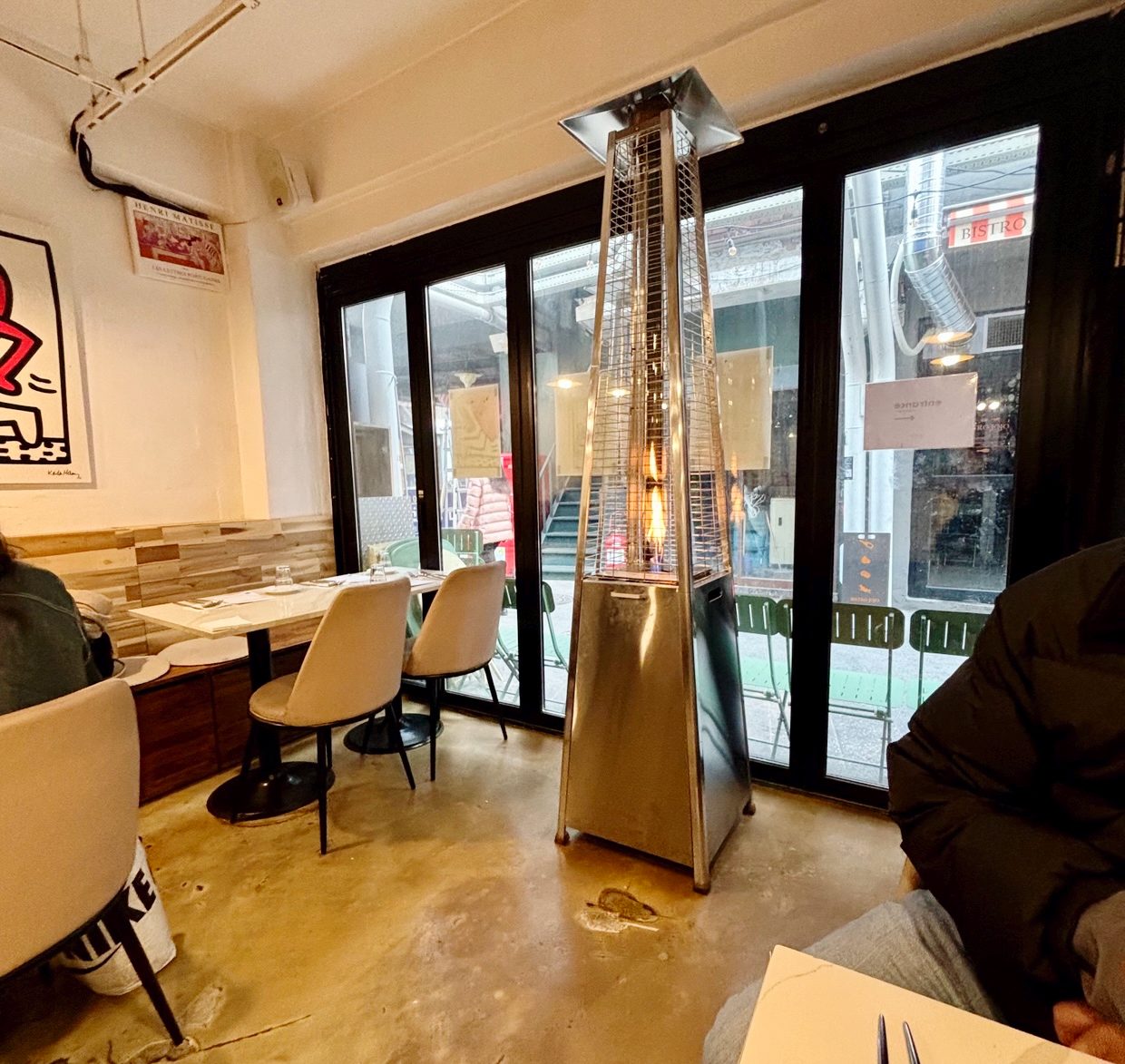
    Inside, the room is small and bright, with white walls, wooden tables and big glass doors onto the market. It feels calm rather than trendy, which is why it works well for a date. The restaurant has also appeared on the Korean TV show Handsome Guys (2025), so expect it to be busy.

    Cozy white dining room with large windows at Decalcomanie, Haebangchon

    What we ordered

    We ordered the set for two (₩59,800), which includes the three signature dishes: honey cod, spinach basil pesto pasta and the pork neck sous-vide steak. The set normally comes with two ades; we paid a little extra to swap them for sangria.

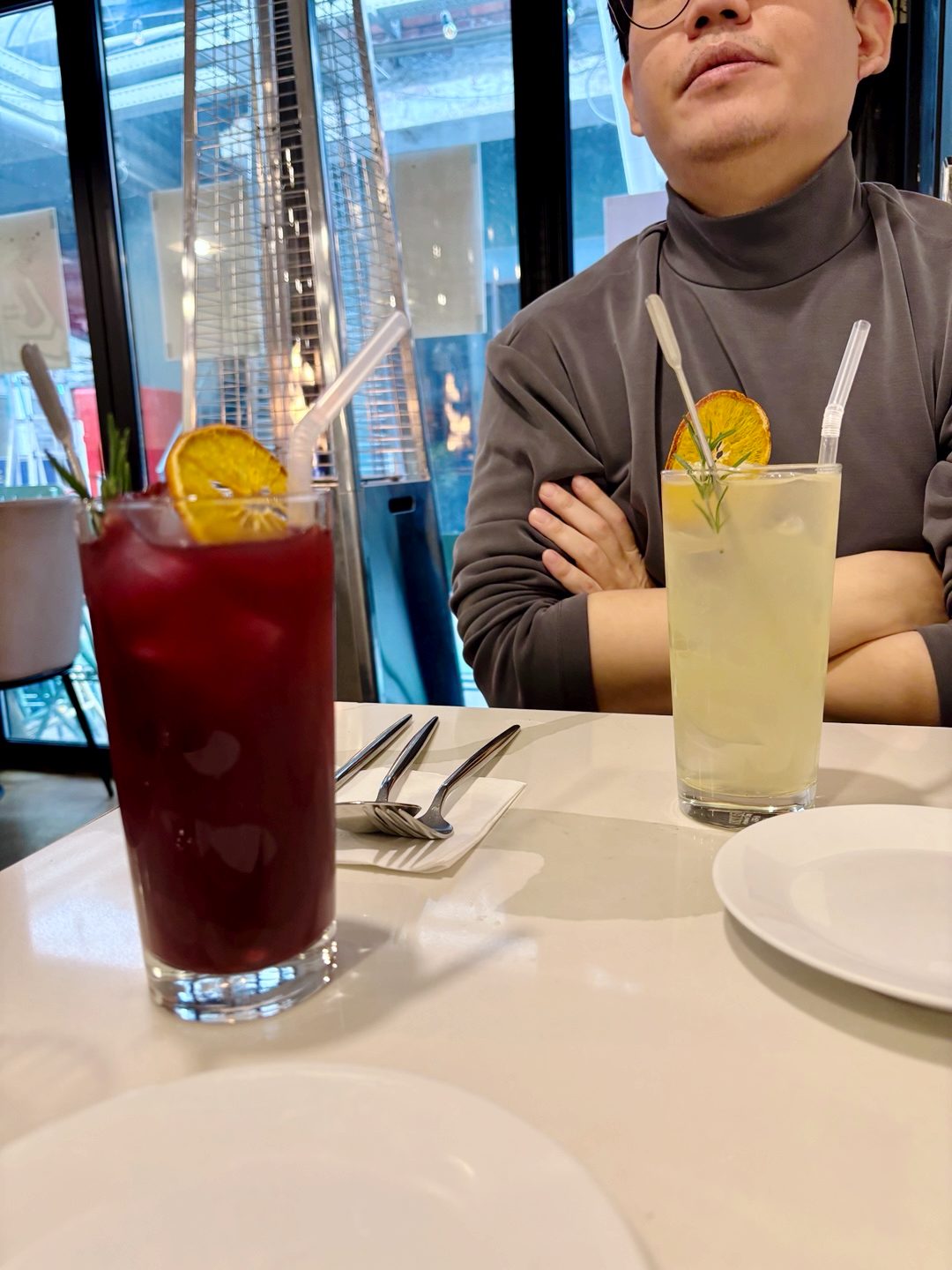
    Red and white sangria

    The red sangria is fruity, a little bittersweet and easy to drink. The white is lighter and more citrusy, with a fresh, slightly sharp finish. If you are celebrating something, start with one of each and share.

    Red sangria and white sangria at Decalcomanie

    1. Uiseong garlic honey cod (의성마늘 꿀대구)

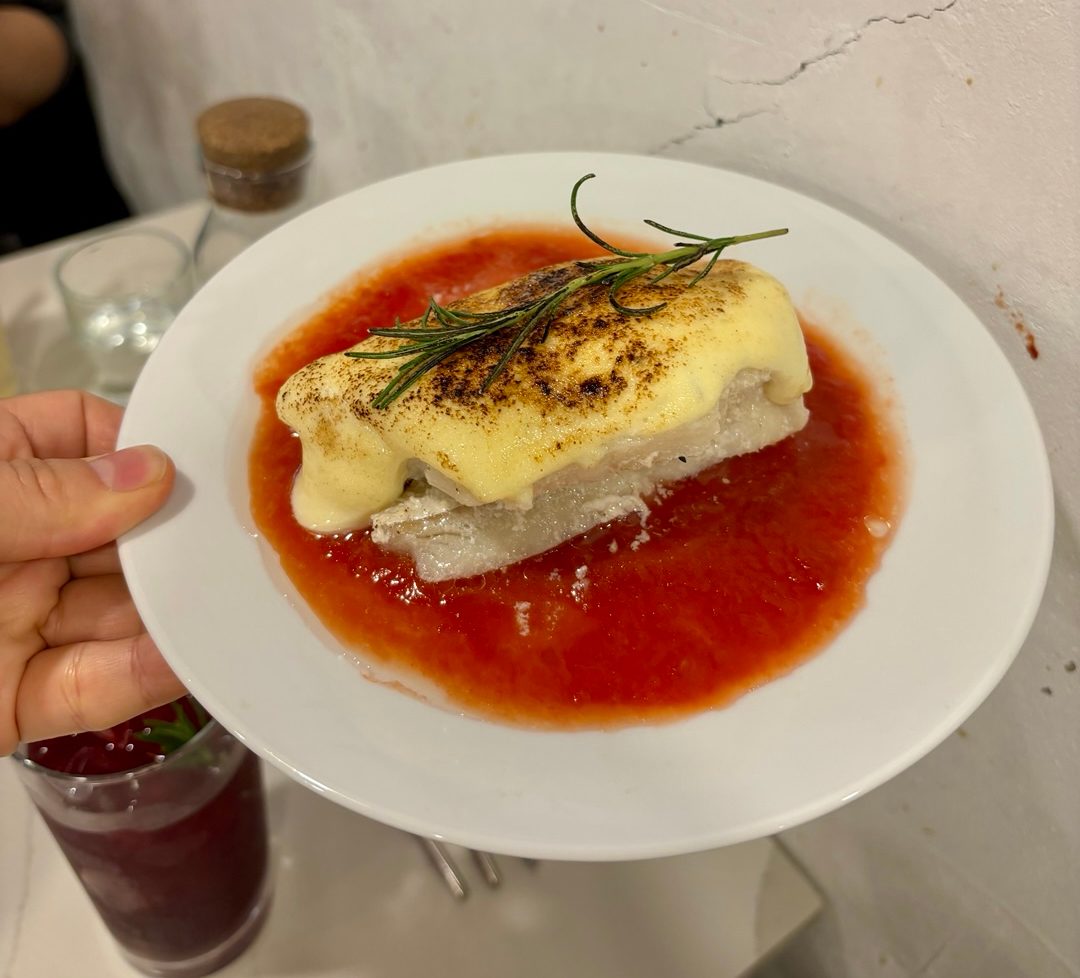
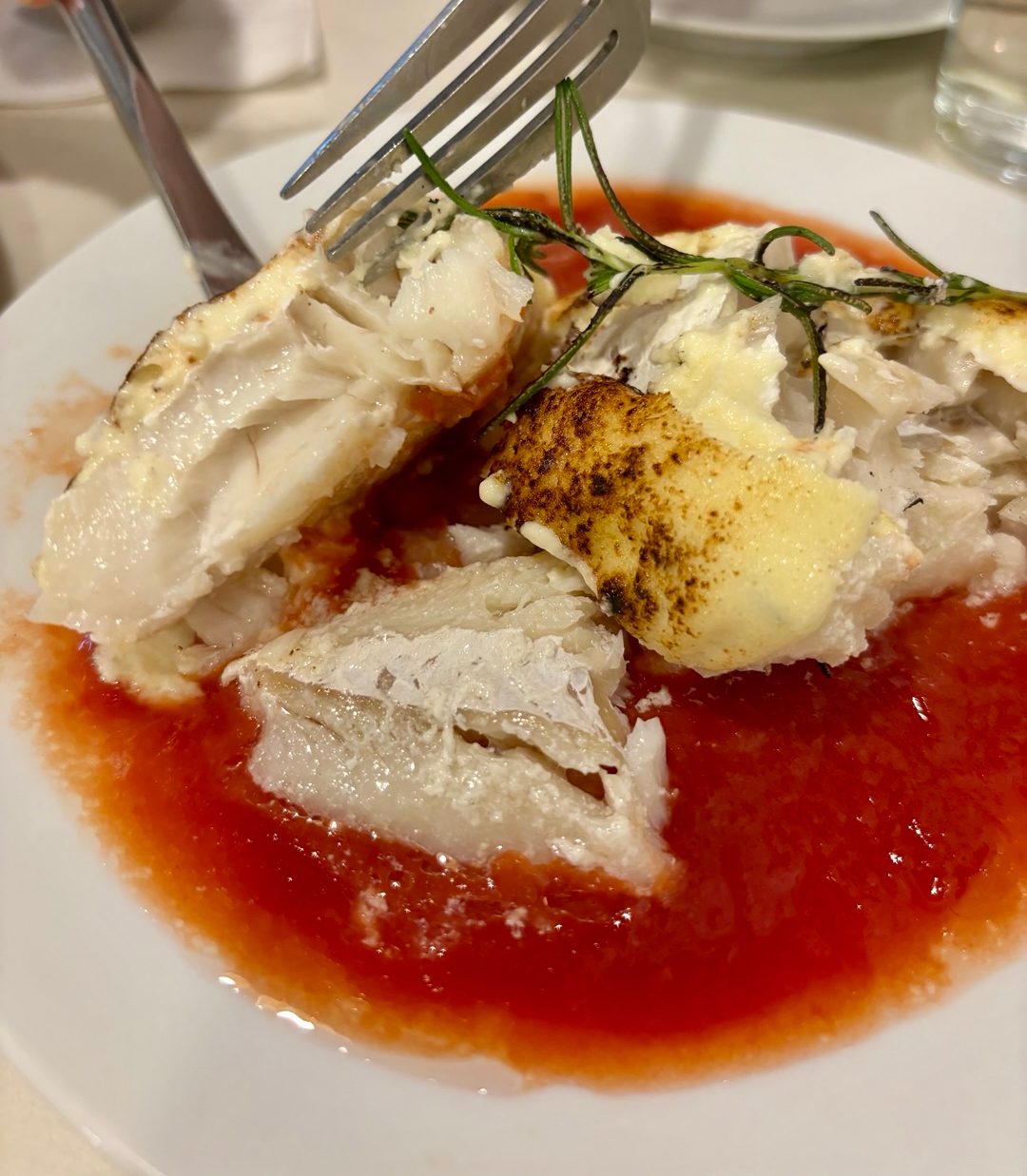
    This is the reason most people come. A piece of cod is topped with aioli made from Uiseong garlic (a well-known Korean garlic region) and honey, then served on a bright tomato sauce. The fish was so soft it fell apart as soon as my fork touched it. The garlic is mellow, the honey adds gentle sweetness, and the tomato keeps it from feeling heavy.

    It is simple enough that you think you could make it at home, but the balance is what makes it special. At ₩9,900 it is also the cheapest thing on the menu, so order it even if you are not getting the set.

    Honey cod with Uiseong garlic aioli and tomato sauce, the signature dish at Decalcomanie in Haebangchon, Seoul
    Soft flakes of cod with honey garlic aioli and tomato sauce
    The cod flakes apart at the first touch of a fork.

    2. Spinach basil pesto pasta (시금치 바질페스토 파스타)

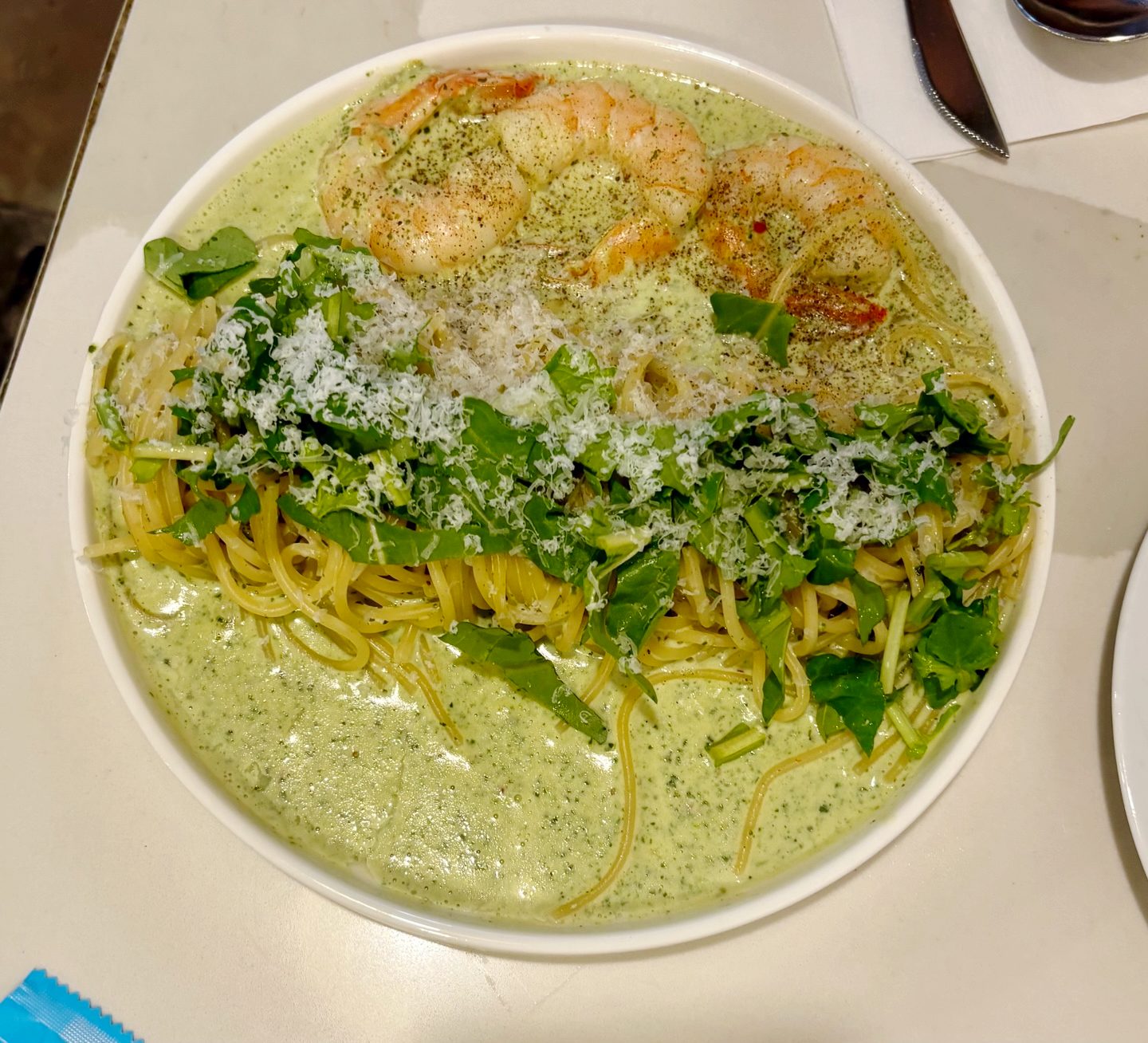
    A thick, creamy green sauce coats every strand of pasta. The basil gives it a fresh aroma, and the spinach keeps the cream from tasting too rich, so it never got boring. Plump shrimp and arugula on top add bite and a peppery edge. I really enjoyed this one.

    Spinach basil pesto cream pasta with shrimp and arugula

    3. Pork neck sous-vide steak (팜스플랜 목살 수비드 스테이크)

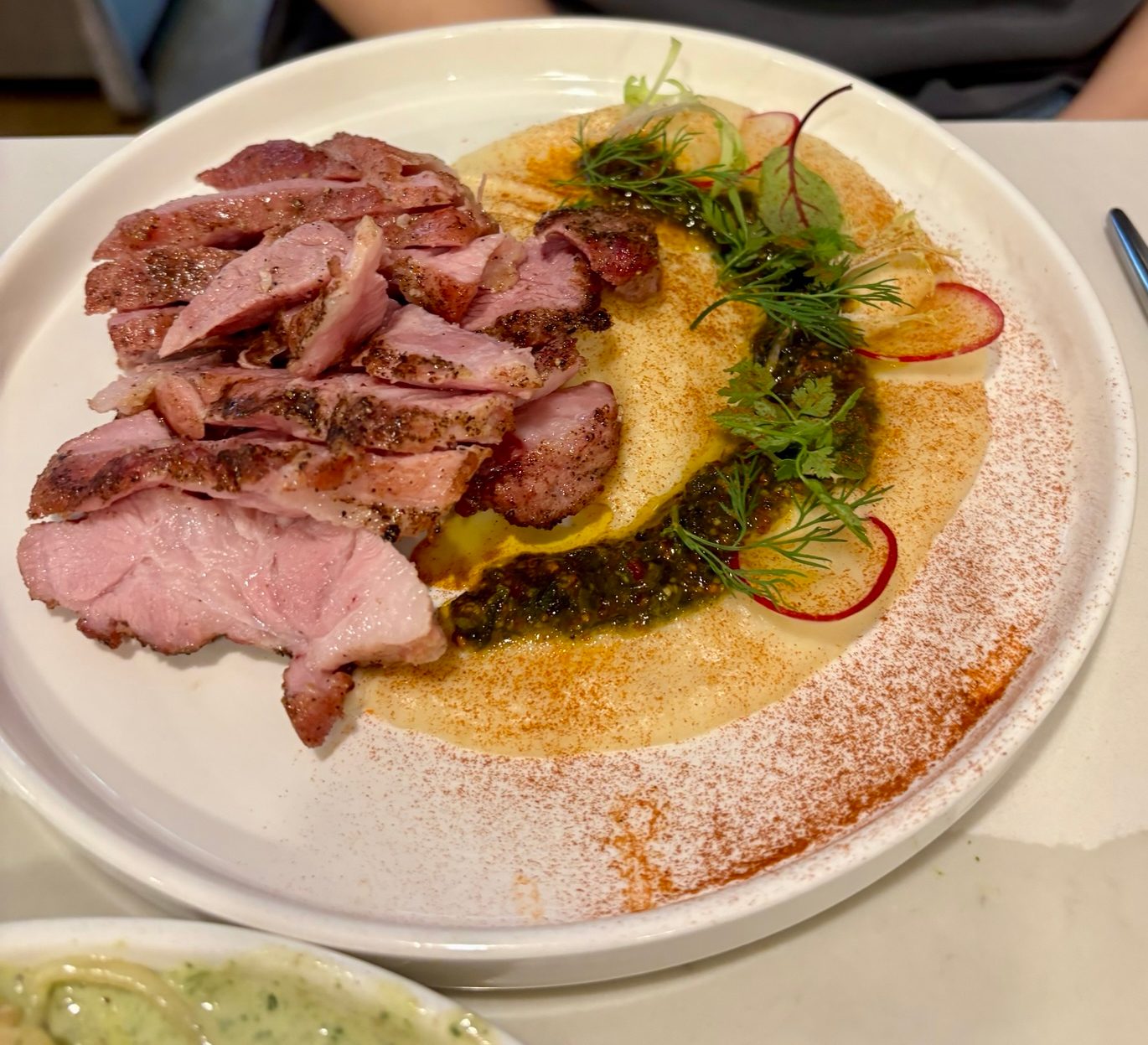
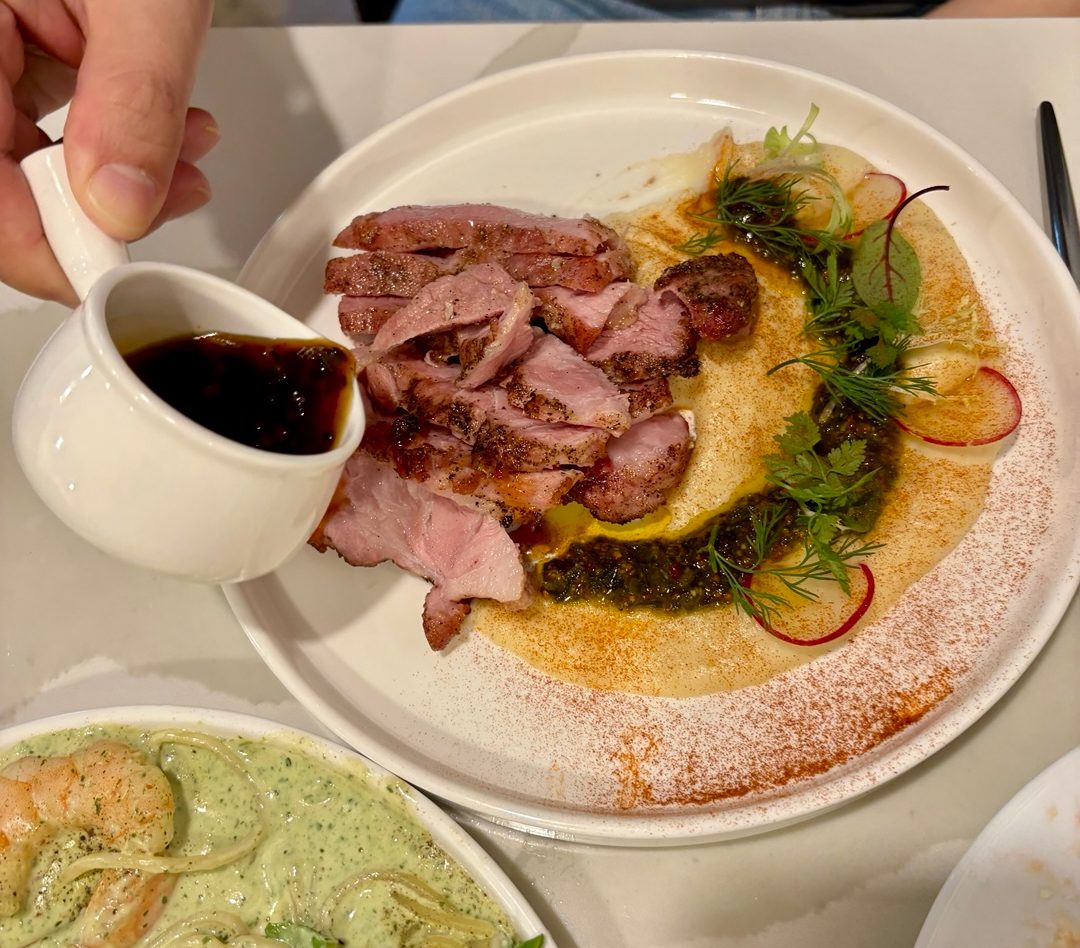
    Moksal is pork neck, a cut Koreans love for its mix of lean meat and fat. Cooked sous-vide, it was tender with a pleasant chew, and it sits on a smooth, nutty potato sauce. Eating the pork with the potato and the pickled greens together was my favorite bite.

    Sous-vide pork neck steak with potato puree and myeongi greens
    Pouring sauce over the sous-vide pork neck steak
    The steak comes with an extra sauce on the side.

    Menu and prices

    Prices below are from the restaurant’s current Naver menu (updated May 2026).

    DishPrice
    Uiseong garlic honey cod
    의성마늘 꿀대구
    ₩9,900
    ~$7
    Spinach basil pesto pasta
    시금치 바질페스토 파스타
    ₩17,900
    ~$13
    Hanwoo white ragù pasta
    한우 화이트 라구 파스타
    ₩18,900
    ~$14
    Pork neck sous-vide steak
    팜스플랜 목살 수비드 스테이크
    ₩26,900
    ~$19
    Pork jowl sous-vide steak (limited daily)
    항정살 수비드 스테이크
    ₩31,900
    ~$23
    Set for 2 (steak + basil pasta + cod + 2 ades)
    2인 세트
    ₩59,800
    ~$43
    Set for 3
    3인 세트
    ₩89,800
    ~$64
    Red or white sangria
    샹그리아
    ₩7,900
    ~$6
    Fruit ade
    에이드
    ₩4,900
    ~$3.50

    *USD figures are rough estimates at about ₩1,400 to $1. The menu also lists Spanish beers (₩9,500–13,500) and corkage at ₩30,000. Prices can change.

    Tips for visitors

    • Expect a wait. We waited about 30 minutes. Arrive early or come on a weekday.
    • Order the set. The set for two covers all three signature dishes and is the easiest way to order.
    • Watch the break time. On weekdays the kitchen closes in the afternoon (14:30 or 15:00 until 17:00). Weekends have no break.
    • No kids. It is a no-kids zone, so plan a different place if you travel with children.
    • Parking. There is no on-site parking; use the public lots at the Yongsan 2-ga community center or Haebangchon.

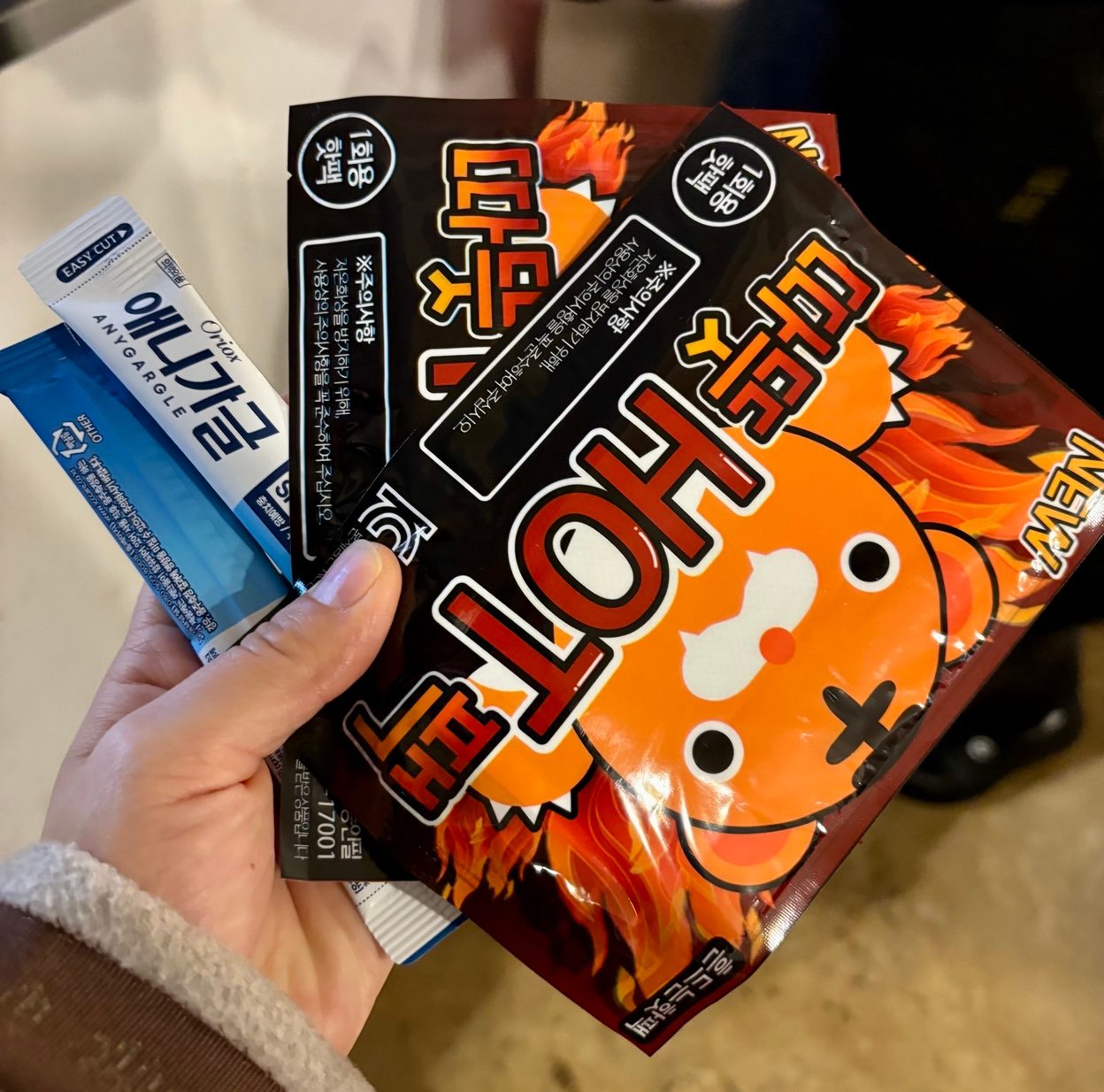
    A nice touch: when we paid on our way out on a cold night, staff handed us hand warmers and mouthwash. Small, but we still remember it.

    Hand warmer and mouthwash given to guests at checkout

    My verdict

    Decalcomanie does a few dishes and does them well. The honey cod lives up to the hype, the basil pasta is comforting, and the sous-vide pork neck is a nice introduction to a very Korean cut in a Western dish. With sangria and friendly, thoughtful service, it is one of the easiest anniversary or date-night picks I know in the Itaewon area. Just be ready to wait.

    Decalcomanie FAQ

    What is Decalcomanie famous for?

    Its honey cod: cod topped with Uiseong garlic aioli and honey on tomato sauce. It costs ₩9,900.

    How do I get to Decalcomanie?

    It is inside Sinheung Market in Haebangchon, uphill from Itaewon and Noksapyeong Station (Line 6). The walk is steep, so a short taxi ride is easiest.

    What are Decalcomanie’s opening hours?

    11:00–21:00 every day. On weekdays there is an afternoon break (14:30–17:00 Monday to Thursday, 15:00–17:00 on Friday). No break on weekends.

    Can I bring children to Decalcomanie?

    No. Decalcomanie is a no-kids zone.

    How much does dinner at Decalcomanie cost?

    The set for two is ₩59,800, about ₩30,000 per person. Add drinks if you want sangria or beer.

    Planning more meals in Seoul? Browse all Seoul restaurant guides, or try Pyongyang cold noodles in Hongdae for a completely different Korean experience.

    Visited: December 2024. Menu and hours last checked: October 15, 2026, on Naver. Please check Naver Map before you go.

    This post is based on my own visit and photos. I used AI tools to help with the English wording.
  • Seogwan Myeonok Hongdae: Pyongyang Naengmyeon Guide

    Seogwan Myeonok Hongdae: Pyongyang Naengmyeon Guide

    In short

    Seogwan Myeonok Hongdae serves Pyongyang-style naengmyeon (cold buckwheat noodles in a clear beef broth) made with 100% Jeju buckwheat, about a 10-minute walk from Hongik Univ. Station Exit 1. Cold noodle dishes cost ₩17,000–19,000 (about $12–14). It is open daily 11:00–21:00 with a 15:00–17:00 break, has 1 hour of free parking, and the classic dishes are not spicy.

    If you have only had the sweet, tangy cold noodles sold at Korean BBQ restaurants abroad, Pyongyang naengmyeon will surprise you. It is quiet, clean and subtle, and Seoul has a devoted fan club for it. Seogwan Myeonok (서관면옥) in Hongdae is a comfortable place to try it for the first time: a big, bright dining room, buckwheat noodles made from Jeju buckwheat, and a menu that also has easier options if the classic bowl is too plain for you.

    I came here on a weekend with my parents and my child, so this review is also about how it works for a three-generation family meal.

    Quick facts

    • Korean name서관면옥 홍대점 (Seogwan Myeonok, Hongdae branch)
    • Address41 World Cup-buk-ro 5-gil, Mapo-gu, Seoul, Units 106–107 (ground floor of the NUDEET Hongdae building)
      서울 마포구 월드컵북로5길 41 106호~107호
    • SubwayHongik Univ. Station Exit 1, about a 10-minute walk. Hapjeong Station Exit 2 also works.
    • HoursDaily 11:00–21:00, break 15:00–17:00. Last order 14:40 (lunch) and 20:30 (dinner)
    • PriceCold noodles ₩17,000–19,000 (about $12–14)
    • Good forFamilies with grandparents and kids, a light summer lunch, first-time naengmyeon eaters
    • Phone+82 507-1379-5735
    • ExtrasBuilding parking with 1 hour free, wheelchair access, reservations on Naver
    • MapOpen in Naver Map

    Finding it

    The restaurant is on the ground floor of the NUDEET Hongdae building (누디트 홍대), behind the Terarosa coffee shop. From Hongik Univ. Station Exit 1, walk toward Line Friends, turn right, and keep going straight past the Megacoffee and Paris Baguette crossings toward the Amanti Hotel. It is roughly a 10-minute walk.

    If you come by car, the building has a large underground car park with 1 hour free, and an elevator goes straight up. With a young child and grandparents in the group, this made the day much easier.

    📍 Seogwan Myeonok (서관면옥 홍대점), 41 World Cup-buk-ro 5-gil, Mapo-gu, Seoul · Naver Map · Google Maps

    Seogwan Myeonok signboard at the entrance of the Hongdae branch

    Inside it is much bigger than I expected: high ceilings, wide windows and long wooden tables, so groups do not feel squeezed. We arrived around 2 p.m. on a weekend and it was still busy. A board on the wall says the beef is Korean hanwoo and the other ingredients are domestic, and the noodles are made with 100% Jeju buckwheat.

    Spacious, bright dining room with wooden tables at Seogwan Myeonok Hongdae

    Two small details I liked: each table has both cold and warm water, and staff handed out hair ties when we sat down. Anyone with long hair who has ever slurped noodles will understand why.

    What is Pyongyang naengmyeon?

    Naengmyeon (냉면) means “cold noodles”. The Pyongyang style comes from North Korea and is made with buckwheat noodles in a chilled, clear broth, usually beef-based. It is not spicy and only lightly seasoned. The noodles are softer and break more easily than the chewy, starchy kind you may know.

    Many first-timers describe the broth as “bland”. That is normal. Take a few sips before adding anything; the beefy, nutty flavor of the buckwheat comes through slowly. Locals argue a lot about whether to add vinegar or mustard. My advice: try it plain first, then add a little.

    What we ordered

    1. Matbaki Naengmyeon (맛박이냉면, mat-bak-i naengmyeon)

    This is the classic Pyongyang naengmyeon with much more beef on top, served in a large brass bowl. The portion was big. The beef broth tasted deep and savory without being salty, and the sliced beef made it filling enough for a proper meal. If you are only ordering one bowl and want to taste the “real” style, this is the one I would pick.

    Matbaki naengmyeon: Pyongyang-style cold buckwheat noodles piled with sliced beef in a brass bowl at Seogwan Myeonok, Hongdae
    Matbaki naengmyeon topped with beef, egg yolk garnish and pickled radish

    2. Goldong Naengmyeon (골동냉면, gol-dong naengmyeon)

    This was my own order and my favorite. It is a dry, mixed noodle dish: buckwheat noodles with mushrooms, sesame powder, whole perilla seeds, seaweed and seasoned radish, which you mix with perilla oil and soy sauce. The perilla oil smells wonderful, nutty and toasty, and I liked it so much I asked for a bit more oil halfway through.

    If you find the cold broth too subtle, goldong naengmyeon is the easiest way into buckwheat noodles. It is not spicy either.

    Goldong naengmyeon: buckwheat noodles with mushrooms, seaweed and sesame, mixed with perilla oil and soy sauce
    Mixing goldong naengmyeon noodles with perilla oil
    Mix everything well so the perilla oil coats every strand.

    3. Laengban (랭반, laeng-ban)

    Laengban is Pyongyang naengmyeon served with a small bowl of rice. When you finish the noodles, you put the rice into the remaining cold broth and eat it with a spoon. It sounds odd, but it turns the last of the broth into a mild, refreshing rice soup. My child said this was the best dish on the table.

    Laengban: Pyongyang naengmyeon served with a side of rice to add to the broth
    A spoonful of rice soaked in cold beef broth after finishing the noodles
    Finish the broth with rice: the way my kid liked it best.

    4. Dotjeyuk (돝제육, dot-je-yuk)

    Dotjeyuk is boiled pork served cold. Because it is chilled, the meat is firm and pleasantly chewy rather than soft. It goes well with the kimchi on the side, and we also wrapped noodles around slices of pork, which worked surprisingly well. It is a good side to share between three or four people.

    Dotjeyuk: chilled sliced boiled pork served with kimchi

    We finished with a glass of makgeolli (Korean rice wine) because a slow family lunch deserves one.

    Menu and prices (October 2026)

    Prices have gone up since my visit, so the table below uses the current menu on the restaurant’s Naver listing.

    DishPrice
    Pyongyang naengmyeon (cold broth)
    평양냉면
    ₩17,000
    ~$12
    Seonbi naengmyeon (spicy-sweet, no broth)
    선비냉면
    ₩17,000
    ~$12
    Goldong naengmyeon (perilla oil & soy)
    골동냉면
    ₩19,000
    ~$14
    Matbaki naengmyeon (extra beef)
    맛박이냉면
    ₩19,000
    ~$14
    Laengban (naengmyeon + rice)
    랭반
    ₩18,000
    ~$13
    Dotjeyuk (chilled boiled pork)
    돝제육
    ₩28,000
    ~$20
    Seogwan mandu (steamed dumplings)
    서관만두
    ₩15,000
    ~$11
    Mung bean pancake
    녹두빈대떡
    ₩15,000
    ~$11
    Lunch set: naengmyeon + tteokgalbi + 2 dumplings
    떡갈비냉면세트
    ₩25,000
    ~$18

    *USD figures are rough estimates at about ₩1,400 to $1. The menu also includes set meals for one, eobok-jaengban (a beef hot pot for 2–4 people) and tteokgalbi (grilled beef or pork patties). Prices can change.

    Tips for visitors

    • Try the broth first. Sip it before adding vinegar or mustard, then adjust.
    • Not a fan of plain flavors? Order goldong naengmyeon (nutty, savory) or seonbi naengmyeon (spicy-sweet sauce).
    • Check the lunch specials. The tteokgalbi + naengmyeon set (₩25,000) and the limited Seogwan myeonsang (₩19,000) are lunch-only.
    • Mind the break time. The kitchen is closed 15:00–17:00, and lunch last order is 14:40.
    • Reserve for groups. Naver reservations are available for 2–4 people and for groups of 5 or more.
    • Ordering phrase: “Pyeongyang naengmyeon hana juseyo” means “One Pyongyang naengmyeon, please.”

    Is it kid-friendly?

    Yes. The room is spacious, there is an elevator from the car park, and nothing we ordered was spicy. Buckwheat noodles are soft and easy for children to eat, and laengban (noodles plus rice in broth) was a hit with my child.

    My verdict

    Seogwan Myeonok is a friendly introduction to Pyongyang naengmyeon. The broth is clean and beefy, the buckwheat noodles are fragrant, and the perilla-oil goldong naengmyeon is worth ordering even if you think cold noodles are not for you. With easy parking, lots of space and nothing spicy on our table, it is one of the more comfortable family meals I have had near Hongdae.

    Seogwan Myeonok FAQ

    Is the Pyongyang naengmyeon at Seogwan Myeonok spicy?

    No. The classic version is a mild, cold beef broth with buckwheat noodles. Only the seonbi naengmyeon uses a spicy-sweet sauce.

    How do I get to Seogwan Myeonok from Hongik Univ. Station?

    Take Exit 1 and walk about 10 minutes toward the Amanti Hotel. The restaurant is on the ground floor of the NUDEET Hongdae building, behind Terarosa.

    What are Seogwan Myeonok Hongdae’s opening hours?

    Every day from 11:00 to 21:00, with a break from 15:00 to 17:00. Last orders are 14:40 for lunch and 20:30 for dinner.

    How much does a meal at Seogwan Myeonok cost?

    Cold noodle dishes cost ₩17,000–19,000 (about $12–14). With a shared side, expect around ₩25,000–30,000 per person.

    Is there parking at Seogwan Myeonok Hongdae?

    Yes, in the building’s underground car park, with the first hour free.

    Hungry for more in the area? See my Baekri Gomtang guide for hot beef soup near Hongik Univ. Station, or browse all Seoul restaurant guides.

    Visited: early 2024. Prices and hours last checked: October 15, 2026, on Naver. Please check Naver Map before you go.

    This post is based on my own visit and photos. I used AI tools to help with the English wording.
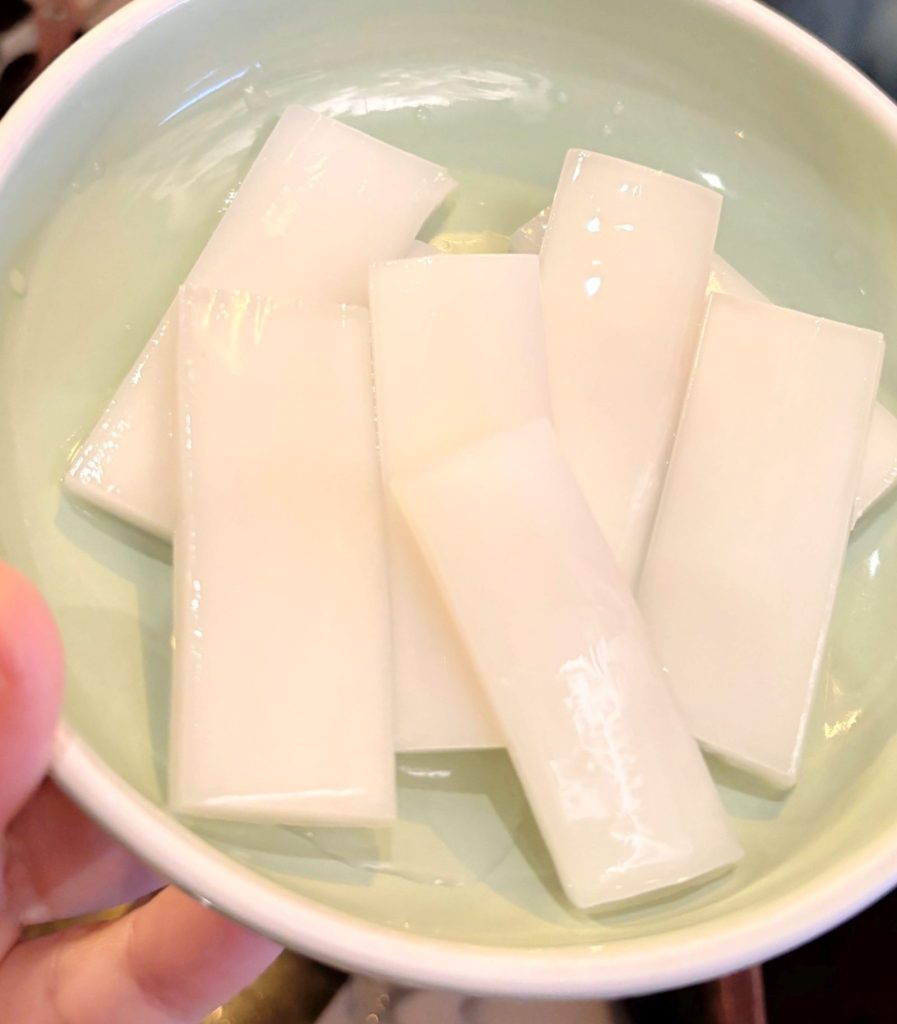
  • Baekri Gomtang Hongdae: Hanwoo Beef Soup Near Hongik Univ. Station

    Baekri Gomtang Hongdae: Hanwoo Beef Soup Near Hongik Univ. Station

    In short

    Baekri Gomtang is a small hanwoo beef soup (gomtang) restaurant about 220 m from Hongik Univ. Station Exit 7 in Hongdae, Seoul. A bowl of clear, non-spicy hanwoo gomtang costs ₩12,000 (about $9) and the beef tartare bibimbap is ₩13,000. It is open 11:00–22:00 with a 15:00–17:00 break, and it works well for solo diners and families with kids.

    If you have had enough of spicy rice cakes and late-night fried chicken in Hongdae, this is the place I would send you for a calm, comforting Korean meal. Baekri Gomtang (백리곰탕) is a small, newly opened restaurant a few minutes from Hongik University Station that does one thing very seriously: gomtang, a clear Korean beef soup, made here with Korean hanwoo beef.

    Quick facts

    • Korean name백리곰탕 (Baekri Gomtang)
    • Address40-18 Wausan-ro 29-gil, Mapo-gu, Seoul, 1F
      서울 마포구 와우산로29길 40-18 1층 1호
    • SubwayHongik Univ. Station, Exit 7, about 220 m (3–5 min walk)
    • Hours11:00–22:00, break 15:00–17:00
    • Price₩12,000–13,000 per main (about $9)
    • Good forSolo diners, light lunch, non-spicy eaters, families
    • Phone+82 2-6489-3383
    • ServicesTakeout, reservations, Wi-Fi, group seating (per Naver listing)
    • MapOpen in Naver Map

    Finding it

    Come out of Exit 7 of Hongik Univ. Station and head into the side streets. The restaurant sits on a quiet alley rather than the main road, so I recommend following a map app instead of trying to spot a sign.

    Google Maps is fine for the walk, but Naver Map is far more accurate for small Korean restaurants and also shows current opening hours.

    📍 Baekri Gomtang (백리곰탕), 40-18 Wausan-ro 29-gil, Mapo-gu, Seoul · Naver Map · Google Maps

    Front counter and logo of Baekri Gomtang in Hongdae, Seoul
    The counter with the Baekri Gomtang logo.

    Inside it is bright and tidy, with light wood tables and enough space between them that you are not elbow to elbow with strangers. There are smaller tables that work well if you are eating alone, which is very normal in this student neighborhood.

    One small detail I loved: every table had its own little fan. Eating a bowl of hot soup can make you sweat, and someone clearly thought about that.

    Bright wood-tone dining room with small tables at Baekri Gomtang near Hongik Univ. Station

    What is gomtang?

    Gomtang (곰탕) is a soup made by simmering beef bones and meat for many hours until the broth is rich but still clear. It is not spicy at all. It is usually served with rice already in the bowl, plus thin slices of beef and chopped green onion.

    Koreans eat it when they want something warm and easy on the stomach, after a long night out, or simply as a filling lunch.

    An important tip for first-timers: gomtang is served lightly seasoned on purpose. You are expected to add salt (and pepper if you like) at the table to suit your own taste. If your first spoonful tastes a bit plain, that is normal, not a mistake.

    What we ordered

    1. Hanwoo Gomtang (한우곰탕, hanu gomtang) – ₩12,000

    The thing that impressed me most was a small board inside showing the saltiness level of the day’s broth. Long-simmered soup can slowly change in taste, so it seems they measure and manage it daily. Publishing that number to customers says a lot about how confident they are in the broth.

    The soup arrived in a traditional brass bowl with a whole ginseng sprout on top, which gives it a gentle, earthy aroma. The broth is on the mild side. I added just a little salt and kept it light, and it tasted deeper with every spoonful.

    What really set it apart was the amount of beef: there was so much tender, clean-tasting meat that it never felt like I was just drinking broth.

    Adding salt to taste to the mild gomtang broth
    Season it yourself: the broth is mild, so add salt to taste.

    The side dishes (free and refillable)

    Three side dishes come with your meal:

    • Kkakdugi (깍두기): cubed radish kimchi, crunchy and refreshing, the classic partner for gomtang. Here it is cut small, so it is easy to eat in one bite.
    • Ojingeo-jeotgal (오징어젓갈): salty, savory seasoned squid. Put a little on a spoonful of rice and broth. This was my favorite combination of the whole meal.
    • Potato salad: soft and creamy, served in a neat scoop. Unusual for a gomtang restaurant and a nice break between salty bites.
    Three side dishes: cubed radish kimchi (kkakdugi), potato salad and seasoned squid (ojingeo-jeotgal)

    2. Mini Suyuk (미니수육, mini suyuk) – ₩9,000

    Suyuk is sliced boiled beef. The “mini” size is small, but as a side to share with soup it was just right. The meat was soft rather than dry.

    The best way to eat it: wrap a slice around a few stems of garlic chives, then dip it in the tangy sauce. The sharp chives and sour sauce balance the mild beef really well. If there are two or more of you, I would definitely add this.

    Mini suyuk: sliced boiled beef with garlic chives, ginseng sprout and dipping sauce
    Wrapping a slice of boiled beef with garlic chives before dipping
    Roll a slice of beef with garlic chives, then dip.

    3. Hanwoo Yukhoe Bibimbap (한우육회비빔밥, yukhoe bibimbap) – ₩13,000

    Yukhoe is Korean-style beef tartare, served raw. This bibimbap comes with a generous mound of fresh hanwoo tartare over rice, greens and sprouts. You can choose between a soy sauce or a gochujang (sweet and spicy red pepper paste) dressing.
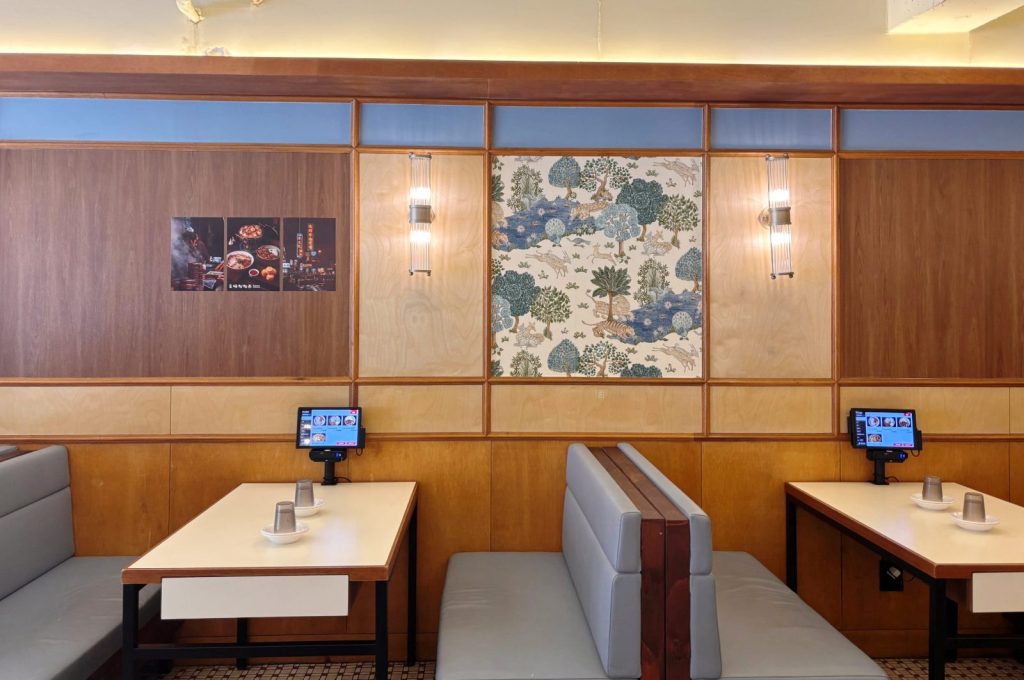
    I went with gochujang and was surprised by how good it was. Mix everything together well, take a big spoonful, then follow it with a sip of the gomtang broth.

    If you can’t handle spice, ask for the soy sauce version. And if raw beef is not for you, the gomtang alone makes a complete meal.

    Hanwoo yukhoe bibimbap with raw beef tartare, greens, sprouts and gochujang
    A spoonful of mixed beef tartare bibimbap topped with a slice of beef from the gomtang

    How to order (tips for visitors)

    • Pick a main per person. Most people order one gomtang or one bibimbap each, then share a side like mini suyuk.
    • Point and say the Korean name. “Hanu gomtang hana juseyo” means “One hanwoo gomtang, please.” Replace hana (one) with dul (two) if needed.
    • Side dishes are free. You can ask for more kkakdugi or potato salad by pointing at the dish and saying “Deo juseyo” (more, please).
    • Season at the table. Salt and pepper are there for a reason.
    • Mind the break time. The kitchen closes between 15:00 and 17:00, a common pattern for small restaurants in Hongdae.
    • Rice is already in the soup. Gomtang here comes with the rice in the bowl, so you don’t need to order rice separately.

    Menu and prices

    DishPrice
    Hanwoo gomtang
    한우곰탕
    ₩12,000
    ~$9
    Hanwoo gomtang, large
    한우곰탕 특
    ₩15,000
    ~$11
    Yukhoe bibimbap (beef tartare)
    한우육회비빔밥
    ₩13,000
    ~$9
    Mini suyuk (boiled beef)
    미니수육
    ₩9,000
    ~$6
    Hanwoo hot pot, large
    한우전골(대)
    ₩49,000
    ~$35
    Makgeolli, 1 glass
    막걸리 한잔
    ₩2,000
    ~$1.50

    *USD figures are rough estimates at about ₩1,400 to $1. Prices are from the restaurant’s Naver listing and recent visitor reviews and can change.

    Is it kid-friendly?

    Yes, as long as your kids are fine with soup. Gomtang is one of the safest Korean dishes for children because it has no spice at all, and the beef is soft.

    Several Korean reviewers mention coming with their kids for exactly this reason. Tables are well spaced, and the bright, clean room feels relaxed rather than rowdy. The only menu item I would skip for young children is the raw beef bibimbap.

    My verdict

    Baekri Gomtang is a great pick when you want something warm, filling and gentle after a few days of heavy or spicy food.

    The daily-managed broth, the generous amount of beef, the chive-wrapped suyuk and the surprisingly good tartare bibimbap all made it a meal I would happily repeat. Next time I want to try the bibimbap with the soy sauce dressing.
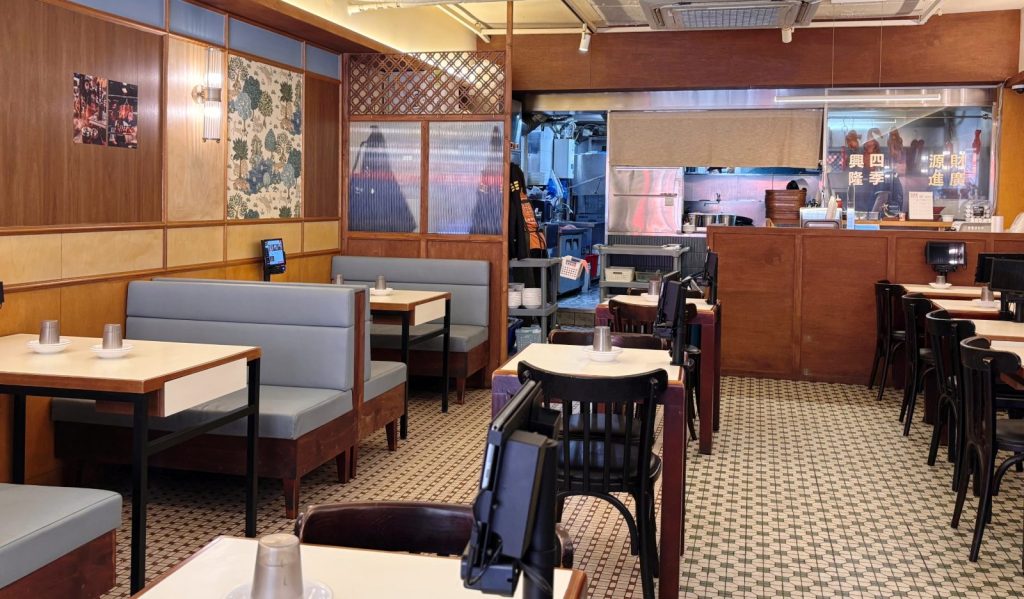
    If you are near Hongdae and want an honest bowl of Korean beef soup without the tourist-street noise, this is a good place to go.
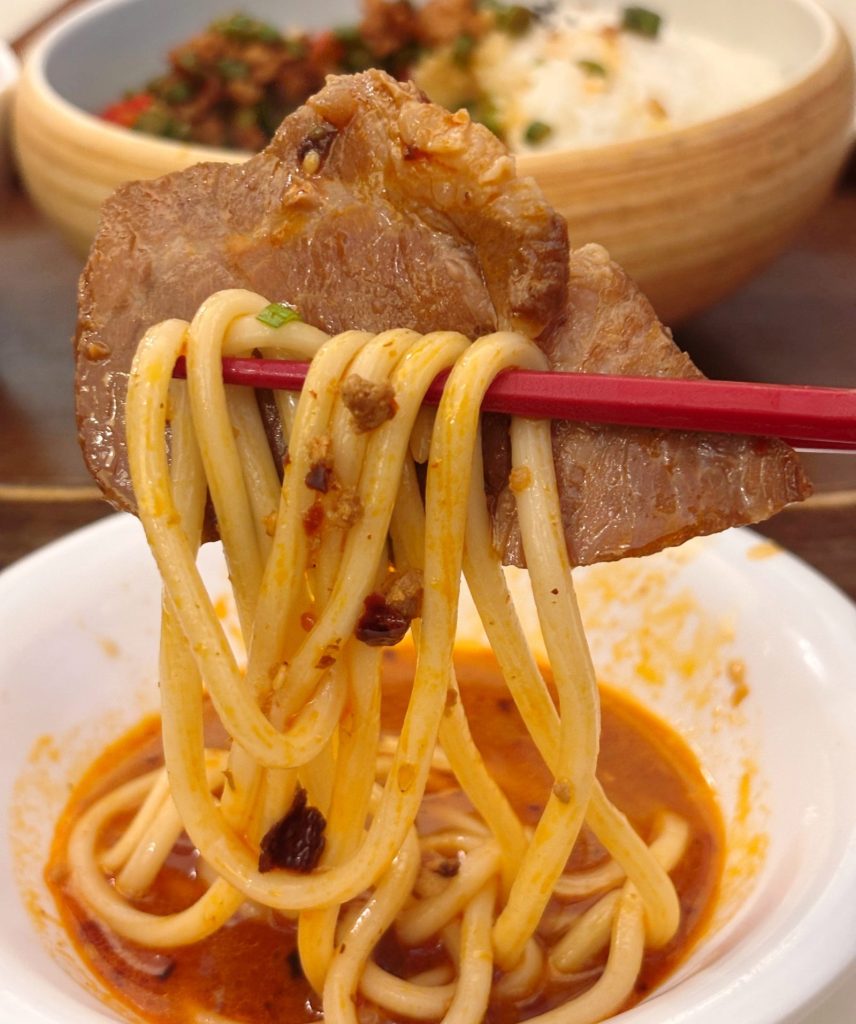
    Baekri Gomtang FAQ

    Is Baekri Gomtang spicy?

    No. The gomtang is a clear, mild beef broth with no chili at all. Only the yukhoe bibimbap with gochujang dressing is spicy, and you can choose soy sauce instead.

    What is the nearest subway station to Baekri Gomtang?

    Hongik Univ. Station (Line 2, AREX airport railroad and Gyeongui-Jungang Line). Use Exit 7; the restaurant is about 220 m away, a 3–5 minute walk.

    What are Baekri Gomtang’s opening hours?

    Recent visitors list 11:00–22:00 with a break from 15:00 to 17:00. Hours can change, so check Naver Map on the day you go.

    How much does a meal at Baekri Gomtang cost?

    A bowl of hanwoo gomtang is ₩12,000 (about $9) and the yukhoe bibimbap is ₩13,000. Expect to spend around ₩12,000–20,000 per person with a shared side.

    Can I eat at Baekri Gomtang alone or with kids?

    Yes to both. There are small tables for solo diners, and the non-spicy soup and soft beef make it an easy choice for children.

    Looking for more places nearby? Browse all Seoul restaurant guides or our kid-friendly picks.

    Visited: September 2026. Information last checked: October 14, 2026. Opening hours and prices can change, so please check Naver Map before you go.

    This post is based on my own visit and photos. I used AI tools to help with the English wording.